
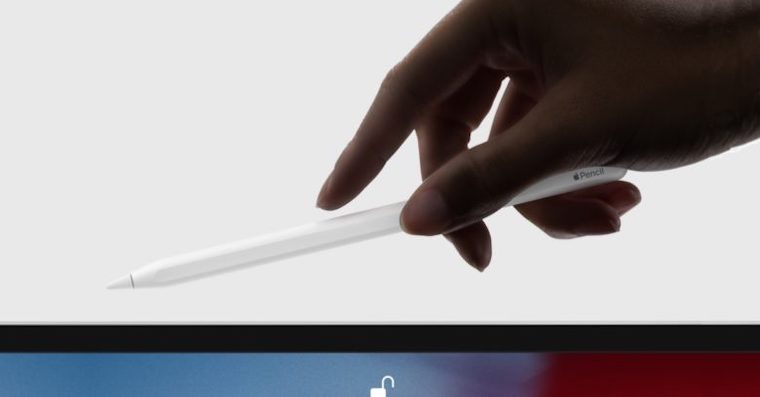
Apple in registering new patents is not slowing down, quite the opposite. It seems to have intensified at the beginning of the new year, and indeed the decade. While most of the additions so far have concerned the iPhone, iPad and MacBookoh, now you Apple he also shined a light on his smart pen, which has become an integral part of many iPad owners. This time, the technological giant focuses mainly on a haptic system that would convey information to the user without disturbing the stability of the pen itself.
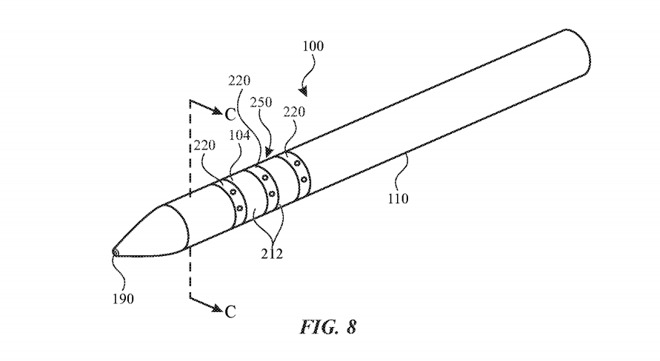
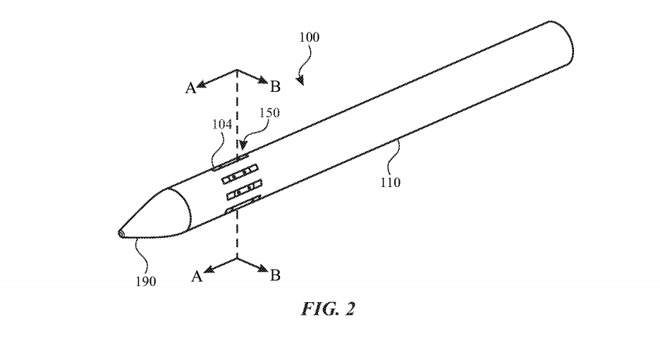
If you use Apple Pencil or any other stylus, you will surely have noticed that, unlike phones, game controllers or other portable devices, it does not transmit information via vibrations. This makes sense given its purpose, as most artists and draftsmen rely primarily on precision, which would be disrupted if the pen moved unexpectedly. In addition, the motor itself would negatively affect both the size and weight of the pen, which would lead to impaired usability. Fortunately, the Apple company has come up with a potential solution, in which the use of an alternative haptic system plays a role, which could alert the user to major changes, but at the same time would not compromise the integrity in any way. Instead of a motor shaking the entire stylus, technology would be used that would transmit a gentle vibration at the point where the user has toonefingers. The force exerted would also be spread out in all directions, preventing the pen from moving spontaneously.
You might be interested in
There are several ways to achieve haptic feedback described in the patent. The first varianta talks about using narrow slots filled with a special material connected to a rotating motor, which would be hidden inside the stylus and would transmit various stimuli to the user at the point of contact. In the alternative, the slots would be replaced by small protrusions on which the user would place theonefingers and could receive individual information not only audiovisually, but also haptically. However, between the aforementioned material and the rest of the pen there would of course be a surface for a comfortable grip, which is taken into account in both options. Although it could be argued that artists look at the iPad display when creating, the physical response would facilitate orientation and could possibly also symbolize turning on or off a certain function. When and whether we will see such technology at all is up in the stars, but Apple is working diligently on haptic interaction, even for VR and AR systems, where the interface between the user and the device would play a key role.
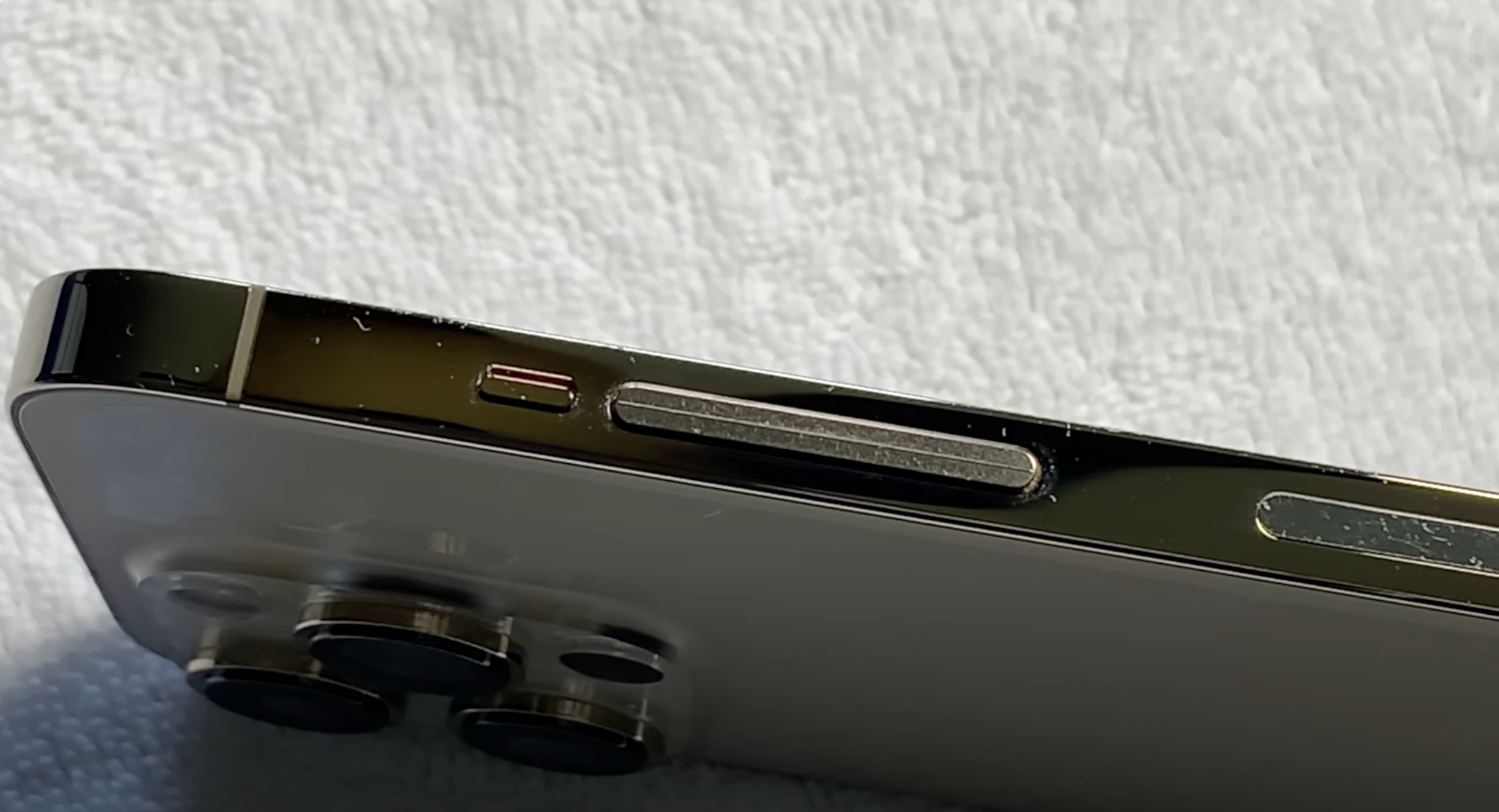





Can someone explain to me what this is for? On my iP11 it rattles completely randomly, but I don't understand what it's telling me with the rattle.