
Co-founder AppAlthough he was one of the most successful people of our time, success certainly didn't come to him on a silver platter. Jobs' life was more like a roller coaster with all its ups and downs. But despite everything that happened, he remained the same. He simply wanted to be successful at all costs.
Gallery

Flattery for loyalty
There are many rumors circulating about Steve Jobs.storek, related to his sarcastic and biting remarks. The truth is, however, that Jobs also knew how to flatter – but often to get his way. He did not hesitate to flatter even those he actually hated. The desire to be praised for a job well done is part of human nature, and praise can motivate the vast majority of people to perform even better. Jobs was aware of this and was able to use it appropriately.
Honesty to the core
When it's Steve Jobs in the mid-nineties of the last century he returned to Applu, the company was on the verge of bankruptcy. Jobs quickly discovered the cause of the problem and did not hesitate to present it to his colleagues with complete honesty: “These products are useless!”, he thundered. “There is no sex in them!”. Jobs believed that colleagues and employeesancThey will appreciate honesty – even if it hurts. But customers also appreciate honesty, so Steve also bet on honesty towards them.
Passion for a cause
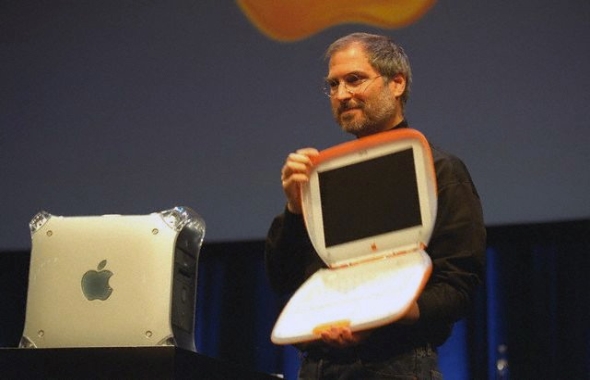
Moments when on stage at Apple conferences entered Steve Jobs, are unforgettable. In a black turtleneck, jeans, and sneakers, Jobs marched back and forth on stage, talking passionately about what he was working on. Apple works and why. His enthusiasm for everything the company does was genuine and infectious, and was a significant part of its success AppJobs also relied on emotions and was well aware that people often prioritize feelings over logic when making purchases – and he knew how to use this knowledge properly.
You might be interested in

Commitment to work
In connection with Jobs' work as a director AppThere are many words that come to mind, but “passivity” is definitely not one of them. If it was possible, Jobs was at work every day from seven in the morning to nine in the evening to make sure that everything was running as it should. He was greatly admired for this determination and dedication to his work. His statement that the work you do will take up a large part of your life, and therefore you need to believe that what you do is great, has gone down in history.
Act now, fix later
Many technology-focused companies work first and very carefully on ideas, and only then on products. But Jobs had a different approach – he often made decisions in this direction based on sudden impulses instead of studies, research, or feedback. He knew that the most important thing was to react as quickly as possible, and he had no problem with modifying the products later.
Face the problems – or the back
When it comes to approaching problems of all kinds, Jobs knew two very different extremes. He had no problem facing problems literally head on, which allowed him to adapt quickly and not waste time. But he knew very well that even passivity can in some cases put him in a position of power. It was just another one of his ways of getting his way. For example, there is a story about how Jobs wanted a mouse that would move in all directions. When one of the engineers tried to convince him that it really wasn't possible, Jobs simply found a replacement for him. It's hard to say how proud he was of his move - but he was certainly convinced that he did it in the interest of innovation.
Want perfection - nothing more, nothing less
Jobs didn't just want to beat the competition - he wanted to be at the very top. And he was also able and willing to sacrifice absolutely anything for this goal. The impossible did not exist for him, he wanted to have everything done and in order. The desire for perfection was one of the company's key values AppleAnd this desire was also often behind Jobs' indiscriminate behavior towards colleagues and employees.ancHe wanted to have his own Apple in short, the best.












I have reached the pinnacle of success in the business world. In the eyes of others, my life is probably the epitome of success. However, I have little joy outside of work. In the end, wealth is just an aspect of life that I have become accustomed to.
As I now lie in a hospital bed and reflect on my entire life, I realize that all the recognition and wealth I had built so much on has paled and lost meaning in the face of impending death.
Steve Jobs
In the dark I look at the green lights of the machines that keep me alive and hear their mechanical hum. I feel the death god's breath approaching. Now I know that when we accumulate enough wealth to last us the rest of our lives, we should also pursue something else that is not wealth related. It should be something much more important: maybe relationships, or art, maybe a dream from your youth...
Unbridled pursuit of wealth turns us into warped beings like me. God gave us the senses and the ability to feel the love in everyone's heart, not the illusion that wealth brings.
The wealth I have won in my life I cannot take with me.
I can only take memories precipitated by love. This is the real wealth that will follow you, accompany you and give you the light and strength to go on. Love can travel thousands of miles. Life has no limits. Go where you want to go. Reach the heights you want to reach. It's all in your heart and in your hands.
What is the most expensive bed in the world? Hospital bed. You can hire someone to drive your car, someone to earn money for you, but you can never hire someone to carry your illness for you. Lost material things can be found. But there is one thing that can never be found when lost ~ life. When a person goes to the operating room, he realizes that there is one book he has yet to read ~ The Book of Healthy Living.
No matter what stage of life you are in, you will all face a day when the curtain comes down. Protect the love of your family, the love of your partner, the love of your friends. Love yourself and take care of others with love.
~ Steve Jobs
https://www.snopes.com/fact-check/steve-jobs-deathbed-speech/
Hi, good luck to everyone.ancum, mamonarum etc. – many more mentally disturbed world rulers and other people etc. have to go through what S. Jobs went through. Only on his deathbed, that is, late, will he realize, perhaps, what S. Jobs did.
Human stupidity is nothingoneoh!!!!!!
Everything is absolutely true, with the only exception that given the illness Steve Jobs he fought, so if he didn't have that wealth, he would have gone to the eternal hunting grounds a few years earlier... Yes, that's the schizophrenia of life... The mistakes that Steve made in his approach to the disease were not exactly small... At the same time, he Steve Jobs one of those who managed to live several lives at once in his short life and left behind a completely different world... Yes, a madman who truly believed that he could change the world, and he succeeded...
I guess… ✌🏻