Commercial message: The release of the latest US inflation data has brought a new wave of volatility to commodity markets. Higher-than-expected inflation has supported the US dollar and government bond yields, putting gold under short-term pressure. However, there is no reason to interpret the current movement as a fundamental change in the long-term trend. Fundamentals continue to operate beneath the surface of the market, providing significant support for gold.
Inflation vs. gold
US inflation once again beat market expectations, which immediately pushed up US Treasury yields and supported the dollar. Pro Gold is an unfavorable combination. Gold itself does not yield interest income, so if yields on relatively safe bonds rise, holding gold becomes less attractive from an investor's perspective.
Moreover, higher inflation reduces the likelihood of the Fed easing monetary policy quickly. Expectations of lower rates and falling real yields have been important factors supporting the price of gold in recent months.
At the same time, however, there is another side to the story. Geopolitical tensions, high fiscal deficits in major Western economies, and uncertainty in financial markets are supporting demand for gold as a safe haven. The market is currently caught between two opposing forces.
Bank of America warns that for a more significant return to new maxFor investors, gold would need either a clearer dovish signal from the Fed or renewed concerns about the depreciation of fiat currencies. JP Morgan, on the other hand, still expects the long-term growth trend to remain intact, and in its scenarios it works with a price of around $6,000 per ounce at the turn of 2026 and 2027 and around $6,300 by the end of 2027. The main arguments include the continued diversification of reserves and the risks associated with high state debt.
Central banks remain an important player
While short-term price movements are primarily driven by macroeconomic data and investor expectations, the long-term story of gold also hinges on real capital flows. Central banks have been playing a significant role in this, increasing the share of gold in their reserves in recent years.
Active buyers include China, Poland and India. The main motivation is the diversification of foreign exchange reserves and the effort to reduce dependence on traditional reserve assets. This type of demand is less sensitive to short-term price fluctuations than speculative capital.
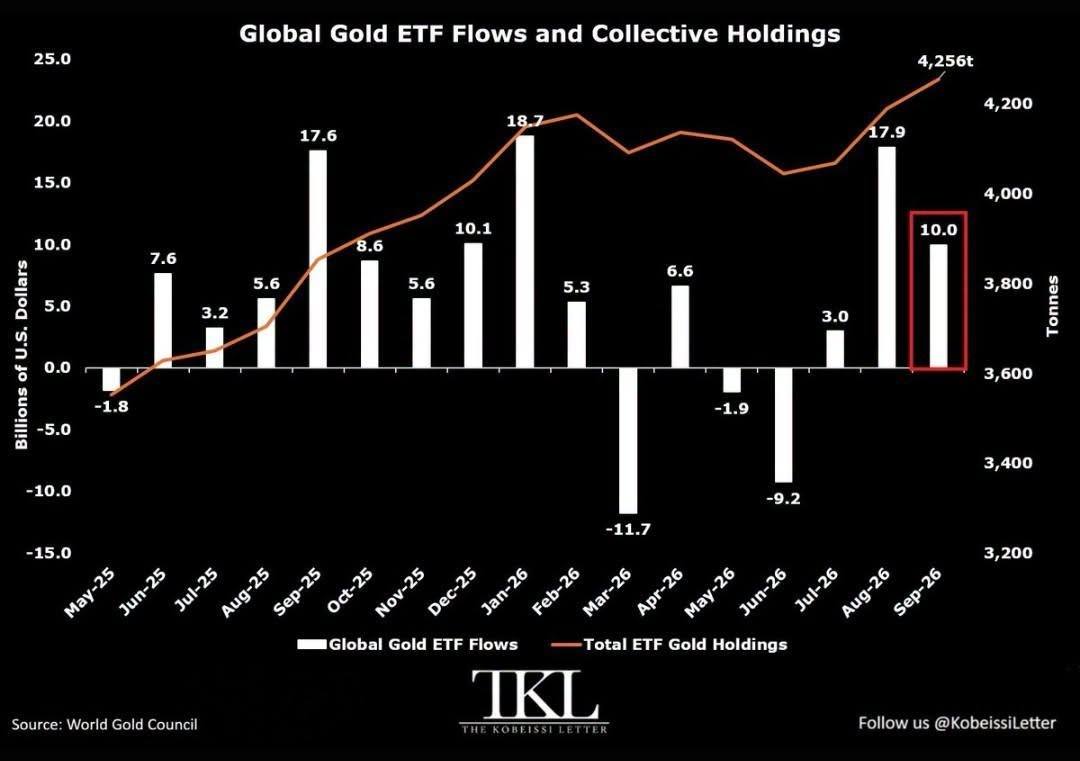
Source: World Gold Council, Capital Flows into Global ETFs Backed by Physical Gold
Gold ETFs backed by physical gold also deserve attention. After a period of weaker activity, Western institutional investors have started to return to these funds and we have seen significant capital inflows. August was historically one of the strongest months ever, and above-average inflows continued in September.
However, caution is needed when interpreting the data. The growing share of gold in global reserves does not automatically mean that central banks are massively selling dollars and buying gold. The share may also be growing because the price of gold is growing faster than the value of other reserves. For example, the International Monetary Fund points out that a significant part of the growth in the value of gold in reserves between 2018 and 2025 was related to the revaluation of already existing stocks.
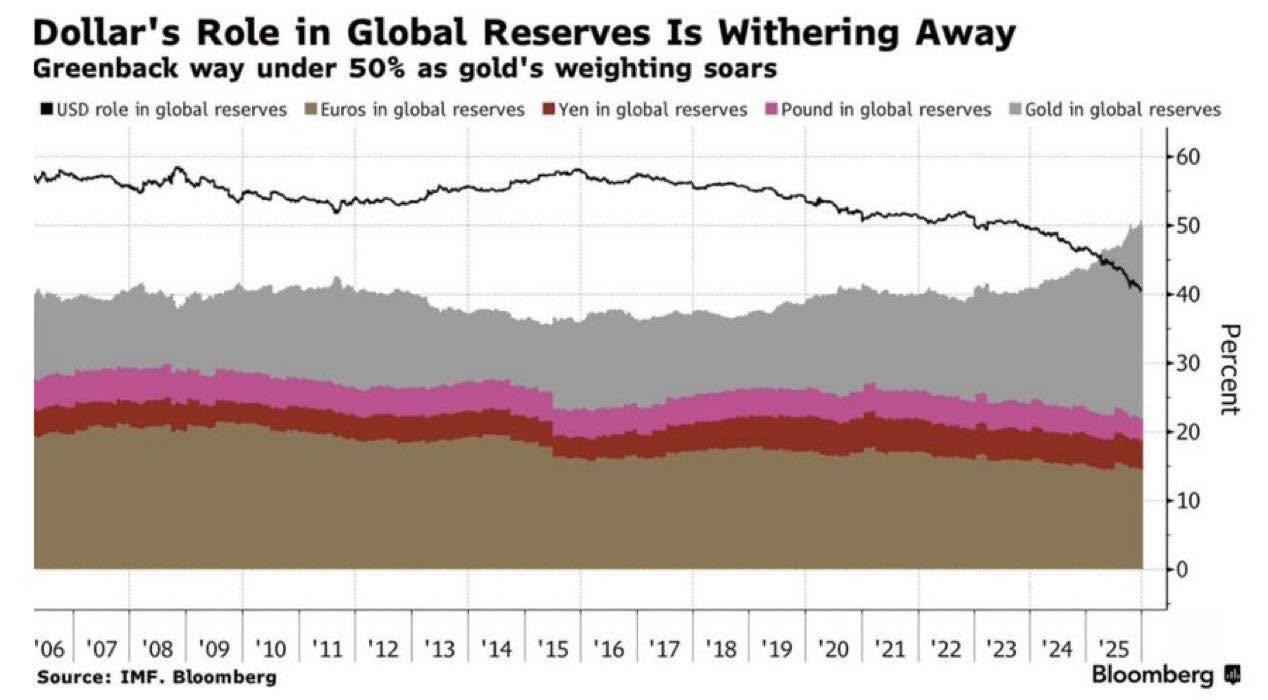
Source: IMF, Bloomberg, development of the share of gold in global reserves
What do the positions of large speculators show?
In addition to fundamentals, it is also interesting to monitor the positions of major players in the futures market. CFTC data shows that hedgeManaged M fundsoney still hold significant net long positions in gold. At the same time, there is no significant influx of new buyers yet that could surpass the previous maxima in the number of open contracts.
On the contrary, the number of contracts has been decreasing in the recent period in the medium term. This may indicate some restraint on the part of large investors. Pro It will therefore be interesting to see whether this trend reverses and new long positions start to return to the market. Their return could be an important confirmation of further growth.
The $4,100 and $4,300 levels will be key
From a technical perspective, attention is now focused on several price levels. The first important support is the zone around $4,075 to $4,125 per ounce, which has so far managed to stop the decline after the inflation data release. If this area fails, space would open up to the psychological level of $4,000 and then towards the area around $3,700.
On the contrary, to restore stronger growth momentum, it will be important to overcome the $4,200 mark and then confirm a breakout of the $4,300 band. A return above these levels could indicate that the current correction was only a short-term reaction to macroeconomic data.
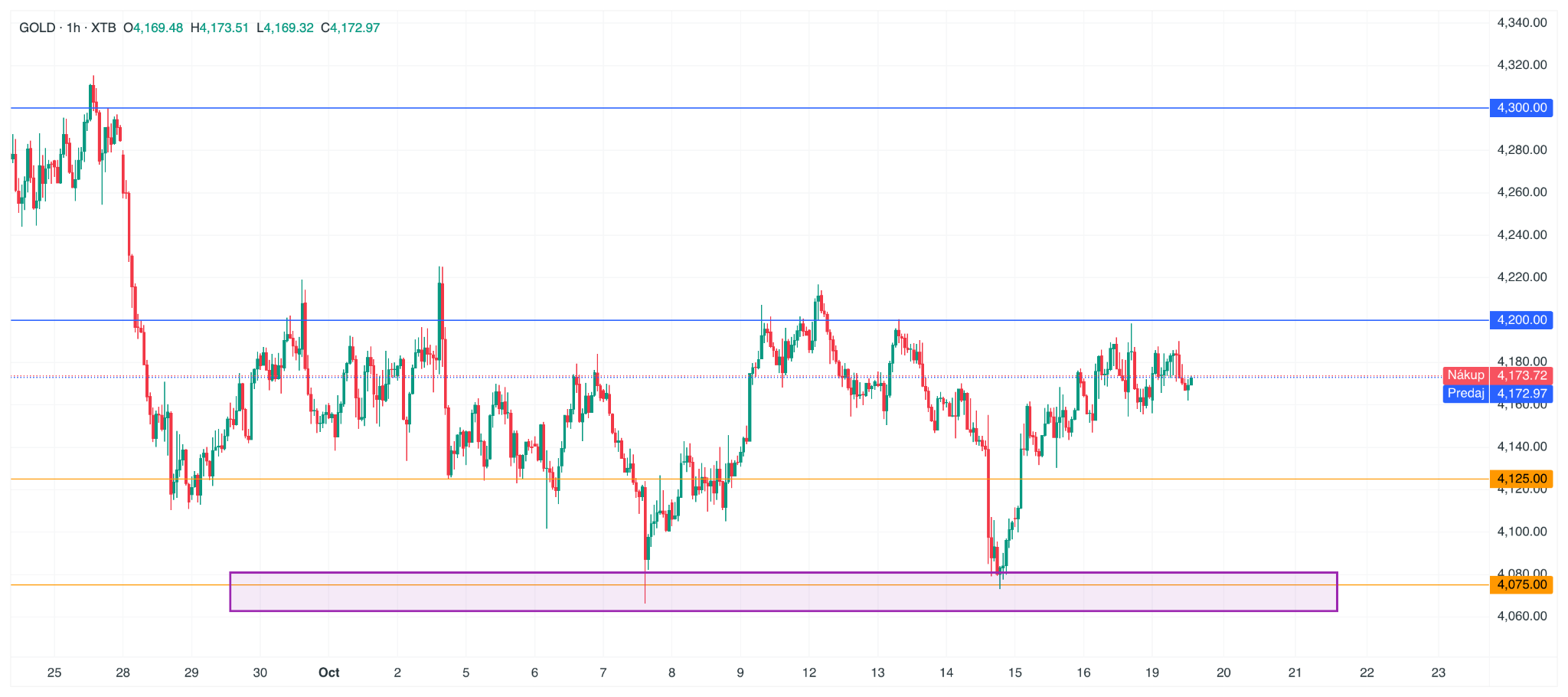
Source: Own analysis, xStation 5, GOLD price chart with marked levels of traders' interest
Gold is entering an interesting phase. In the short term, higher inflation, a stronger dollar, and higher bond yields are not doing it any favors. But the longer-term picture remains significantly more complex. Central banks continue to diversify their reserves, institutional investors are returning to gold ETFs, and geopolitical and fiscal uncertainty has not disappeared.
Further developments will therefore not depend on just one inflation number. The key will be the combination of US yields, the dollar, expectations around the Fed and continued capital flows into gold. It is their development that may decide whether the current correction will remain a short-term fluctuation or whether gold is preparing for another significant movement.
You can find a complete price chart analysis, detailed methodology for working with the COT report, and practical scenarios for investors and swing traders in new video from XTB.
If you are interested in trading or investing in gold, XTB has prepared a free e-book How to buy or sell gold at XTB, in which you will find all the necessary information about this commodity.
CFDs are complex instruments and, due to the use of leverage, come with a high risk of rapid financial loss. 77% of retail investors have experienced a loss. You should consider whether you understand how CFDs work and whether you can afford the high risk of losing your funds. Investing is risky, invest responsibly.