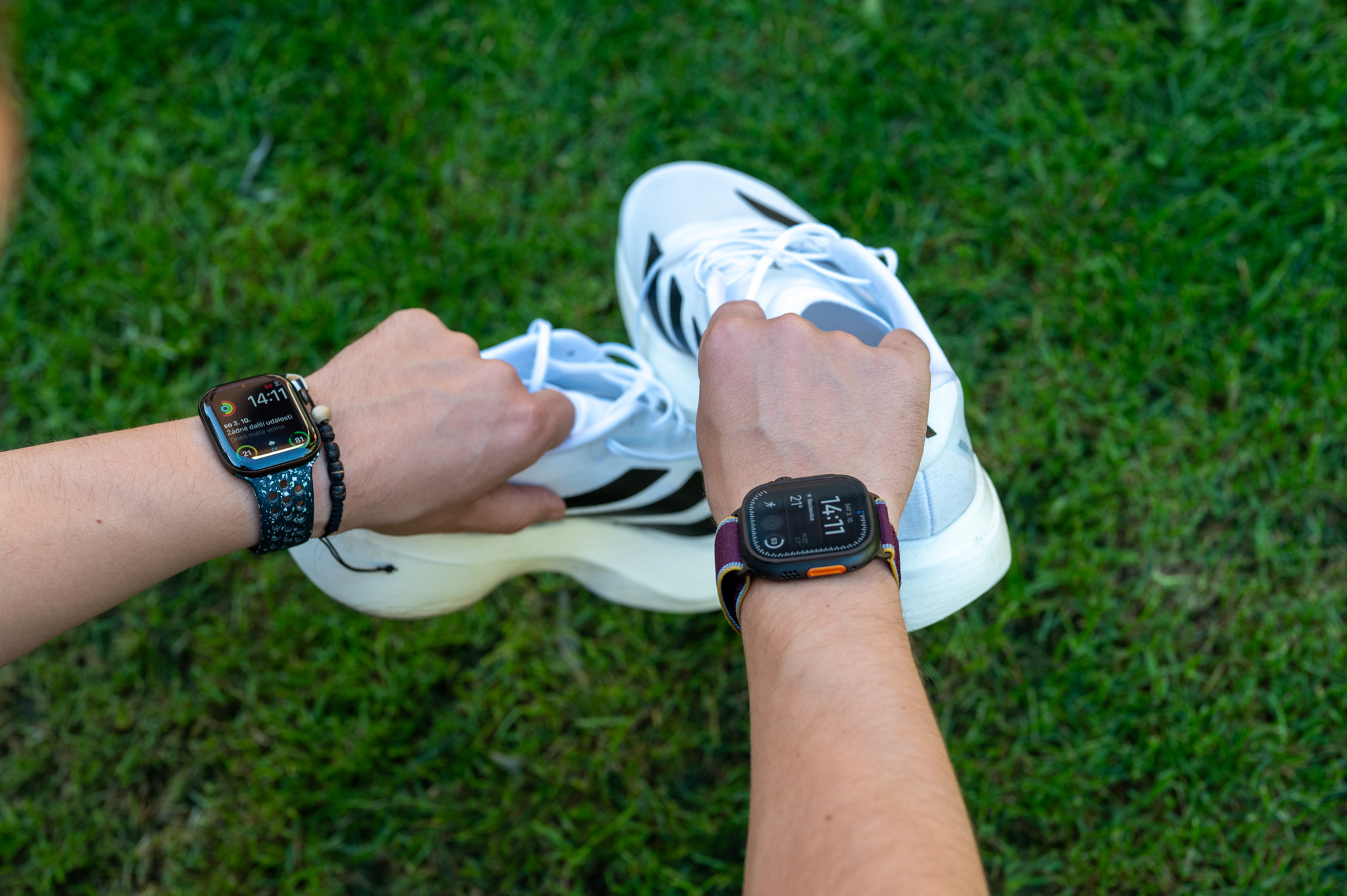
My brother and I go running together quite often, and since I now have both available for testing, Apple Watch Series 12, so Apple Watch Ultra 4, I thought I would use one of our shared runs to do a rather interesting comparison. Both models can of course record runs using GPS, but technically their solutions are not the same. While the Series 12 uses precise GPS L1, Ultra 4 have accurate dual-frequency GPS L1 and L5, which should cope better especially in more complicated environments. And since one of our running routes mostly runs along city streets, i.e. around houses and other potential obstacles for GPS signal, I think this was quite an interesting opportunity to find out whether the difference between the two solutions is noticeable in practice.
You might be interested in
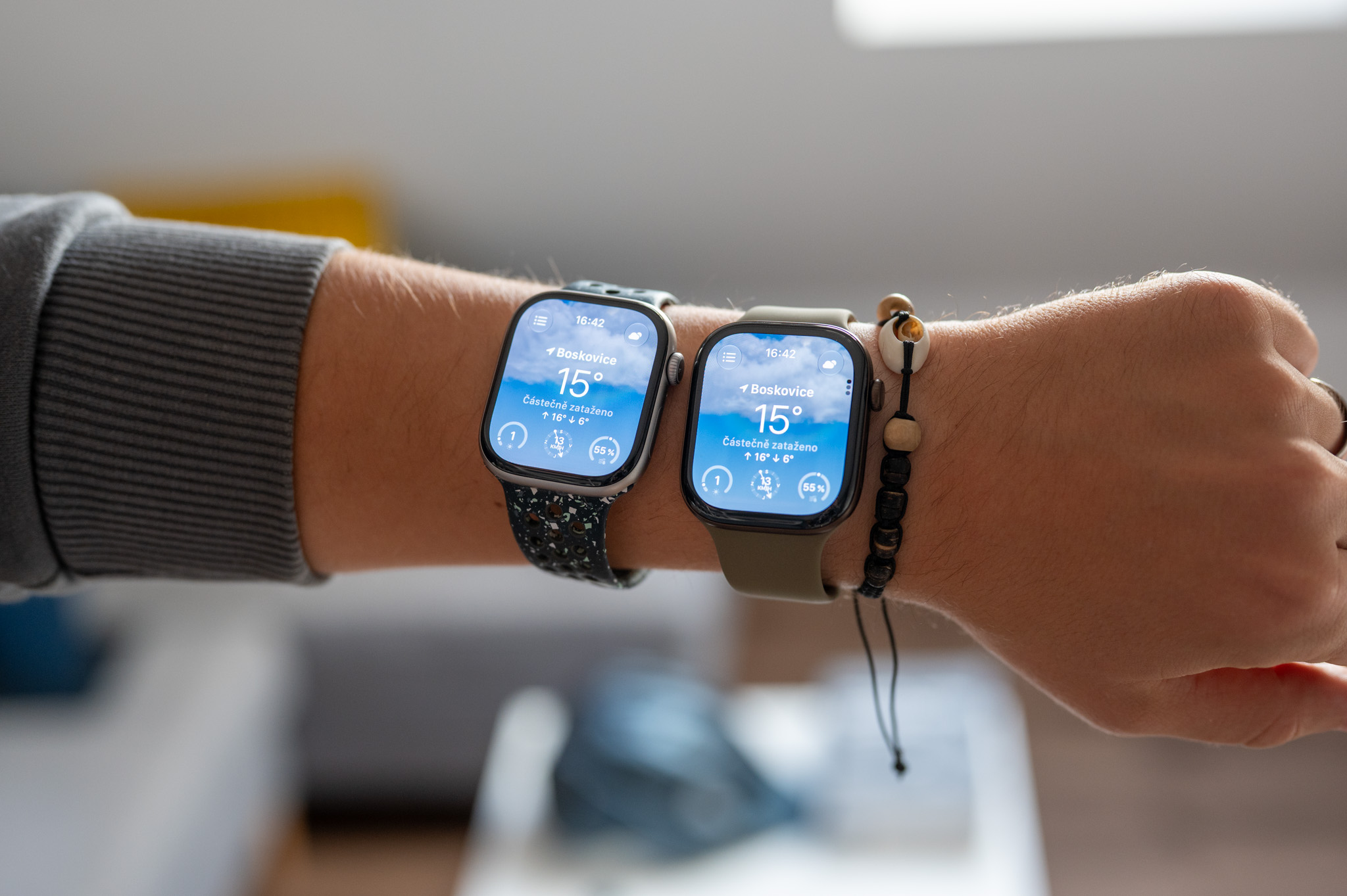
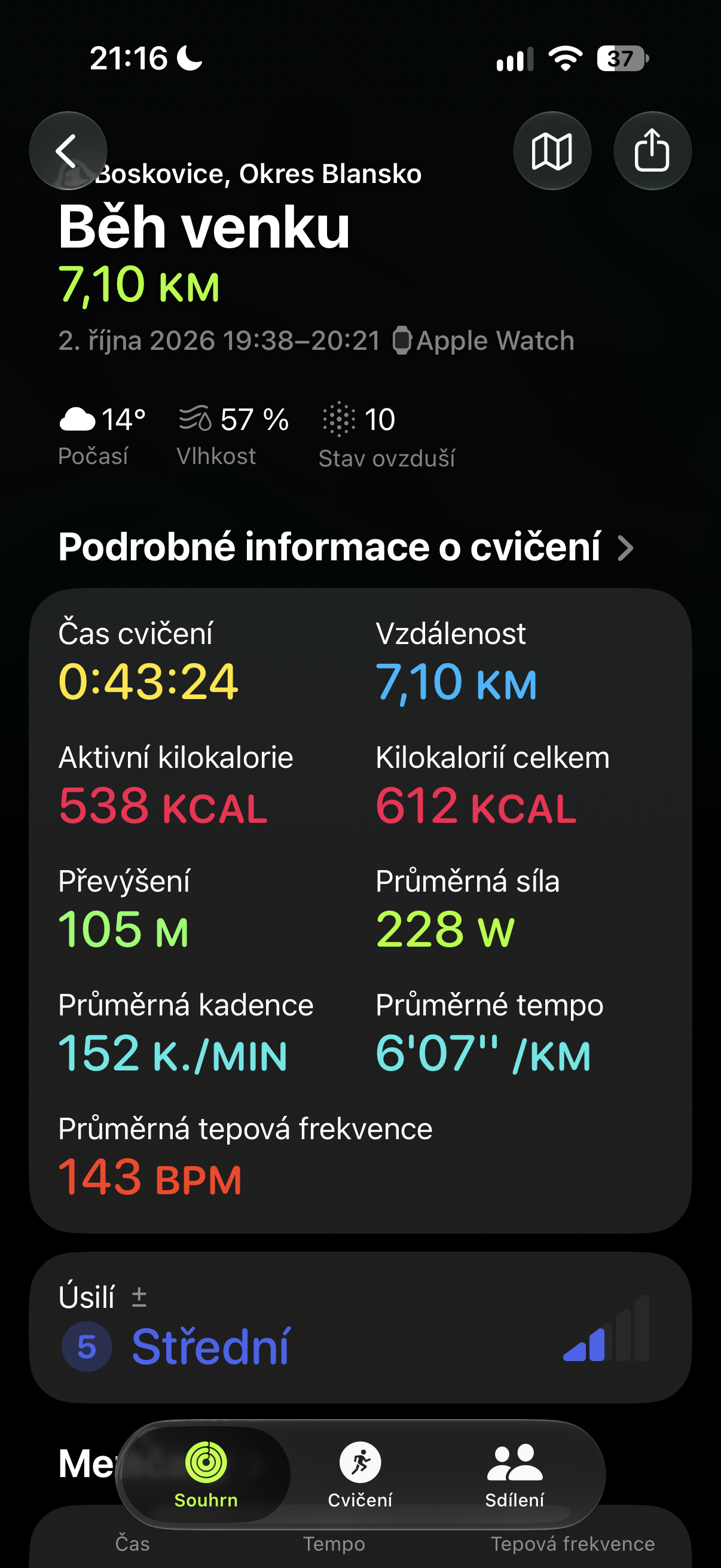
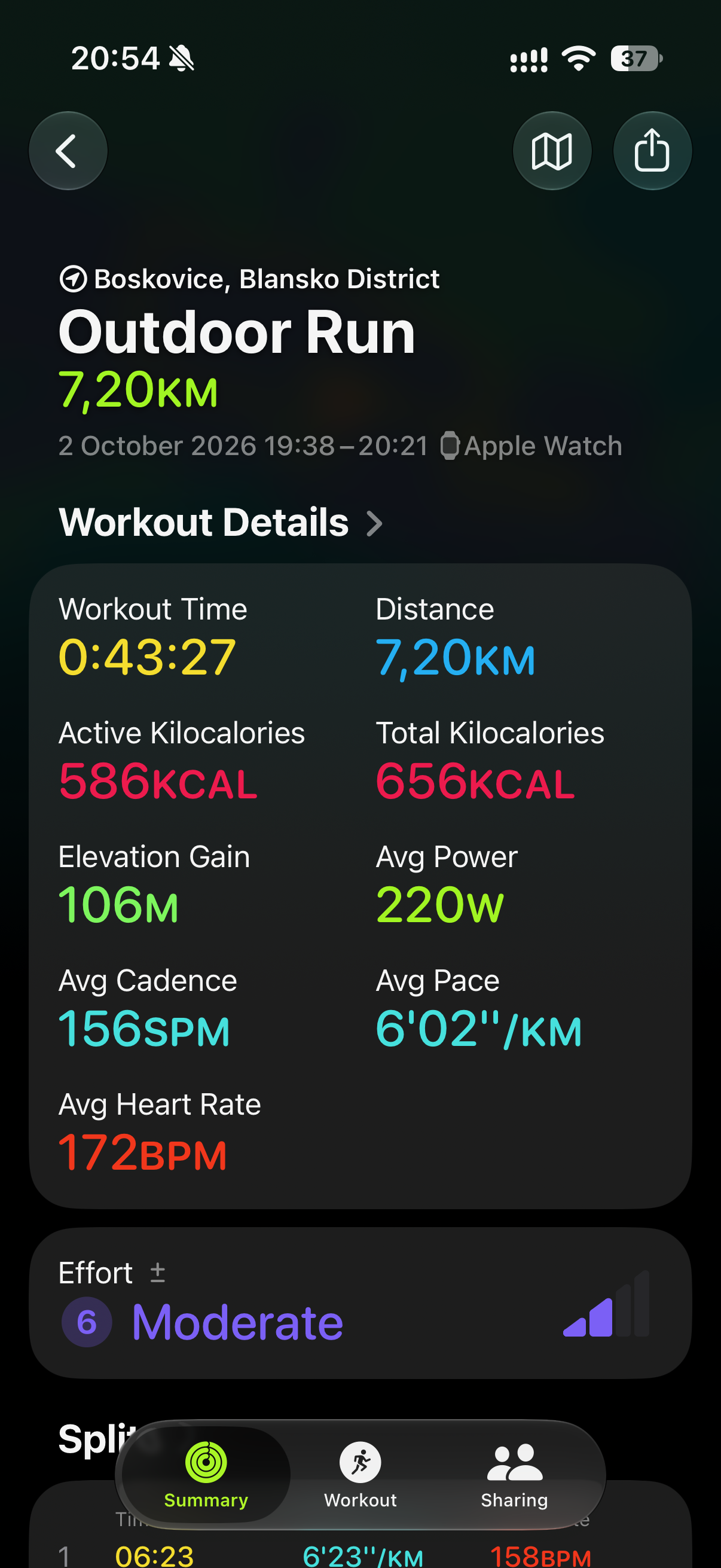
The conditions for comparison were practically ideal. We ran the entire route together, side by side or maxat least a few meters apart, and we started and ended both recordings at practically the same time. Apple Watch Ultra 4 nakonec recorded a time of 43 minutes and 27 seconds, while the Series 12 recorded 43 minutes and 24 seconds. The elevation also matched almost perfectly, as Ultra 4 measured 106 meters, Series 12 105 meters. But once you look at the distance, the agreement ends, perhaps a little surprisingly. Ultra 4 showed 7,20 kilometers, Series 12 stopped at "only" 7,10 kilometers. Yes, I admit that at first glance 100 meters may seem like a negligible difference, but in reality we are talking about approximately 1,4% of the entire route, which in my opinion is not a small amount, and if you are training for a half marathon or something longer, these last missing meters can hurt quite "sharply".
Dual frequency GPS Ultra makes sense
The difference is also clearly visible in the calculated pace. While Ultra 4 showed an average pace of 6:02 min/km at practically the same time, Series 12 calculated 6:07 min/km due to the shorter measured distance, even though we ran together the whole time. This is exactly where the difference between the GPS technologies used begins to show, from which one subsequently tends to conclude whether one ran at a good or bad pace.
As I wrote above, Apple Watch Series 12 rely on GPS L1, while Ultra 4 can operate simultaneously with frequencies L1 and L5. The advantage of the dual-frequency solution is Apple This is especially true in urban areas, where buildings can block or reflect the satellite signal. In such cases, the watch must logically determine its position in much more complicated conditions than, for example, when running on an open field path. In such a situation, dual-frequency GPS is therefore better suited to more accurate position determination and therefore more accurate recording of the actual route.
Looking at the map records, however, the Series 12 needs to be praised, as their GPS track certainly doesn't look bad either. There are no significant drifts or meaningless position jumps on it. That is, when I look at the map in more detail, I find a few places where the recorded route deviates quite a bit from the place where we ran (for example, when the route is led through places where there is no sidewalk, while we ran a few meters away on the sidewalk bordering the road).
Gallery
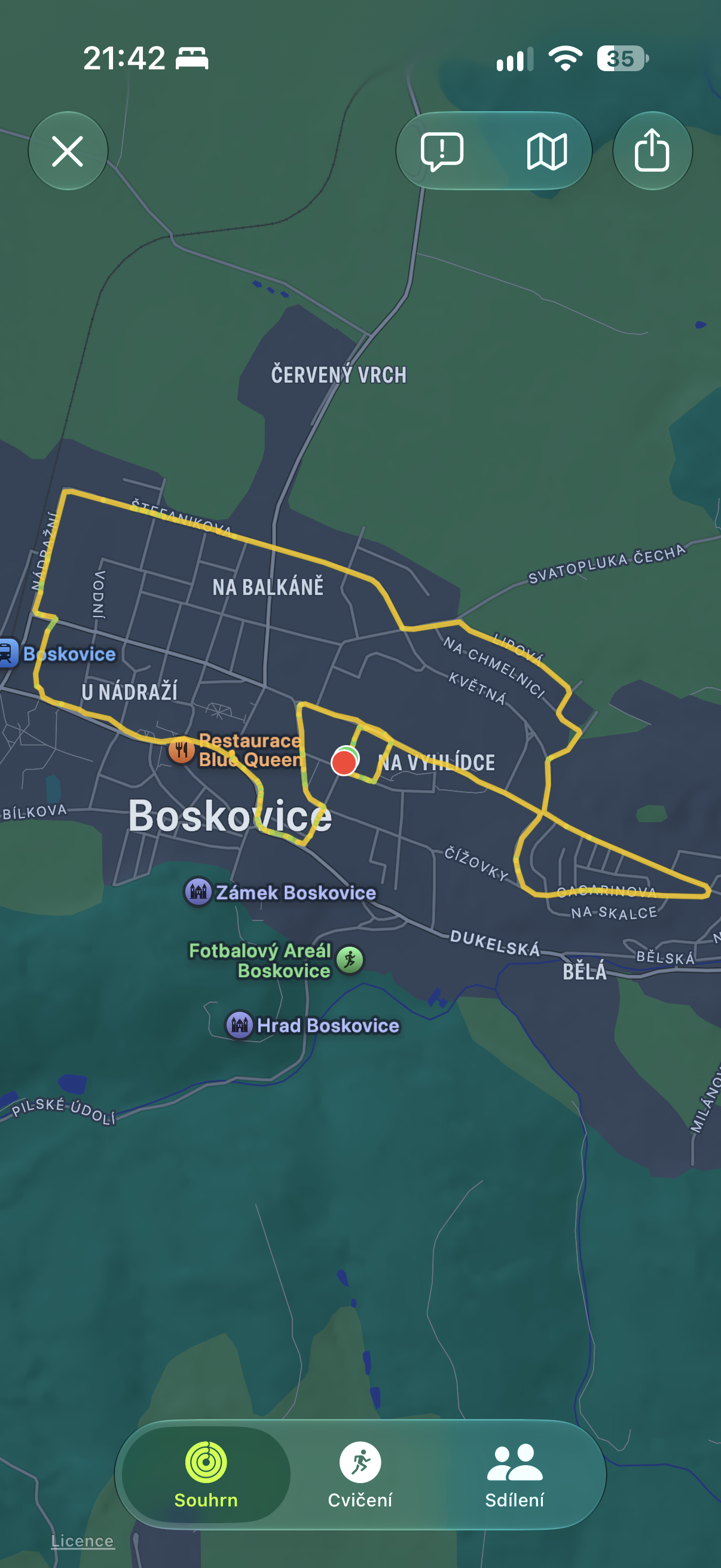
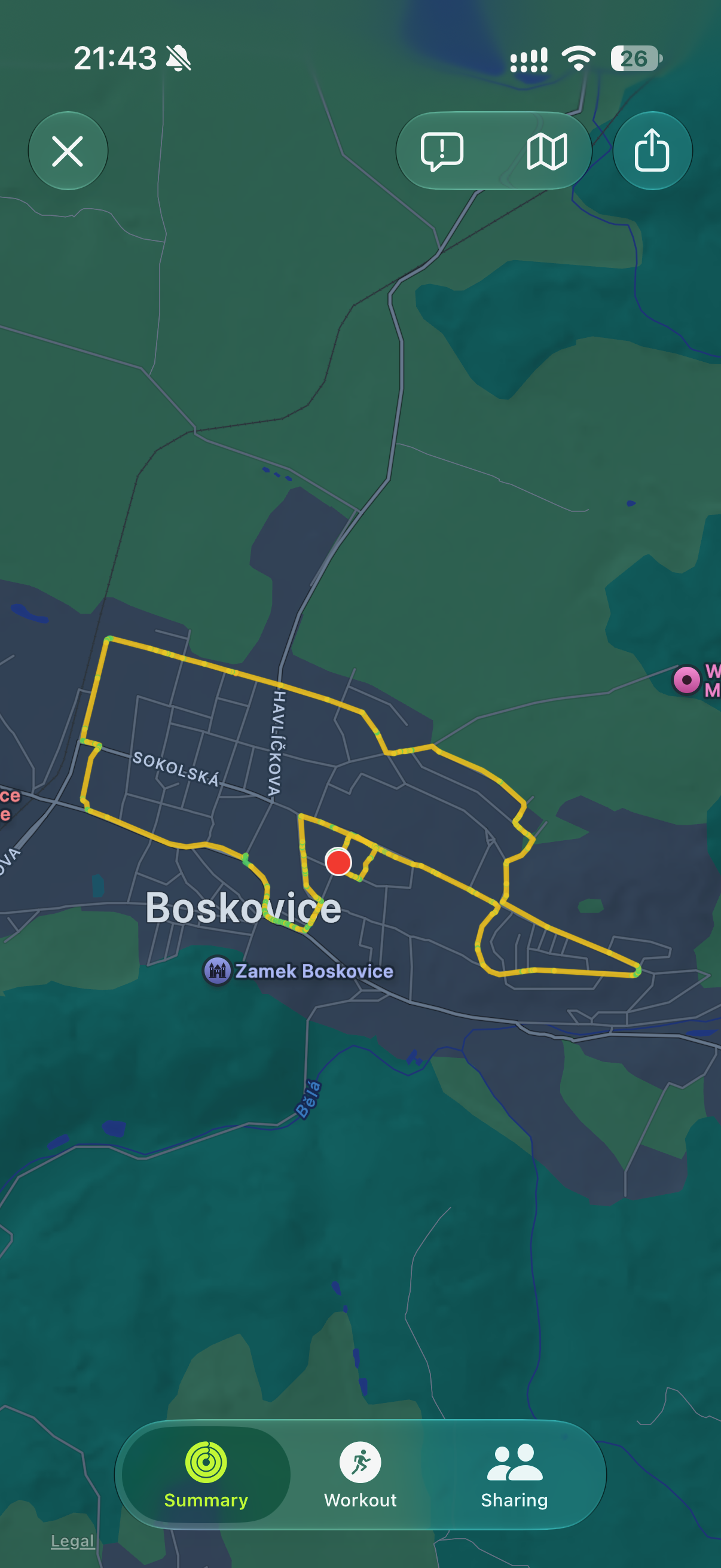
ProHowever, the problem can be much more subtle and, as a result, easier to explain. It is often enough for the watch to slightly "cut" the curve or smooth out the GPS track a little in some places. In one place, this may only cause a loss of meters, but if you have a large number of curves on a seven-kilometer route, which we have quite a few, the resulting differences gradually add up.
You might be interested in
The reality is very close. Ultra 4 – so, about
In order to have at least some other value with which to compare the results of both watches, I tried to click our route as accurately as possible into online maps, which calculated its length to be approximately 7,19 kilometers. Of course, this figure cannot be considered an absolutely accurate measurement either, because it depends on how exactly a person enters the individual route points, where exactly on the road or sidewalk they ran, and a whole host of other small things can play a role. However, as an orientation check, the result is quite interesting.
Ultra 4 measured 7,20 kilometers, so they only differed from the value on the maps by about 10 meters. Series 12, with its 7,10 kilometers, was about 90 meters lower. What is even more interesting to me is the fact that this is not some one-time peculiarity of Series 12. When I looked at my history of runs on the same route, I found that last year's runs measured a very similar distance. Apple Watch Series 11, with which I also moved around 7,1 kilometers.
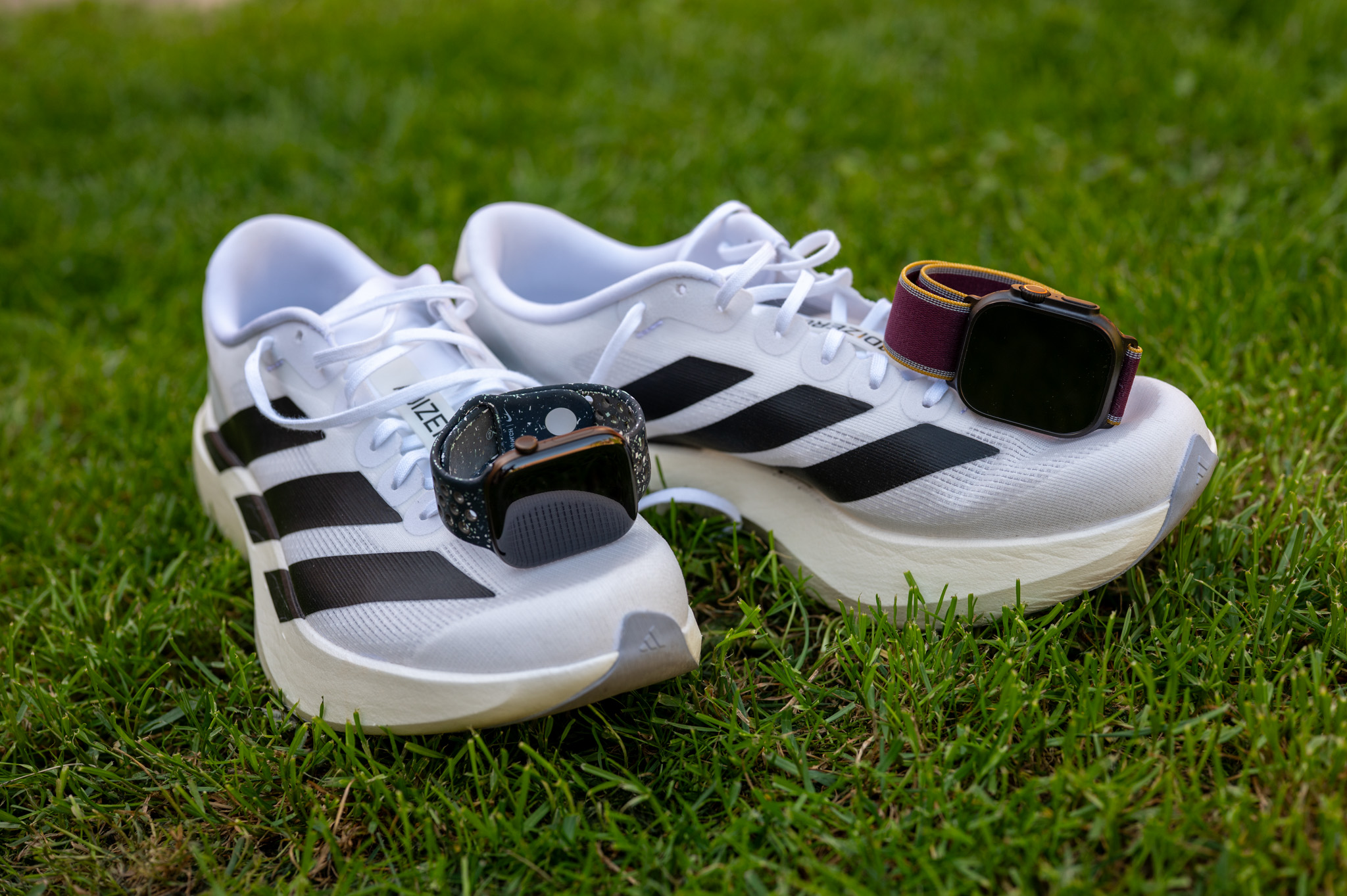
Of course, one run cannot be used as a laboratory test of GPS accuracy, and it is certainly not possible to say that every Ultra will be more accurate by exactly a specific percentage in all circumstances. But the result very nicely shows the practical advantage that dual-frequency GPS has in models Ultra brings. So if you run mostly in open areas, the difference may be significantly smaller and you may not even notice it. However, once you move between houses, in the forest or in general in an environment with poor satellite reception conditions, a better GPS may make sense.
So, if you care about the most accurate recording of your route, distance and calculated pace when running, Apple Watch Ultra have one relatively fundamental technical advantage over the classic Series, which does not only apply to the latest Ultra 4, as dual-frequency precise GPS L1 and L5 are offered by many Ultra for a long time. Our joint run has shown that it is not just an unnecessary item in the technical specifications, but a difference that can be really seen in everyday use. And honestly, this thing is starting to make me more and more convinced to switch from the Series to the Series Ultra I'll switch after years because it makes sense in many aspects for an active lifestyle.