Commercial message: Gold has returned to the spotlight after a quieter period in June and July. After hovering around $4,050 an ounce, its price climbed above $4,400 in early August and rose to $4,440 an ounce on Wednesday after a significant afternoon rally.
The continued growth is driven by a combination of factors. One of the main ones is the ongoing geopolitical uncertainty associated with the conflict between the United States and Iran and the situation around the Strait of Hormuz, which is one of the most important routes for the transportation of energy raw materials. Any further deterioration of the situation increases the demand for safe assets, to which gold traditionally belongs.
Uncertainty about the future of the US economy and the Federal Reserve's monetary policy also plays an important role. When investors expect interest rates to fall, gold usually gains support, as lower yields reduce the attractiveness of interest-bearing assets and increase interest in precious metals.
Bond yields remain a key factor
In addition to geopolitics, investors are primarily monitoring developments in the US bond market. The yield on 10-year US Treasury bonds has been miniThe yield on the 30-year Treasury note rose from around 3,94% to 4,7%. The yield on the 30-year Treasury note even rose above 5,3%, its highest level since 2007.
Higher yields pose a certain obstacle for gold, because holding gold itself does not provide any regular income. If investors can obtain attractive yields, for example, on government bonds, the so-called opportunity cost of holding gold increases.
But on Wednesday, there was a significant turnaround. miniFinnishancannounced that miniThe Fed will roughly double the volume of long-term bond buybacks. The 30-year bond yield subsequently fell by 9 basis points to 5,19%, the dollar weakened, and gold rose from around $4,365 to $4,440 per ounce in a short period of time.
The weaker dollar and falling yields have given gold an additional boost to growth.
Chart: Gold price development (GOLD, H1)
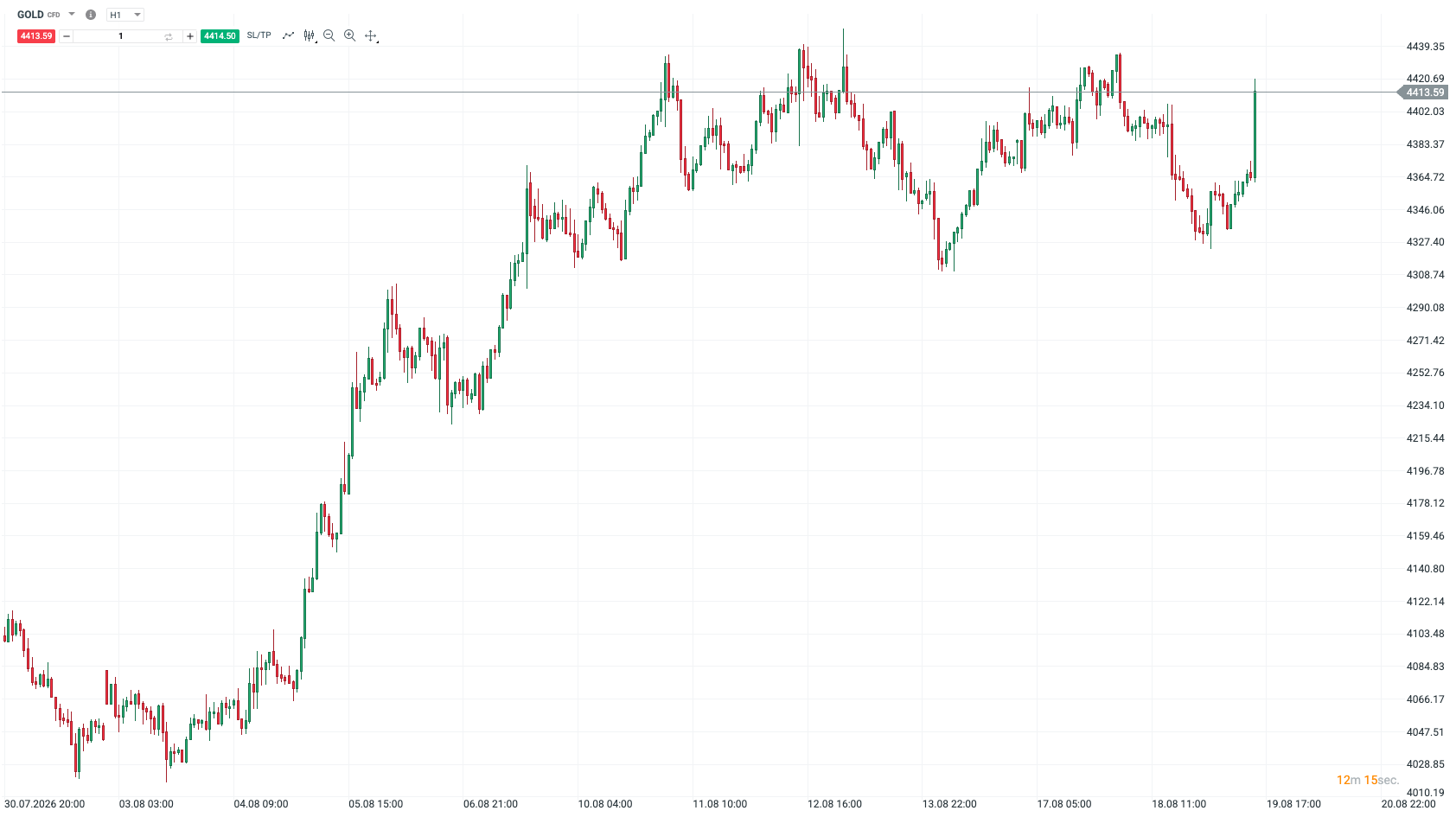
Source: xStation5
Central banks continue to support demand for gold
Central bank activity also remains an important long-term factor. According to the World Gold Council, central banks bought a net 289 tonnes of gold in the second quarter, representing a year-on-year increase of 62%.
Poland was one of the major buyers, and China also continued to buy. Although the total volume of purchases during the first half of the year fell short of the record values of previous years, it remains very high from a historical perspective.
The main reason for these purchases is the effort to diversify foreign exchange reserves and reduce dependence on traditional reserve assets, especially the US dollar. It is the growing indebtedness of major economies and geopolitical uncertainty that are supporting central banks' interest in physical gold.
Investment demand has been more mixed in recent months. Gold ETFs saw an outflow of around 45 tonnes of gold in the second quarter, but their overall flows remained slightly positive for the first half of the year.
Further growth is not a given
Although the long-term outlook for gold remains positive, the path to further maxThe short-term outlook will be primarily driven by the further development of US yields, the dollar exchange rate and expectations regarding the Fed's actions.
If bond yields continue to fall and the dollar remains under pressure, gold could gain further support. Conversely, a return to recent yields maxA sharp rise in the dollar or a more significant strengthening of the dollar could bring about a correction.
However, in the long term, continued central bank purchases, uncertainty around public finances, andancmajor economies and geopolitical risks. Any further escalation of the situation in the Middle East could open up space for gold to new historical highs. maxto the imams.
Gold is just one of many commodities whose prices are influenced by a combination of supply, demand, geopolitics and economic developments. If you want to better understand what drives the prices of the most famous commodities and get an overview of the factors that influence their development, download the free XTB e-book "Top 7 Commodities".
CFDs are complex instruments and, due to the use of leverage, come with a high risk of rapid financial loss. 77% of retail investors have experienced a loss. You should consider whether you understand how CFDs work and whether you can afford the high risk of losing your funds. Investing is risky, invest responsibly.