A warning is spreading on social media about a dangerous trick that allows fraudsters to create an internet address that looks exactly like a real one. Apple.com. The user checks the address bar, sees nothing suspicious, and enters their login details without hesitation. However, instead of Applu directly to the attackers. So-called homographic attacks do exist and are not an internet invention. However, viral posts often forget one important fact – domain registrars and modern web browsers have been actively fighting against such attacks for many years.
The whole trick is based on the fact that some letters from different alphabets look practically the same at first glance. A typical example is the Latin and Cyrillic alphabets. While a person can see two completely identical letters, a computer considers them to be two different characters. In theory, a fraudster could create a domain resembling Apple.com, in which it would replace some characters with their visually similar alternatives. A user would not even have to know at a quick glance at the address bar that they were not on the real site Appyou.
Internet addresses can contain characters from different alphabets
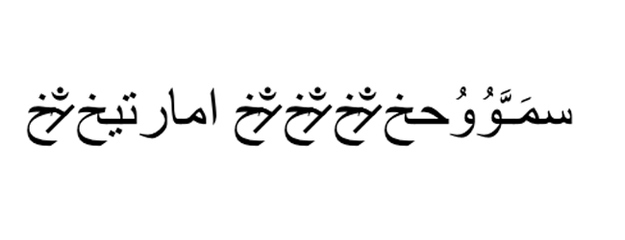
The problem is caused by so-called Internationalized Domain Names. The Internet originally worked mainly with basic Latin characters, but over time, the need arose to allow people from other parts of the world to use domains. Internet addresses can therefore contain, for example, characters used in Cyrillic, Chinese, Arabic and other languages.
To enable the DNS system to work with these addresses, a technology called Punycode is used. A domain containing special characters is converted into a technical format that often begins with the characters xn--. ProThe browser can then display its normal, more readable form to the user. However, this is where the potential for abuse arises, as some characters can look almost identical to normal Latin letters.
It is not true that anyone can create a fake one today. Apple.com
However, viral posts on social media greatly simplify the situation. They create the impression that all you have to do is go to any registrar, replace one letter in the address Apple.com with a Cyrillic character and you instantly get the perfect tool for stealing passwords. But it's not that easy these days.
Domain registries and registrars use rules to prevent such attacks. For example, they limit dangerous combinations of characters from different fonts. It is therefore not automatically assumed that any combination of Latin and Cyrillic will be able to be registered without any problems. This is also what people are pointing out in the comments under the viral post, and in this case they are right.
View post on Instagram
Another layer of protection is provided by the internet browsers themselves. Safari, Chrome, Firefox and other modern browsers use mechanisms to detect suspicious domains. If the browser evaluates an address as potentially dangerous or confusing, it may display it directly in Punycode format instead of the trustworthy-looking name. The user will then not see, for example, a perfectly good-looking Apple.com, but a significantly more suspicious combination of characters starting with xn--.
ProSo do similar attacks still exist?
However, protection from registrars and browsers does not mean that the problem of fake domains has completely disappeared. Fraudsters are constantly looking for new ways to confuse users. They do not necessarily have to create a perfectly identical copy of the Internet address. Often, a domain that only resembles the real address is enough.
For example, attackers swap two letters, leave one out, add a hyphen, or create a longer address that includes the name of a well-known company. At a quick glance, especially on a small phone screen, such a domain may appear trustworthy enough. This type of attack is known as typosquatting and is still a common technique used in phishing campaigns today.
Moreover, the fake website address itself is only the beginning of the entire attack. The scammers then create a copy of the real website AppHello, Google, Microsoftu, banks or other well-known services. It is not too difficult to copy the logo, colors, buttons and login form today. If you add a trustworthy-looking domain and a message claiming that the user's account will be blocked, for example, the resulting scam can be very convincing.
So the viral post doesn't lie, but it greatly simplifies reality.
The very idea of a post spreading across social media is based on a real security problem. Homographic attacks exist, and the misuse of similar-looking characters poses a real risk. However, it is not true that anyone today could easily create a visually identical copy of an address Apple.com, bypass all registrar protections and then notchat view in any modern browser as a real website Appyou.
The reality is much more complicated. Registrars restrict the use of dangerous character combinations, and browsers have their own security mechanisms. However, there are still ways to create a domain that can confuse a user at a glance. Especially if they get to it via a link in a fraudulent email, SMS message, or social media post.
How to protect yourself from fake internet addresses
Checking the address bar itself is still important, but it should not be the only protection. A password manager is a very effective helper. It does not decide based on how the internet address looks to the human eye, but checks the actual domain. If you have a password saved for a real website Applu and you visit its fake copy, the password manager should not automatically offer you the saved login details on it.
It is also important to use two-step verification and be careful with links that come through emails or messages. For example, if you receive information about a blocked Apple account, a payment problem, or the need to immediately change your password, it is safer not to click on the attached link and open the service page manually.
So the viral warning is not a complete fabrication, but presents a real security problem in a much simpler and more dramatic way than it currently works. Homographic attacks exist, registrars and modern browsers against their simplest variaHowever, they use protective mechanisms. The biggest risks remain inattentive users, fake login pages, and increasingly sophisticated phishing campaigns.