
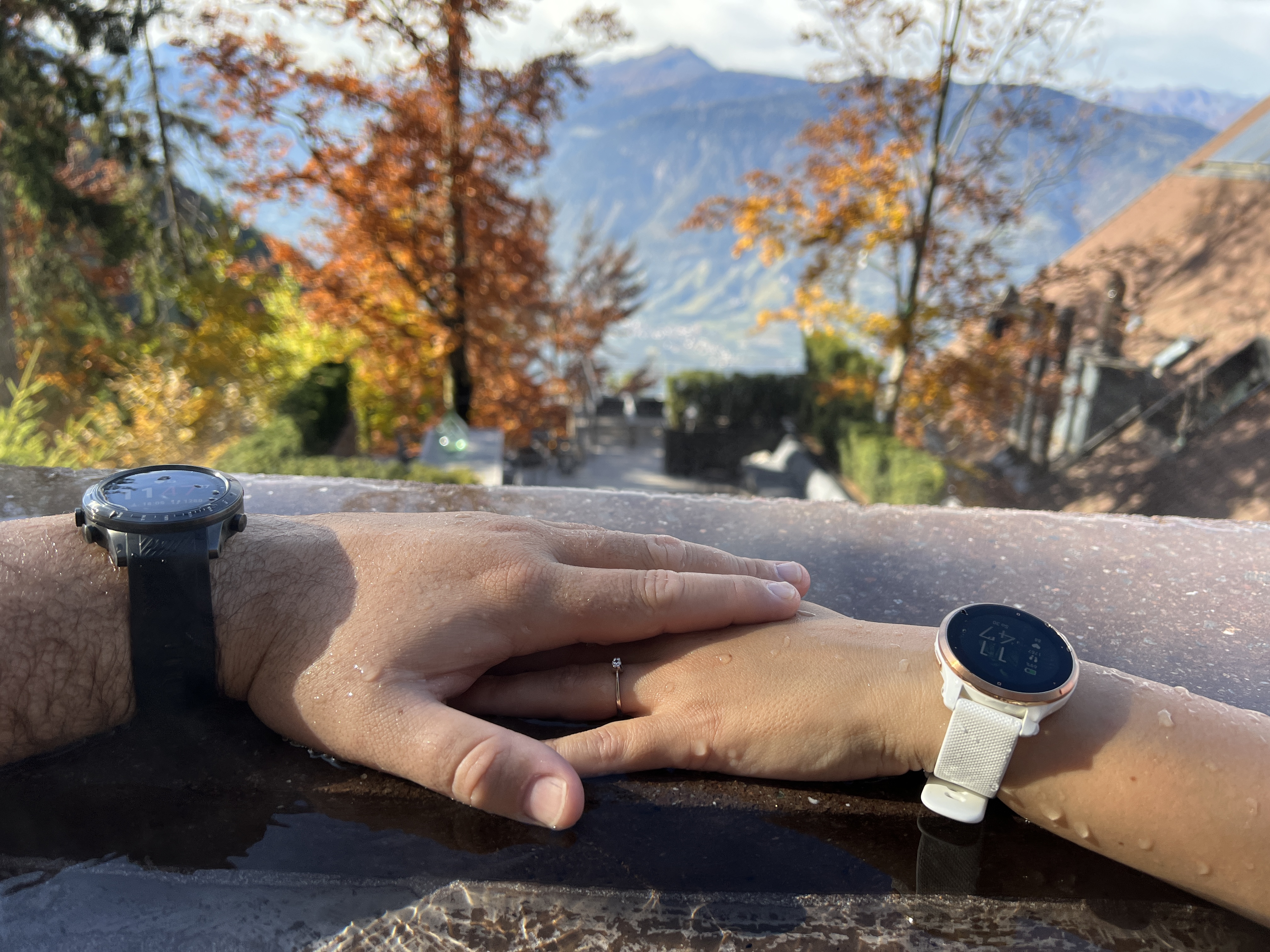
From time to time I bring foreign news about how to someone Apple Watch saved a life, possibly miniThey helped solve a health problem. I never thought that I would unfortunately have the opportunity to describe a similar story from my own experience. My mother has had asthma for many years and unfortunately also suffers from heart problems. I bought her a smart watch in the summer and although it is not entirely important for our story what model it was, for the sake of completeness I will add that it was specifically Garmin Venu 2sBy the way, my wife also uses them, and I myself wear them in nature and on the Garmin Marq circuit. Driver.
ProMy mom actually enjoys technology and, unlike me, uses it for 100 %, so he doesn't just look at the watch, but also at the app where he has an overview of all the data. With Garmin, it's not Health, but the Connect app. In it, you'll find information about your heart rate, breathing, sleep phases, and, among other things, what data he's recorded. pulse oximeter, with which almost all advanced smart watches are equipped today. When mom was looking at the statistics one day, she found out that during the day her blood oxygenation is 93% and at night it even drops to around 82%.
This is how Garmin watches record blood oxygenation
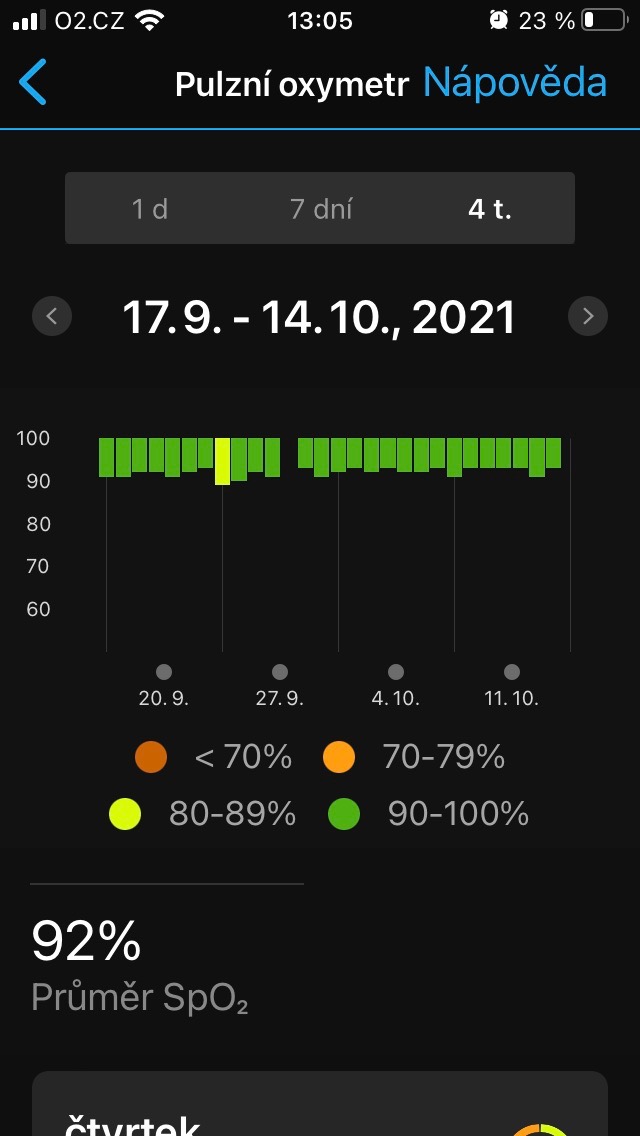
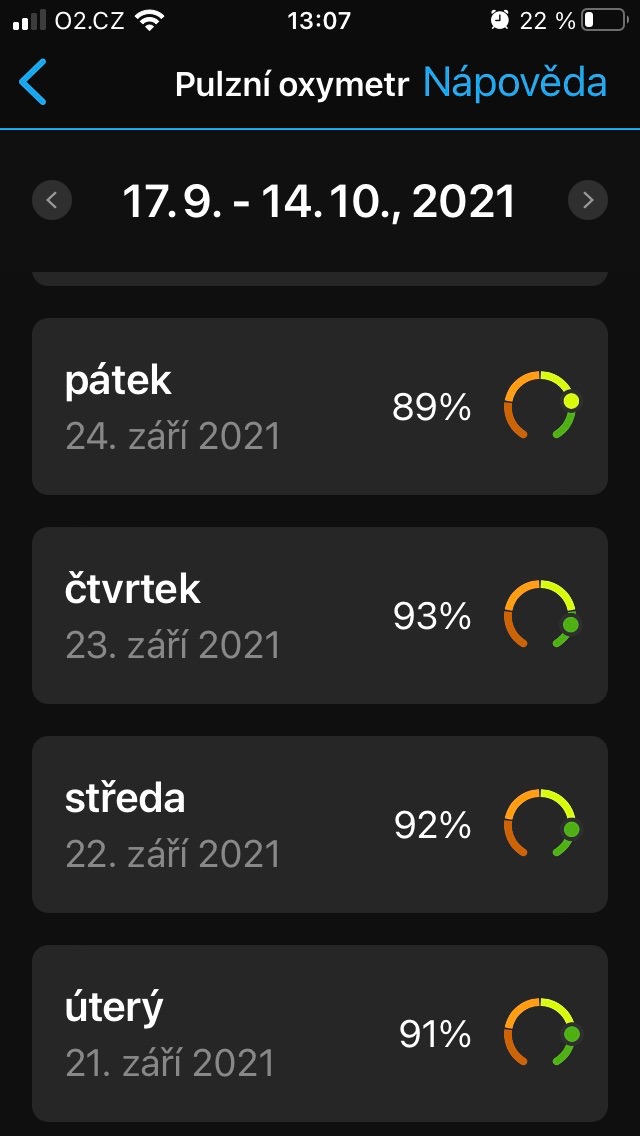
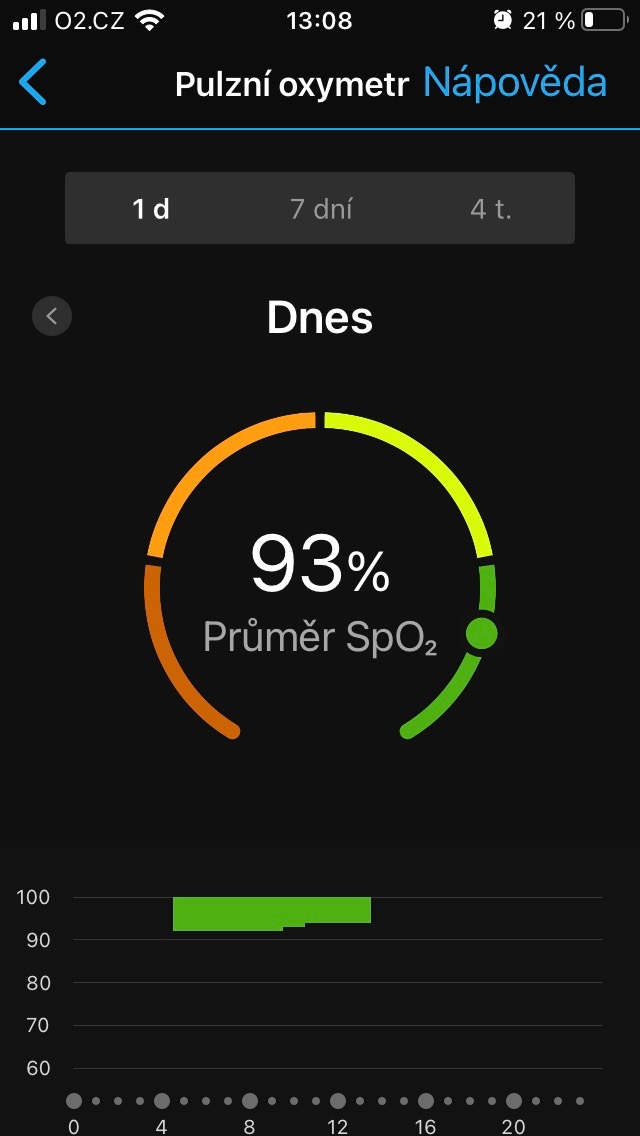
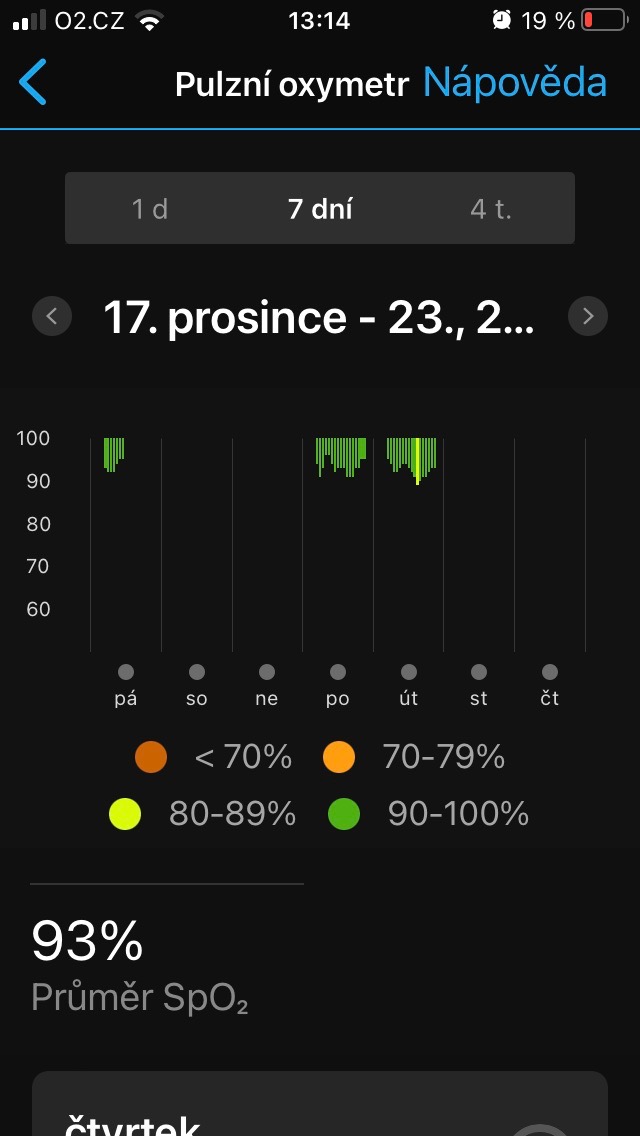
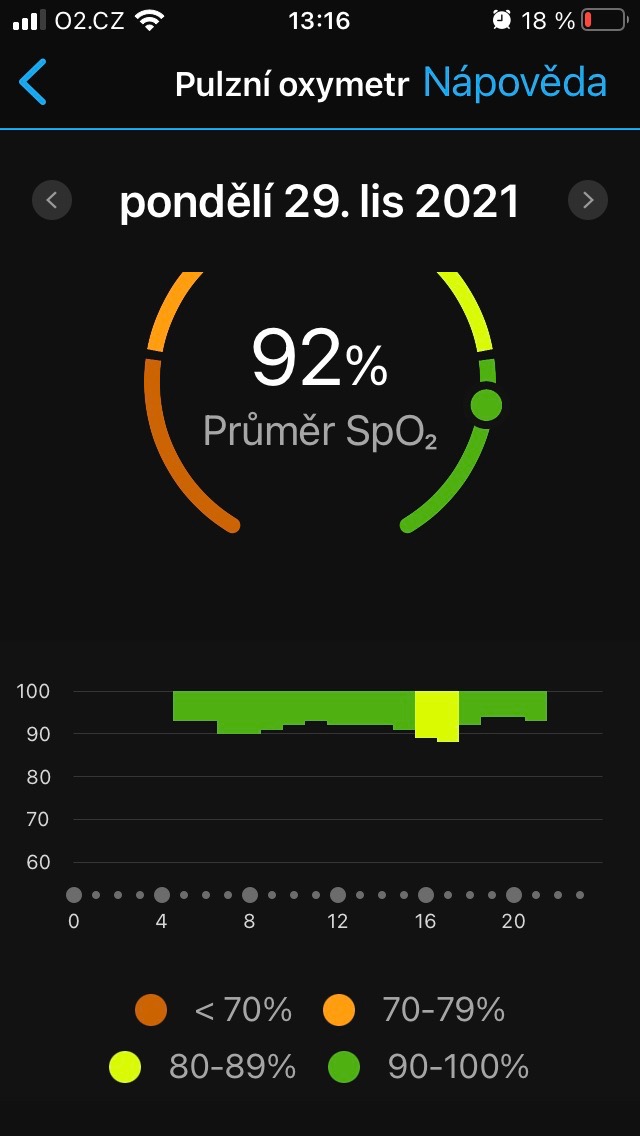
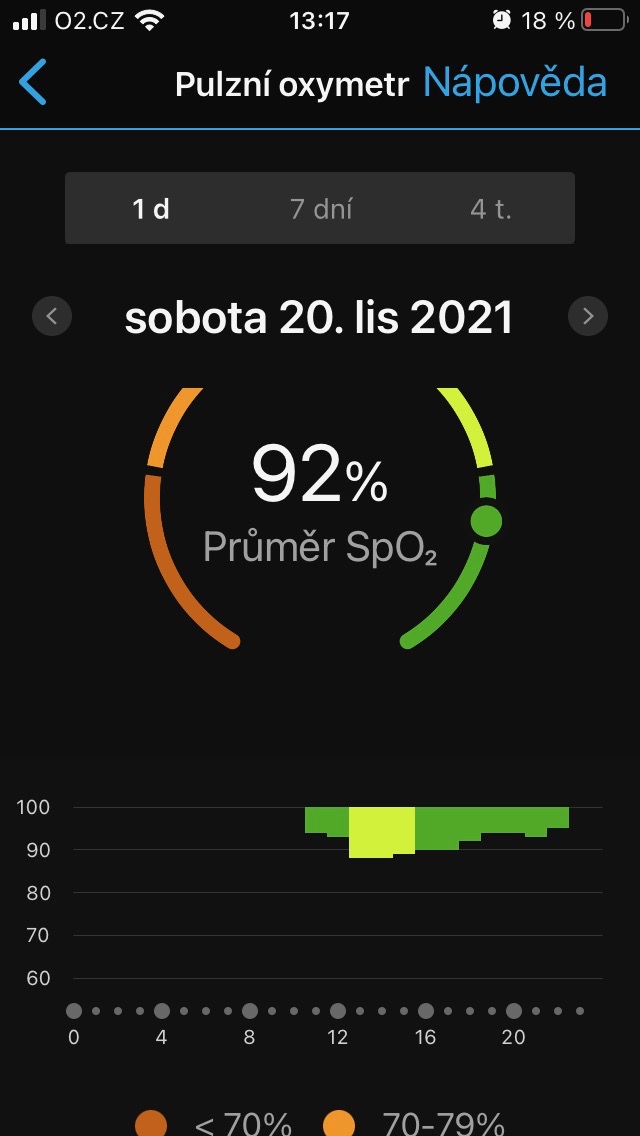
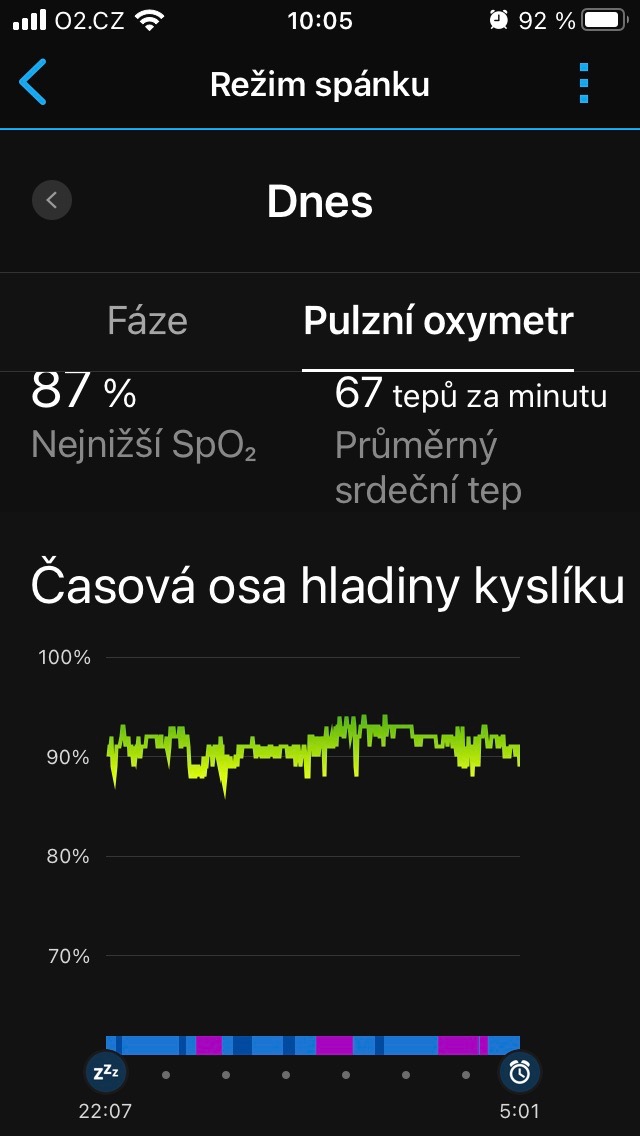
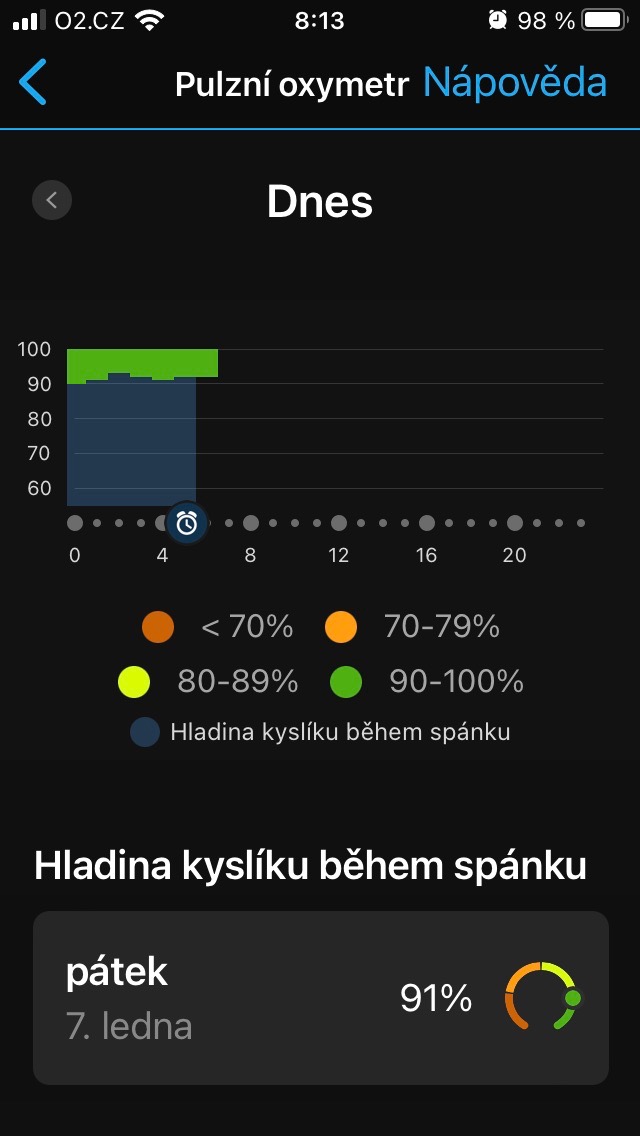
A healthy person should have these values between 95 and 98% and at the same time should have about 13 breaths per minute. Once you have significantly lower values, and since you pass out after 60% oxygenation of the blood, 83% is already a really low value, there are health problems. The most fundamental is the fact that, in addition to the fact that oxygenation affects your mood, alertness, ability to react and much more, it also causes cell death, especially brain cells. With the results, mom went to the pulmonary clinic, where she goes for asthma, and the doctor immediately sent her to the hospital for the night just because of the results from the watch, where professional devices will measure her to see if the watch really shows reality and, if so, they will solve the problem further.
It's great that thanks to technology we have the opportunity to find out things that we otherwise wouldn't know.ancor even observe at all, because when you go to the doctor and he decides to measure your oxygenation for some reason, he measures it when you are awake and, for example, my mother shows only a very small deviation from what is normal and no one would worry too much about such a small deviation. On the contrary, thanks to the smart watch, she found out that something was wrong and fortunately, doctors in the Czech Republic have come to the point where they recognize these technologies and are willing to send a person for another special examination based on their data, which will reveal whether the body is stopping working or, conversely, the watch is not working. Of course, the doctor looked at the long-term statistics and when she saw that the watch was showing the same data night after night for several weeks in a row, it was clear that there could really be a problem and not that something was measured incorrectly one night.
From time to time, try to look at the health records you have in your smartwatch apps and if you discover something that is regular and that is really significantly different from the norm, then don't be afraid to go to the doctor. However, definitely don't bother him with the fact that you once had a slightly elevated heart rate when you ran to the tram. It is really important to use common sense and only consult about things that are not normal. It can really help you, not only abroad, but fortunately also here. Pro For the sake of completeness, I will add that my mother is going for a special examination in a few days and then I will write about whether the watch was actually able to detect a serious problem or whether it was fortunately just an erroneous measurement, although this is actually quite unlikely given how easy it is to measure blood oxygenation.






In the case of Covid, AFAK doctors usually recommend the purchase of an oximeter, literally "even the cheapest for 500 from Alza will do".
In any case, it is good to know this value.
I'm keeping my fingers crossed that she's healthy and it's nothing serious
Thank you. 13. 1. he goes to the hospital and since he has been working in healthcare for 30 years, he has no problem talking about these things, so then we can write a sequel. At least we'll see how it measured up.
I have aw2 when they discovered a heart problem. After heart examinations, how do I read or do a special examination with the help of which radioactive substances are applied correctly? So the result was confirmed tachycardia with sinus syndrome. And the heart delay was up to 430mms after the last holter. I will repeat it this year but I am heading for the application of cardiacioshimulator.
I have a Watch 7. My blood oxygenation during the day is 93-100. During the night they also sometimes show me 83 or 88. I guess I'll also have to pitch it to the bypasser to give me some spirit for a little oxygen.
Vladislav... I feel very similar, especially at night.. I've already thought that it's probably up to the doctor.. I'd also be interested in how my mother will turn out..
If you read the documentation for the watch/sensor, it says that the sensor can show different (smaller) values at night if, for example, you are lying on your hand or in some position, so I think this will be the case.
If the oxygenation sometimes drops to 80% at night, it is also to blame for the fact that you crossed your arm and the impaired blood flow was also reflected in the reduced oxygen saturation. However, if it is regular and long-term, it certainly makes sense to check the values with a doctor.
And I'm keeping my fingers crossed for my mother, let it be just an outstretched hand.
I work as a cardiologist.
Every month someone sends me a record from Apple Watch with some arrhythmia, most often it is atrial fibrillation. Thanks to AW, the council prevented people from having a stroke.
Fingers crossed for mom. I have a Huawei and they often showed me bad breathing quality at night. At first the doctor laughed at me, but when I showed the six-month records, she sent me to the sleep laboratory. The result – sleep apnea of critical value. I'm 40, I'm not obese and I don't snore. So only the watch alerted me to the problem.
As long as there were no AWs, everyone was healthy and we lived better.
I didn't need the hospital, but the watch could still help me. A few days ago, I fell on a puddle of ice in an abandoned playground in the morning. I note that I was already 70 years old. Before I got up, we vibrated the watch and the menu appeared: "You are fine" "You do not need to call for help". Fortunately, I was fine, so I just tapped "I'm fine", but I was still pleased that it could help me if I was so injured that I couldn't call an ambulance myself.
For me, the Garmin Tactix consistently shows a spo2 up to 10 points lower than the finger oximeter at the same time. The sensor on the watch is unusable…
A little bit from a different barrel, but before Christmas, AW also saved the kejhák with a high probability. At a time when the temperatures were well below zero, he slipped on ice in the evening, broke his head and fell unconscious. Apple watche promptly called an ambulance and she took care of him. He said that he had already started to regain consciousness in the ambulance, so he probably would have woken up anyway, but God knows. Thanks for these amenities