
It's been a few years since one of Apple's biggest competitors, Samsung, tried to push eye-tracking on its flagships Galaxy. Unfortunately, this idea did not appeal to users at all and it can be said that it ended almost as quickly as it started. However, an application has recently appeared, which is behind the developers from Hawkeye Labs. They first published a video with which the user can iOS navigate your device using only your eyes and facial gestures. The good news is that an app is now available for the public that allows you to control your device with your eyes.
You might be interested in


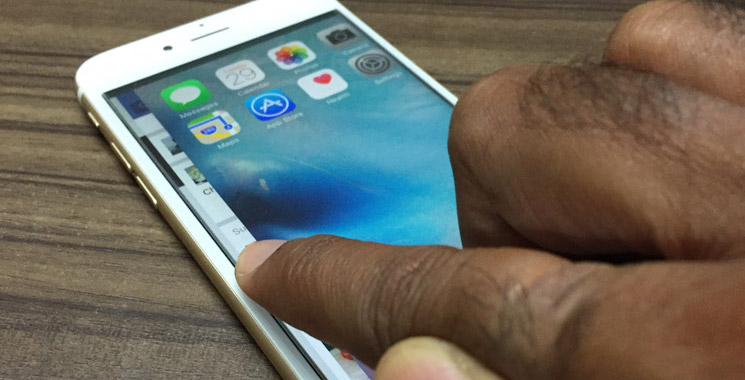
If you would like to try using your phone with your eyes, you can do so using the Hawkeye Access app, which you can download at App Store using this link. After starting the application, you will go through the first calibration, in which, among other things, you will also learn basic gestures, thanks to which you can go back a page or a page forward. Control using the eyes can be especially useful for users who have lost their hands or are otherwise disabled, and thus cannot use the device in the classic way. So the movement is controlled with the eyes, confirmation is then enough to "say" the application with a wink or a smile. In practice, it works so that if you want to click on a link on the website, for example, you move your eyes over it, and then you wink (or smile).
The first video showing the Hawkeye Access app being used to control an iPhone appeared on YouTube in October last year. The project itself originated at last year's conference. WWDC, organized by Apple. The main prize at this conference was won by Matt Moss, who is behind the entire Hawkeye Access application, and one could say that he is also behind the entire group of developers from Hawkeye Labs. However, Moss decided to further improve the application after winning and it is now available to the general public. Since the application uses TrueDepth cameras, it is necessary for you to own a iPhone X or later.







When I reach the second point in the calibration, the winking and smiling back gesture does not work at all. So I don't know where I'm doing wrong or what the problem is. :-/
I have the same problem. I just can't move on.
Something like Tobii Eye Tracker, but without reasonable hw support?
https://gaming.tobii.com/product/tobii-eye-tracker-4c/
Everything works for me, but then it still has quite a long way to go