
Press release: Ambient temperature, whether too high or low, is one of the risk factors that has a great influence on the durability and service life of batteries and accumulators of electronic devices. If the batteries are exposed to very low temperatures for a long time, there is a risk of permanent damage to them.
Not only winter frosts, but also summer heat have a negative effect on battery life. Although it is best for batteries to be stored in a cooler environment, temperatures below 15 degrees already cause a loss of capacity. But on the other hand, the temperature during storage should not exceed 20 degrees for a long time. Modern batteries should also be recharged more often - even if they still have enough capacity left.
You might be interested in
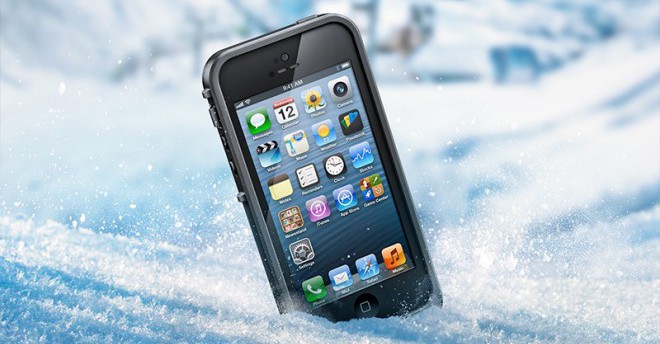
With smartphoneonem to the frost
The effect of long exposure to low temperatures on the battery life of mobile devices can be experienced by every skier or anyone who moves outside in the cold for a long time. Smartphones, tablets or even cameras discharge much faster in the cold. It is therefore advisable to take a charged power bank or a spare battery for the camera with you in order to keep the phone on the reception in case of emergency or to be able to take pictures continuously all day. But there is another trick: wear electronic devices as close to your body as possible to keep them warm. The batteries in the backpack can be at least partially protected from freezing with a simple thermal pack.
It is also important to properly handle the batteries after coming into the heat, when the batteries are not only hypothermic, but also dewy. "It is a very bad idea to 'thaw' the batteries after coming from outside on the heater or perhaps by the fireplace. Exposure of batteries to temperatures above 60 degrees can end in their explosion and subsequent fire." explains Radim Tlapák from the online store BatteryShop.cz, which offers a wide range of batteries for mobile devices. Before charging, you need tochat Slowly warm the battery to ambient temperature and wipe it dry.
Low temperatures cause a drop in battery capacity, which then needs to be changed or recharged at shorter intervals. Long-term exposure to freezing temperatures can also cause permanent damage to the battery. The danger for the battery is not only low temperatures, but also water and air humidity, which corrode the contacts and other delicate components. A wet battery should be thoroughly dried before inserting into the device, but not with a hair dryer or other source of direct heat.
Proper battery storage
We should remove the batteries from devices that we do not plan to use for a long time and store them for management. Improper storage can damage batteries and reduce their usable capacity. "The ideal environment for storing batteries is a dry place with a constant temperature of around 15 degrees. Batteries must be stored charged, and since they lose their capacity even when not in use, it is necessary to recharge them from time to time." added by Radim Tlapák from the online store BatteryShop.cz.
Poor storage and complete discharge can damage lithium-ion (Li-Ion) and lithium-polymer (Li-Pol) batteries, which can be found in practically all mobile phones today.oneThese types of batteries do not suffer from the so-called memory effect, so it does not matter if they are recharged even when only partially discharged. On the contrary, it will damage them if they are completely discharged. ProThese are lithium batteries equipped with a safety fuse that disconnects them before they are completely discharged. Lithium-based batteries lose around 3 percent of their capacity per month, while older Nickel-Metal Hydride (NiMH) batteries spontaneously lose up to a third of their capacity per month.
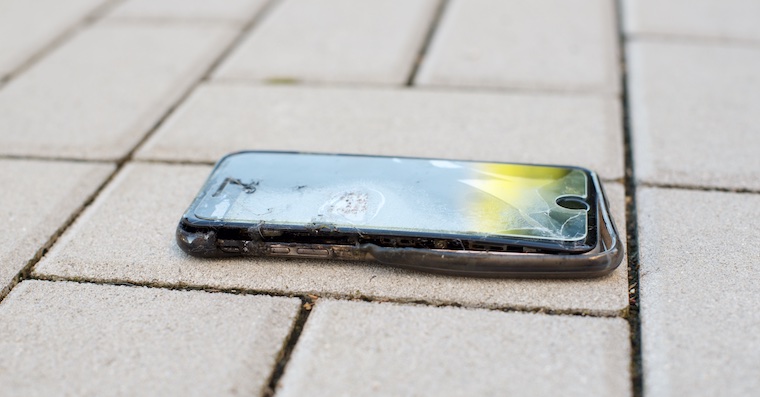












It is hot in winter and summer iphone Unusable? What's the point of it, probably just to have it at home.
Do you want to tell us that the battery is able to function properly between 15 and 20 °C??
Yes, these are the optimal operating temperatures, I don't know what is misunderstanding about it and what leads one to ask such a stupid question, as in the first post...