On Wednesday, August 12, 2026, something will happen in the sky that will definitely nestIt's worth just missing it. The Moon will begin to move in front of the Sun and while in some parts of the world it will be possible to observe a total eclipse, in the Czech Republic we will have an exceptionally pronounced partial phase. The Sun will be maxIt will be largely obscured and will be very low above the horizon. In other words, it is an ideal opportunity to pull out iPhone and try to capture the whole event.
And you don't need to have a professional camera worth tens of thousands of crowns. NASA She points out that a good photo of the eclipse can be taken with almost any camera, including a smartphone. According to her, it is much more important than the device itself to know what you are photographing, to compose the scene correctly and, most importantly, to follow safety rules. That is why NASA has published five specific tips that you can follow when photographing the eclipse. And some of them will also be useful to owners iPhone.
1. Safety comes first
Let's start with the most important thing. NASA warns that looking directly at the Sun is dangerous not only for your eyes, but also for your camera. If you want to photograph the Sun during a partial eclipse, you need to use a special solar filter that is placed in front of the camera lens. Pro For visual observation, special eclipse glasses are required.
And I would be right here iPhone really careful. If you want to point your phone directly at a partially eclipsed Sun, get a special solar filter or film designed for photographing the Sun. This must be placed in front of the lens iPhone and must be firmly attached.
I would definitely not try any home experiments. Regular sunglasses are not a filter for a camera, just like ordinary dark film or a random photo filter is not. And even more important is eye protection. If you want to look directly at the Sun, you need solar viewing glasses. NASA warns that regular sunglasses are not suitable for safe eclipse viewing nestachi.
There is one interesting exception to the total eclipse. During totality itself, when the Moon completely covers the bright disk of the Sun, NASA recommends removing the solar filter from the camera, because that is when you can photograph the Sun's outer atmosphere, or corona. However, as soon as the bright part of the Sun reappears, the filter must be immediately put back on. However, this does not apply to this year's observation from the Czech Republic. In our case, it will be a partial eclipse, so do not remove the filter when photographing the Sun directly.
You might be interested in
2. You don't need a professional camera
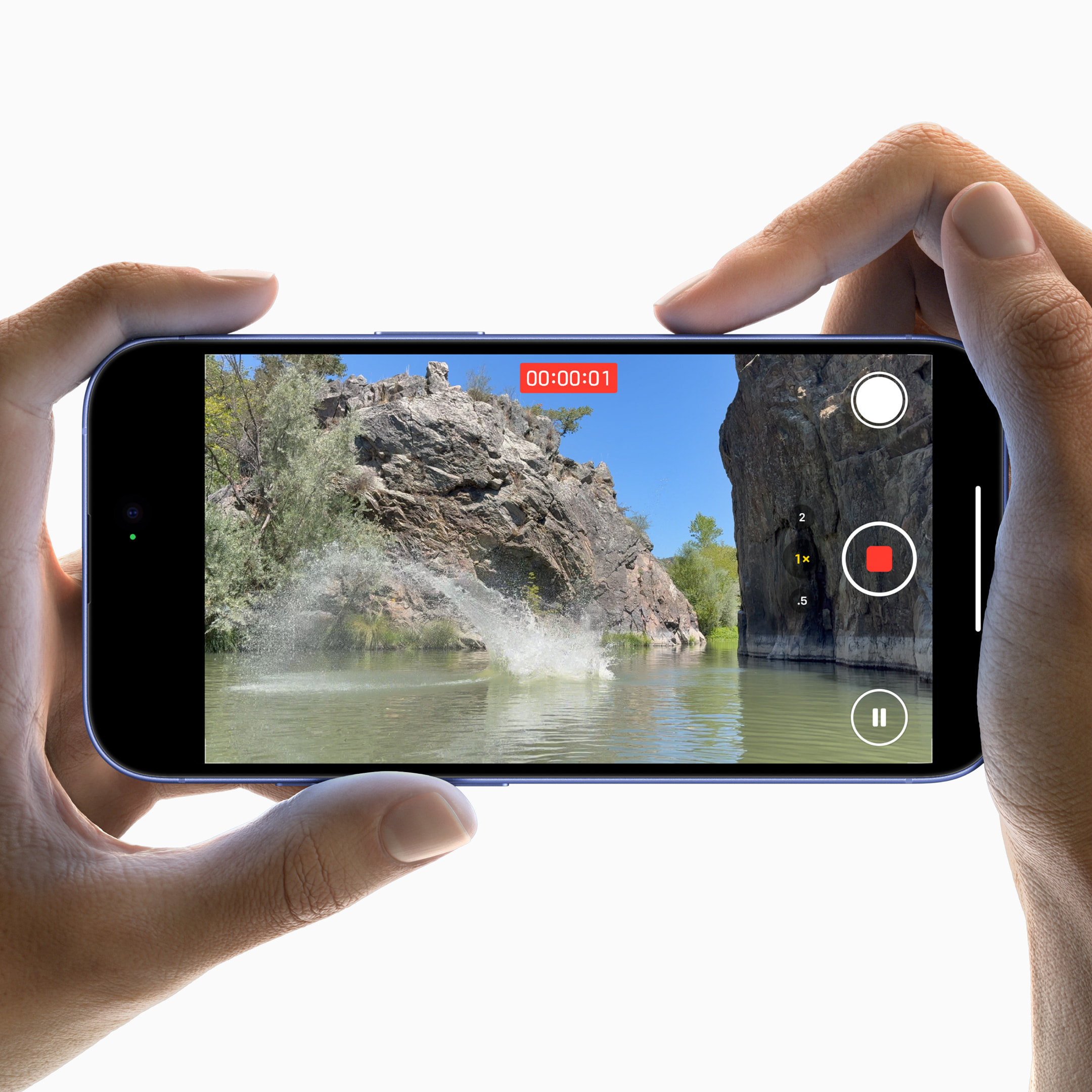
I like NASA's second tip even more. You don't need an expensive SLR camera or a professional lens to photograph the eclipse. NASA directly states that great photos can also be taken with the camera on your phone. And that's good news for owners. iPhone.
Of course, a telephoto lens will allow you to get the Sun much closer in your photo. So if you have iPhone with a telephoto lens, definitely try it. But if you don't have a telephoto lens, nothing happens at all.
In such a case, NASA recommends focusing more on photographing the landscape and overall atmosphere of the eclipse. And this is where it can have iPhone surprisingly big advantage. You don't have to try to get miniThe Sun is projected across the entire display. You can place it in a wider scene. For example, above the roofs of houses, between trees, or over distant hills.
3. Look up, down and around you
This is a tip that I think people often overlook during an eclipse. Most of us automatically point our camera at the Sun and try to capture it. But NASA recommends looking up, down, and around you. The reason is simple. During an eclipse, the light throughout the landscape will start to change. The surroundings will take on an unusual atmosphere, shadows will change, and even the light passing through the leaves of trees can look interesting.
NASA also points out so-called natural pinhole cameras. When sunlight passes through gaps between overlapping tree leaves, small images of the partially eclipsed Sun can appear on the ground. So when you stand with iPhone somewhere on a hill, don't just photograph the Sun. Also photograph the people around you, their silhouettes, the landscape, or the changing light itself. These are the photos that can be nakonec much more interesting than the detail of the solar disk.
4. Try it out iPhone before the eclipse
NASA's fourth tip is simple but very practical: train in advance. Therefore, I would definitely not recommend notchat everything except Wednesday evening. Take iPhone Go out in advance and test how the camera behaves when shooting a very bright object. It is also useful to find out how to manually adjust the exposure and possibly focus on your specific model.
Exposure can be crucial during an eclipse. Once you point iPhone to the Sun, the automatic will try to evaluate the scene. However, if you want to capture the solar crescent itself and work with the surrounding landscape at the same time, you may need to adjust the exposure manually.
Na iPhone just tap on the scene, move the sun symbol with your finger and reduce the exposure as needed. It is also worth checking in advance how your iPhone locks focus and exposure, so you won't have to experiment unnecessarily during the eclipse itself.
NASA recommends that you test the correct exposure on the Sun with conventional cameras before the eclipse itself. iPhone Of course, there's no point in adopting specific shutter speed and aperture values designed for DSLRs, but the principle remains the same: knowing in advance how your camera behaves can save your resulting photos.
You might be interested in
5. Nakonec share photos
NASA's final tip is perhaps the least technical, but all the more enjoyable. Take photos of the eclipse, but also share them. NASA is specifically encouraging photographers to share their images and tag the NASA account, which allows them to be added to other observers' photos.
And I would personally add one more thing to this. Don't photograph the entire event from start to finish. Sometimes iPhone Put it down and just look up. NASA reminds us that the eclipse is not just about photos and that it is good to enjoy the experience itself. But don't forget to wear safe solar viewing glasses during all phases of a partial eclipse.
Bonus: bring a tripod
NASA also recommends using a tripod to stabilize your camera and prevent blurry photos, especially if the surrounding area is already quite dark. You can also use a shutter release to set the camera to slow down when taking a photo.oneThey didn't move me unnecessarily. U iPhone you don't need to buy any huge photography equipment. A small tripod for your phone is enough. And if you don't have one, you can iPhone simply lean it on a stable surface.
So take photos on August 12th, but most importantly, be safe.
This year's partial solar eclipse will be very interesting from the Czech Republic precisely because it will take place in the early evening and the Sun will be at maxIt is very low above the horizon. This creates great conditions for photographs that will capture not only the crescent sun itself, but also the landscape and atmosphere of the entire moment.
So if you want to photograph the eclipse iPhone, you don't need to look for professional equipment. All you need is a phone, ideally a telephoto lens, or a small tripod, and above all a special solar filter in front of the lens if you are going to photograph the partially eclipsed Sun directly. And that's exactly what NASA recommends. But the most important thing is something else. Don't forget to enjoy the eclipse too. ProNo photo is worth risking your eyesight for.