What seemed like science fiction just a few years ago is becoming a reality. China has approved the world's first commercially available brain implant that allows some paralyzed patients to control the device with their thoughts. The technology, called NEO, is entering clinical practice ahead of a long-awaited project. Elon Musk's NeuralinkThe new system was created in collaboration with Neuracle Technology and the prestigious Tsinghua University and represents a significant milestone in the development of so-called brain-computer interfaces (BCIs).Computer Interface, BCI).
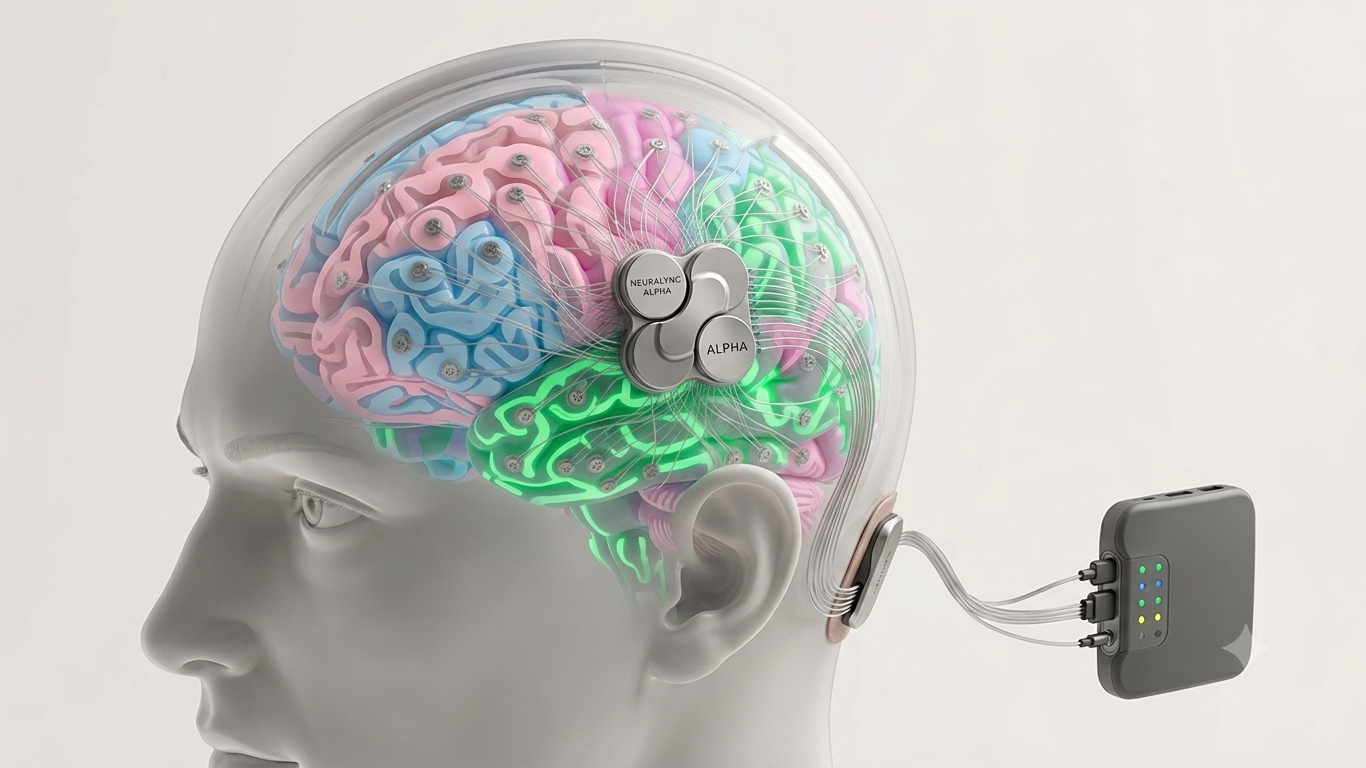
NEO uses a titanium implant about the size of a coin that is equipped with eight highly sensitive sensors. Unlike some competing solutions, the electrodes are not inserted deep into the brain tissue. The implant is placed on the protective membrane of the brain, where it senses electrical signals related to planned movements. The less invasive approach makes the surgery simpler, safer, and carries a significantly lower risk of complications.
Patients write or control a robotic hand again
The technology is intended primarily for people with severe paralysis or loss of mobility.
The implant converts brain signals into digital commands that then control external devices.
Thanks to the system, the first patients can:
- control robotic gloves,
- write text using a computer,
- manipulate the cursor,
- perform some normal daily activities that were previously impossible.
The goal is not to expand the abilities of healthy people, but to restore at least some of the independence of patients who have lost it. Although similar technologies often raise concerns about privacy violations, NEO is definitely not able to read people's thoughts. The system only monitors specific electrical signals generated when imagining movement. In other words, it recognizes the intention to move a hand or finger, not the content of the user's consciousness, memories or emotions. Moreover, all data processing is focused solely on converting these signals into control of a specific device.
China overtook Neuralink
ProElon Musk's project is one of the most well-known initiatives in the field of brain implants, but this time China managed to win the lead. NEO received regulatory approval in March 2026, becoming the first commercially available BCI system of its kind. While Neuralink uses very thin electrodes inserted directly into the brain tissue, the Chinese system chooses a less invasive approach by placing sensors on the surface of the brain. It was the simpler surgical procedure that could significantly speed up the entire approval process.
You might be interested in

A new era of medicine begins
Brain-computer interfaces were stilloneThe technology has long been a subject of academic research and experimental studies. But the approval of the NEO system shows that the technology is gradually moving into routine clinical practice. Developers expect that similar implants will help not only paralyzed patients, but also people who have had strokes, witheurodegenerative onewith spinal cord injuries. Brain implants were for many years a symbol of the distant future. Today, however, they are no longer just laboratory experiments, but real medical products that can change patients' lives. Although NEO cannot read minds or turn a person into a cyborg, it still represents one of the biggest steps in the field of neuroscience.eurotechnology of recent years. If its development continues at the same pace, connecting the human brain with a computer may become a common part of modern medicine within the next decade.