
Smart wearable electronics can do a lot these days – for example, they can alert you that you have a fever, or that your body is functioning abnormally and you may be getting sick. That's exactly what happened to me with my ring. Ultrahuman Ring Air, which I've been wearing for about a quarter of a year and which confirmed my nighttime fever without me having to get out of bed for a classic thermometer. And if I had been more attentive, I probably would have found out in advance that something was trying to get at me thanks to the ring.
You might be interested in
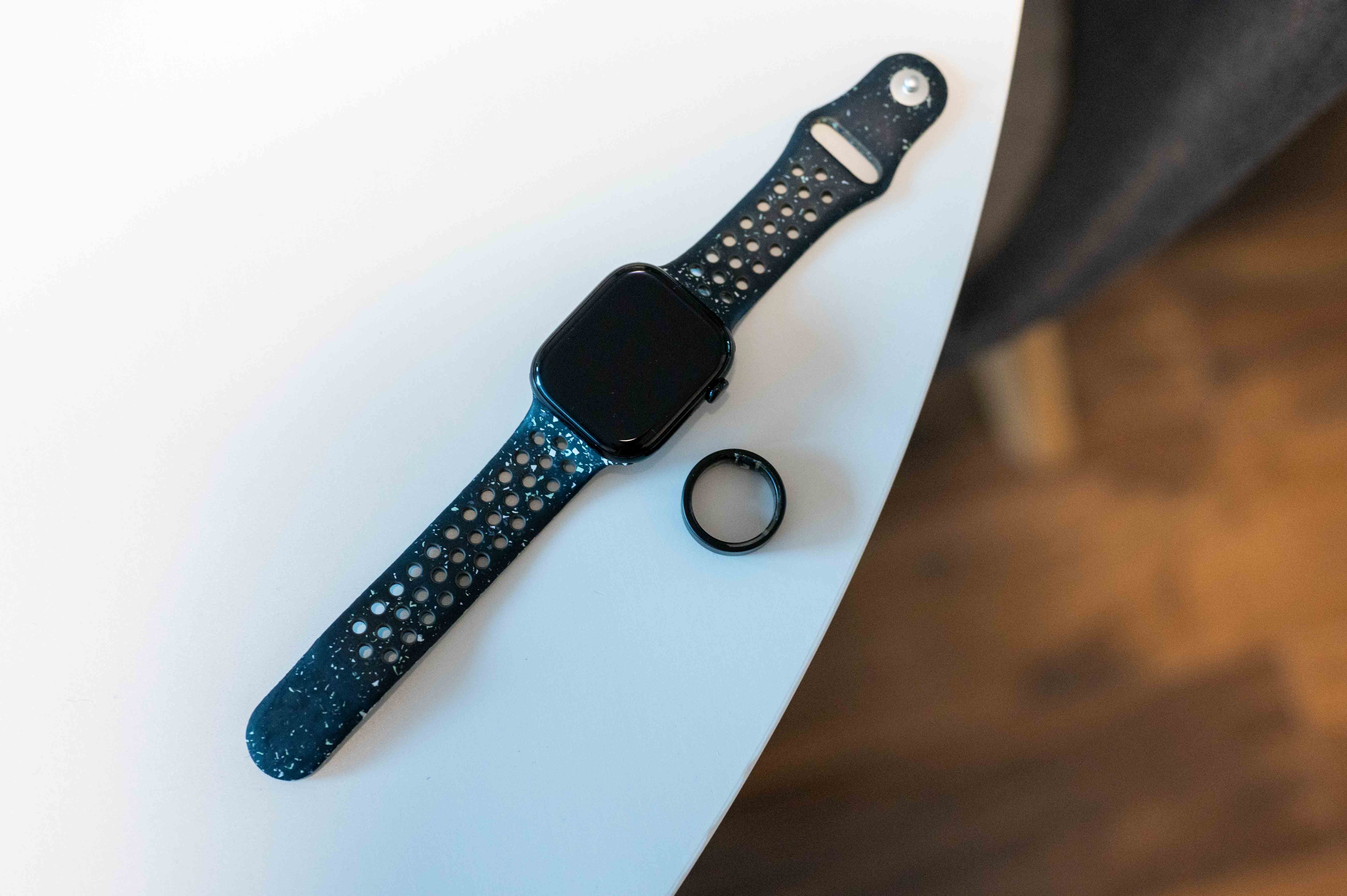
Measuring temperature with a smart ring can be different from traditional methods because finger temperature tends to be lower and more variable due to the environment and blood flow. For example, armpit measurements typically show values between 36,0–37,0°C, but can be affected by ambient air and tend to be lower than actual body temperature. Oral measurements are more accurate, with a range of 36,3–37,5°C, and results can be distorted by recent food or drink consumption. Rectal measurements are most accurate, with a range of 36,8–37,9°C, which is often 0,5°C higher than armpit measurements. Non-contact forehead thermometers show values between 36,0–37,5°C, but can be affected by sweat and the environment.
Smart rings and watches often measure temperatures 0,5 to 1,0°C lower than traditional methods, as finger temperature depends on blood circulation and external conditions. While the ring shows a slightly elevated temperature, such as 37°C, the actual body temperature may be higher, even over 38°C. ProIf you feel hot or cold, it is better to check the value with a classic thermometer, ideally in the mouth or under the armpit. Smart rings and watches are therefore useful for monitoring trends, but they are not ideal for accurately diagnosing a fever. On the other hand, they can alert you to a rising temperature, which allows you to find out in advance that something is crawling on you, as the saying goes. An added value is the various graphs that allow you to glance at how your temperature has increased over time.
Gallery


ProI was relatively well all day yesterday, except for a stuffy nose and pressure in my head, so I didn't need to measure my temperature. However, I was woken up at night by a fever and general symptoms of a temperature. I didn't want to take the pill, because it wasn't anything extreme and I also thought that it was pointless to measure myself with a classic thermometer if I wasn't going to treat my temperature with medication anyway. I then confirmed that I had a temperature in the morning in the app Ultrahuman, which reported to me in the summary of my sleep that I probably had a temperature, and looking at the graphs of my sleep temperature from previous days, it is clear that in previous days my body temperature was higher than standard at night. However, since these were not such major fluctuations (and moreover, similar things can be found more often in the graph in the long term), I did not pay any more attention to them. However, in retrospect, I can say that these signals were probably warning me of an upcoming (perhaps just) cold.


I also bought Ultrahuman, and unfortunately after 11 months of use the battery only lasts 1 day. The oxygen saturation only shows one total number, without a time course, and it keeps showing me 98%, so I don't trust it too much. Overall, it's quite a disappointment for me.
That's right. :) S Apple Watch but I'm not sleeping, so I wanted to at least share my experience with the ring. Overall, these things literally fascinate me. Who would have thought years ago that we would see something like this...
I wore the ring for about a month, during which it provided me with quite an interesting amount of data every day. I've also been wearing the Garmin 935 for about five years, so it was interesting to see where the sleep, fatigue, etc. analyses agreed or disagreed.
First of all, the ring needs to be charged really annoyingly often, which was the reason I gave it away.
Secondly. All these tricks are still very stupid and I hope that AI will enter the work in this field as well. For example, the detection of types of movement, sports, etc. is very poor on all devices and ... it would be nice for AI to do what it is supposed to be good at, that is, finding patterns in a large amount of data. And let's say the application should actually spit out the composition of the training as it really was, now it looks like random data.
I'm wondering if anyone has done a review of the Tesla ring. Ultrahuman air I'm interested but it's out of my budget🤷♀️