
The world of smartphones is constantly evolving, bringing us ever more powerful and innovative devices. But as in any industry, there are also models that have gone down in history rather negatively. Let's take a look at 10 smartphones that, for various reasons, have become the target of criticism and become a memento for manufacturers.
Galaxy Notes 7
Samsung generally makes quality products. The company often raises the bar for quality and innovation with Android devices and the range Galaxy is its flagship model. Advice Galaxy The Note was released at a time when screens were gradually getting larger from the standard size set by the original iPhonem, or about 3,5″. Its unusually large dimensions appealed to customers and fit into a new category of larger mobile devices, which were nicknamed phablets. The Note sold well and was one of the best-selling products for a while until around 2016, when widespread reports from many sources appeared about phones catching fire. One could argue about the many advantages of any phone, but fire is generally not in the top three, or even the top five. In fact, fire should not be a feature of any phone at all. Samsung may have withdrawn it from sale and lost a lot of money, but the damage was done and the Note 7 will forever be known as a bad smartphone.one.
Gallery


HTC First
HTC made a huge chunk of the popular Android phones when the operating system was still new, including the first Android phone ever released, the HTC Dream. Soon after Android became widely available, companies with a long-standing web presence developed mobile-optimized websites and later created full-fledged apps to run on Android devices. iOS or Android. In 2013, it was already Facebook established itself as one of the most popular websites and its application was installed on millionsonech facilities around the world. It's hard to say what led to this, but it seems that someone in theancelegy Facebooku concluded that users want to have a more immersive experience from Facebook24 hours a day, 7 days a week. So they developed a mobile home screen dedicated to this social network and had HTC integrate it into a device that will be colloquially called Facebook phone.
This was not the first attempt at fuller integration. Facebooku to the phone, because before that came the ChaCha models, which added a dedicated button for direct access to Facebook, and Salsa, which had a similar function. If we ignore the integration Facebook Home, the HTC First's faults lie in its mediocre hardware and strong competition. It may have been launched at the wrong time and underdeveloped, but whatever it is Facebook popular, no one wanted him to be so closely involved in everything he did. For good reason, we didn't get another try Facebookto control our devices.
Amazon Fire Phone
First entry AmazonThe year-long entry into the mobile phone market did not go well. It also provided a lesson in how not to enter the market. Amazon has seen great success with its line of e-readers and affordable tablets. Building on this success, Amazon decided to enter the smartphone market. In 2014, the Fire Ph phone entered the scene.one, which offered a Fire OS offshoot focused on Amazon. At the time, we considered its price problematic, which may have been its undoing, but it wasn't just the price that would spell its undoing. Fire Phone It was launched at $199 with a contract, like other phones were selling at the time. However, this was a departure from the cheap, loss-making tablets that the Fire Ph had been selling for up until then.one were, which meant that Amazon directed his phone to another buyer who was motivated not by the low price but by premium features. The Fire OS also did not integrate with Google services, forcing users to use the store Amazon AppstoreIt offered far fewer apps than its competitors and, according to Time magazine, was one of the many reasons the phone failed.


Blackberry Storm
Company Blackberry came up with a model Blackberry Storm, the first Blackberry with a touchscreen. The Storm was originally announced in 2008. This means that the company Blackberry had less than two years to develop the hardware and write the software to transition its operating system from a keyboard-based to a full-touch one. To an outside observer, this seems like a relatively short development time, and when the product hit stores, it was obvious. When the first reviews of this model came out, many shortcomings immediately became apparent. The biggest of these seems to be the inaccurate, insensitive, and unsophisticated touchscreen. In addition, the software, compared to iPhonem lagged behind in development and the overall user experience was below average. Usually, when a company has to catch up with a competitor, it only gets one sanci. Blackberry According to many, it was missed.
Gallery


Kyocera Echo
Kyocera has never been a big player in the mobile phone market, but it has been making them for more than two decades. Many of its phones over the years have relied on being unique or having specific offerings that set them apart from the competition. One such attempt to offer a novel device that fits into its own category is the Echo, a smartphoneone with dual displays, which was launched in 2011. The hardware supporting the phone, however, wasn't necessarily premium for its time. Additionally, Android hadn't yet been developed to work natively on dual screens, so the operating system and several apps had to be modified to run on it. Prothat was the performance of the software nakonec average and with a big prostorem for improvement. Maybe the people at Kyocera were a little too prescient and released the device before it was ready. Battery technology couldn't keep up with two screens, and no one wanted a thick line in the middle of the image if the app was capable of displaying images on two screens. It was out of place and ill-conceived, and nakonec few people bought it. The legacy of the Kyocera Echo is mostly a place on lists of horrible devices.
Samsung Galaxy Fold
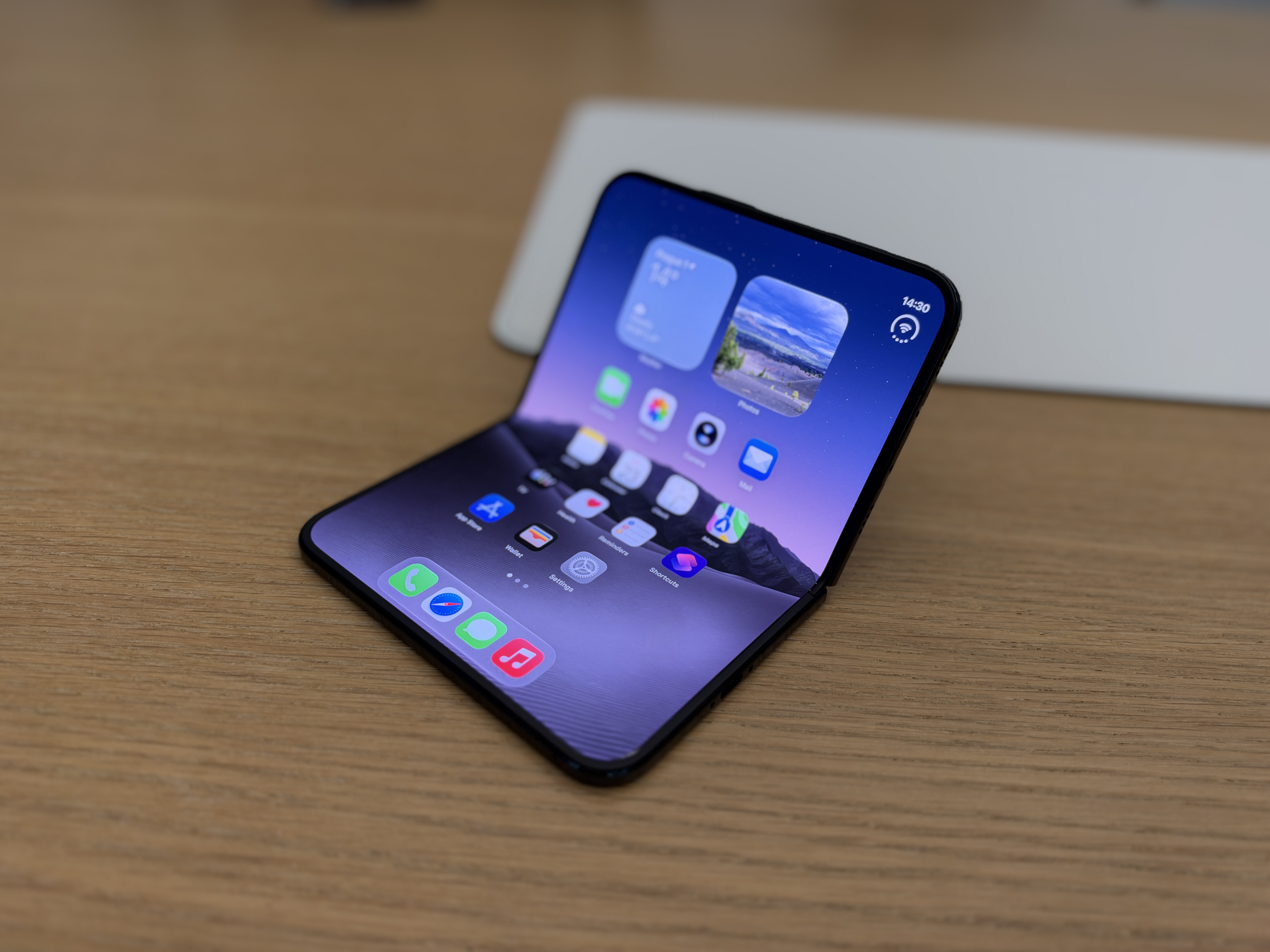
Galaxy Fold managed to do what seemed impossible: fold the screen in half. To do so, Samsung used plastic, and that was problematic from the start. The first wave of concern came when media personnel began peeling off what looked like the protective film typical of new devices, only to discover that they were peeling off the top layer of the screen. Others found their devices with strange bulges along the seam, and still others discovered thick black lines running from hinge to hinge. The fact that pre-release review models broke before the official launch date wasn't Samsung's best calling card. The plastic top layer of the display is somewhat stiff, but it's still plastic. It doesn't take much to damage, scratch, or cut it. The benefits of the phone are great, but the need to handle it with kid gloves and the high entry price make up for it. nesthelm. It seemed that Fold was launched in a hurry, which poneThere was little time to reveal its shortcomings.
Gallery


RED Hydrogen One
Sometimes a company comes up with a novel implementation of existing technology and creates something interesting. Other times, a company comes up with a novel implementation of existing technology and completely fails, delivering a product that no one wants, doesn't work, and costs too much. That's the story of the RED Hydrogen phone. One, which was created to fill a non-existent demand with broken technology. RED had established itself as a leading digital camera manufacturer, so those in the know had high expectations when it first entered the mobile phone market. Instead of building on its stellar reputation for cameras, RED introduced a phone with a strange holographic 3D display. The Verge review of the phone said it was a strange technology that, when it worked, could make the viewer feel sick. What’s more, the 4V technology, as it was called, only worked with a few apps designed specifically for the phone. It was also heavy and had side buttons that were all too easy to press by mistake, but those were minor flaws compared to the rest. Overall, it was a phone that no one wanted, with features that no one cared about. nestOh, and it was all done poorly and for too much money – around $1.
Gallery


iPhone 6 (plus)
Company Apple started the technological revolution with the first iPhonema has already built a reputation for making innovative and quality products. That's why it's all the more disappointing when one fails. There have been several reports of the phone bending when placed in people's pockets or under slight stress, and the problem was exacerbated when Unbox Therapy took up the cause and created a video specifically testing the phone with disappointing results. While the phone doesn't always break, slight stress can cause it to permanently bend in the center of the frame around where the volume buttons are located. In addition, there's been a related issue with the bending issue called Touch Disease, which was widely reported in the media in 2016. This defect can also be the result of a slight bend that causes the chip to pop out and prevent touch response on parts of the screen, somewhat rendering it useless.
HTC EVO 3D
3D entertainment is one of the oldest innovations of modern times. Our ancestors, fascinated by the world around them, admired distant locations through special viewers called stereoscopes, which used a primitive double image to create a 3D effect. The 3D fascination has persisted for decades thanks to 3D horror films and failed 3D TVs and nakonec ended up in the HTC EVO 3D mobile phone. Made at a time when HTC was at the forefront of smartphones, the EVO was progressive, innovative… and utterly useless. It all started with a lifelong fascination with 3D and the desire to make it something people actually wanted. The EVO featured two lenses, split so that they could capture images that would be rendered in 3D. The hardware was comparable to other similar phones of its time, but nothing extraordinary. The HTC EVO 3D built on a decent phone by adding a novelty that didn’t add much to its utility or value. The 3D effect was just a novelty and not aonec kind of useless. A bad phone is one thing, but an unusable phone is worse.
Gallery


In Mobile N8-N
Most people don't know the name V-Mobile and there's a reason for that. However, in 2019, this company was selling smartphones. Whether she made them or not is up for debate and certainly no one would take credit for it. After all, it is difficult to find information about her.
Nevertheless, the N8-N model was available and could be purchased at one time on AmazonIt's hard to find specs listed anywhere, but user reviews are where it's at. First off, it only has a 2,9 out of 5 stars, and there are more one-star reviews than five-star ones. In fact, almost half of the reviews are only one-star. Review gems include "worth the price" and "rubbish." One user said: "It's rubbish, it worked for a month and then it shut down completely".
Perhaps the best review of all was done by the popular YouTube channel Unbox Therapy, where the phone came brand new out of the box and turned itself off after five minutes of use. The review itself is fairly entertaining, and it only gets better when it shuts down a second time before the end of the video. If it can't even stay on for the first five minutes of use, we can almost certainly say that the V-Mobile N8-N is the worst phone ever.








The first shock was how bad the selection of phones was. The second shock came when I realized it wasn't even a selection. LSA, but you took it from a foreign website. And the third shock came when I realized that it was a 1:1 translated foreign article. Does he know that you are stealing?