Press release: Natural gas is a hot topic at the moment, mainly due to the current situation in Ukraine and the approaching winter. Although this topic is very topical, it is quite difficult to navigate the whole thing.
Natural gas (NATGAS) is considered to be the fossil fuel with the lowest carbon footprint in the world, so it has little impact on the environment, as emissions from its combustion are twice as low as coal. Unlike coal or nuclear plants, gas plants can be turned on and off very quickly, providing great flexibility in terms of the country's energy mix. This is why gas-fired power plants have become very popular in both Europe and the United States, while coal-fired power plants are slowly being phased out. Gas is one of the most popular heating commodities in average households.

The overall dependence on natural gas was until recently considered a relatively positive thing. However, given that a large part of European consumption comes from Russia, prices de facto "shot up" immediately after the conflict broke out, as supporting Ukraine in this conflict could end up "turning off the tap", which is essentially what happened.oneWhat happened?
However, the roots of the story go much deeper. Germany's decision to build the Nord Stream gas pipeline led to a significant drop in gas production throughout the European Union. Production has been cut by as much as half compared to the highest levels seen just before the financial crisis in 2008-2009.
The next phase of the story was the COVID-19 pandemic and a reduction in gas imports due to low economic activity in Europe and very difficult winter conditions that pushed natural gas stocks to record lows. At the same time, Russia stopped the sale of gas on the spot market in Europe and limited the filling of its own reservoirs in Germany, which was probably a preparation for blackmailing Europe at the time of its aggression against Ukraine. So when the invasion really started, everything was ready for a rocket growth in the prices of natural gas (NATGAS), but also of other commodities.
Russia initially honored long-term supply contracts, but at some point mandated payments in rubles. Russia suspended gas transfers to countries that did not agree to these terms (including Poland, the Netherlands, Denmark, and Bulgaria). It then reduced them due to technical problems, and afteronec suspended gas transfers to Germany and resumed transportation only via Ukrainian and Turkish pipelines at the beginning of the last quarter of 2022. The latest culmination of this situation is the sabotage of the Nord Stream pipeline system. At the end of September 2022, 3 lines of the system were damaged, which is most likely not related to force majeure, but to a deliberate act aimed at further destabilizing the EU energy market. As a result of these actions, 3 lines of the Nord Stream system could be shut down for up to several years. Heavy dependence on Russian gas and other commodities such as oil and coal has led Europe to the largest energy crisis in history, associated with high prices and shortages of raw materials.
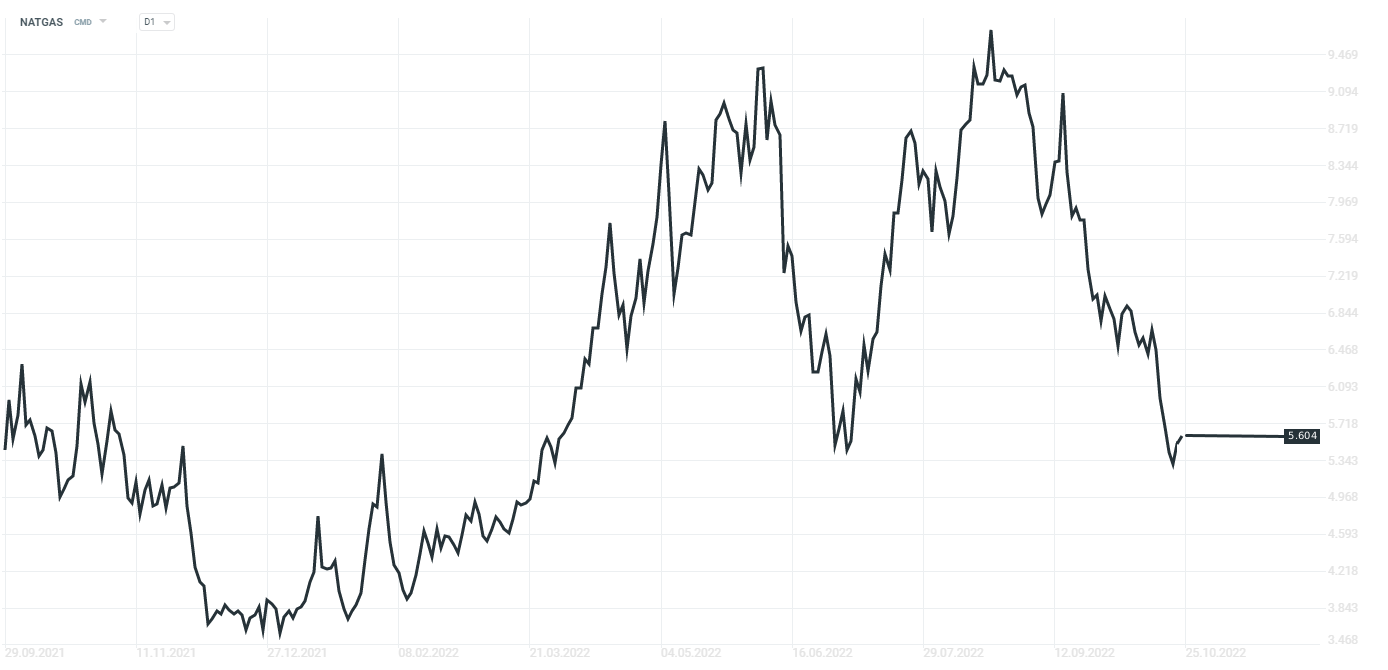
With winter approaching, it is likely that the current situation regarding natural gas will not be resolved in the near future. However, even this generally unfavorable situation can be a potential opportunity for individual investors and traders. If you are interested in this issue, XTB has prepared a new e-book focused on this very topic.
In the e-book NATURAL GAS SUMMARY AND OUTLOOK you will learn:
- ProWhy is the topic of natural gas so interesting?
- How does the global gas market work?
- How to analyze the gas market and how to trade gas?
Discussion of the article
Discussion is not open for this article.