
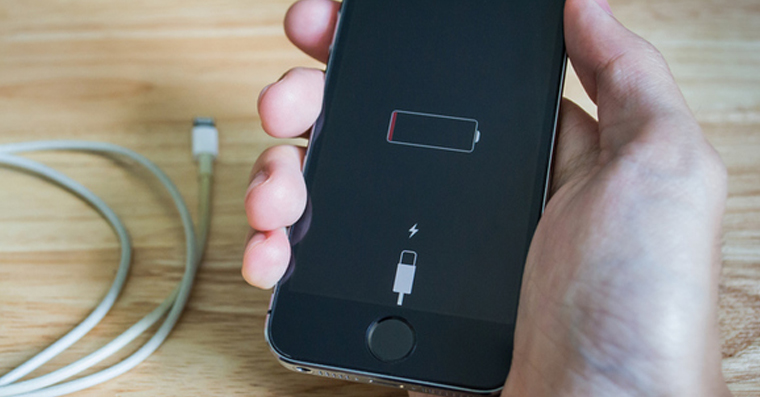
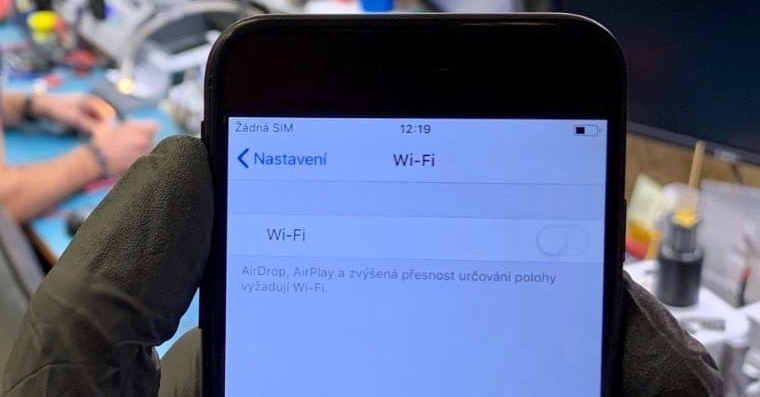
Modern smartphones are in most cases really powerful and sophisticated devices. They often manage multitasking, augmented reality, media playback and taking photos and videos in really high quality without any problems. But all these functions are completely useless to the user when the phone's battery dies. Battery life and energy management are among the biggest challenges facing this area of technology. Every now and then someone comes up with an interesting solution to the charging problem – this time it's scientists from the Massachusetts Institute of Technology who are working on charging via a Wi-Fi network.
You might be interested in
Gallery


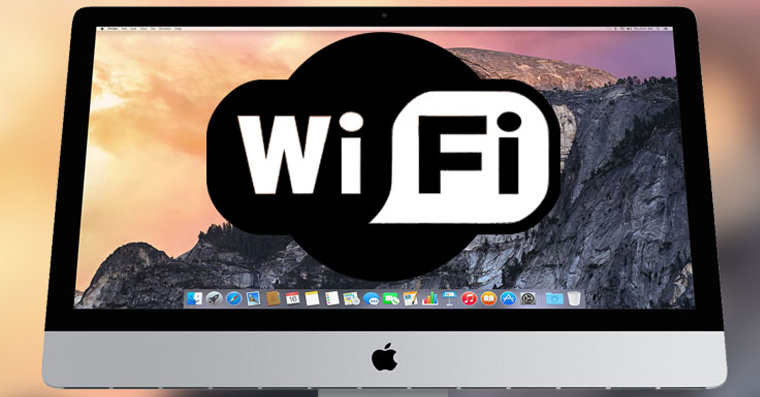
In this context, scientists explain that almost everything we are surrounded by emits low-energy terahertz waves. This is a frequency on the border between microwaves and infrared waves. Terahertz waves are also emitted by Wi-Fi devices or LTE/5G antennas, and the aforementioned experts want to use graphene to create a model of a device that will be able to capture these waves and effectively convert them into usable energy. If this technology can be successfully implemented, it will have great potential. Smartphone, equipped with a device made of the aforementioned graphene material, could use these terahertz waves to continuously charge a battery. The technology also has the potential to be used to power modules with low energy consumption, such as Wi-Fi modules, 5G modems or GPS chips, directly from the Wi-Fi/G5 signal in the area. Liang Fu, one of the authors of the study, describes that the technology in question essentially works on a similar principle to solar cells. However, the technology is still in its infancy, and the members of the relevant MIT team still have a lot of work to do with the development and research of a functional prototype of a device that will passively collect and convert energy in this way.







I have been charging this way for 5 years, I also use energy from high-voltage lines and high-energy particles from space as well as gamma rays.
So far I managed to charge 0,001V 😁 1.4.🤖
It's not hertz but hertz, so neither terahertz nor terahertz waves but terahertz. Then also 5G and not G5 signal. And usually in coordinate sentences a comma is not put before a, so "in diapers, and members" without a comma. ProYes, at least read the articles one after the other :)
but it's an April Fool's article and it's all nonsense for the technicians :-)
And her, I completely forgot. Okay, they