
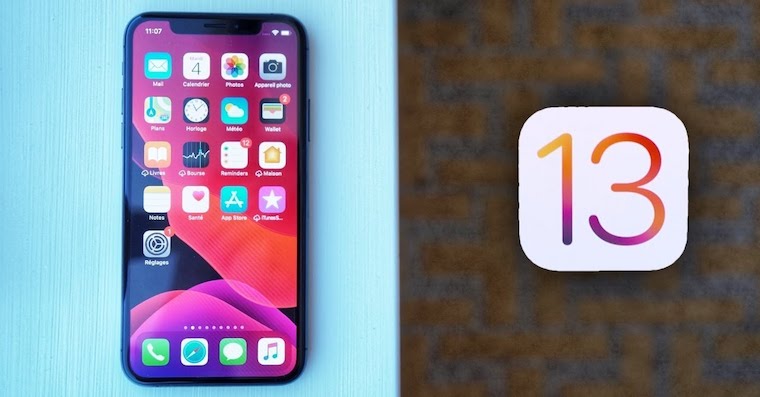
You have probably noticed that this year's operating system updates from Applu are somewhat more problematic than some of the previous versions iOS or macOS. ProThis is what David Shayer, a former software engineer who works for Apple spent eighteen long years.
You might be interested in
Proproblematic updates
Gallery
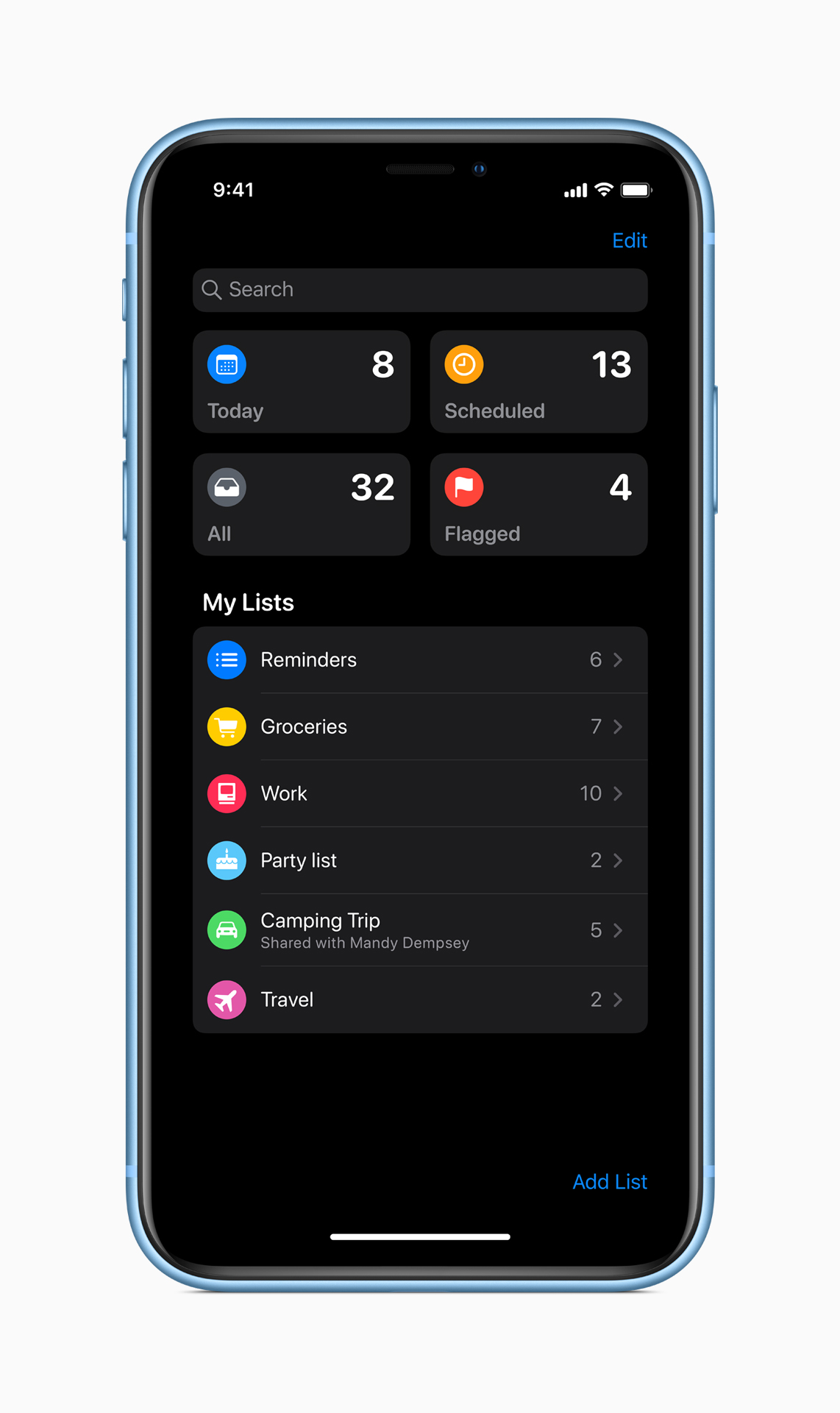
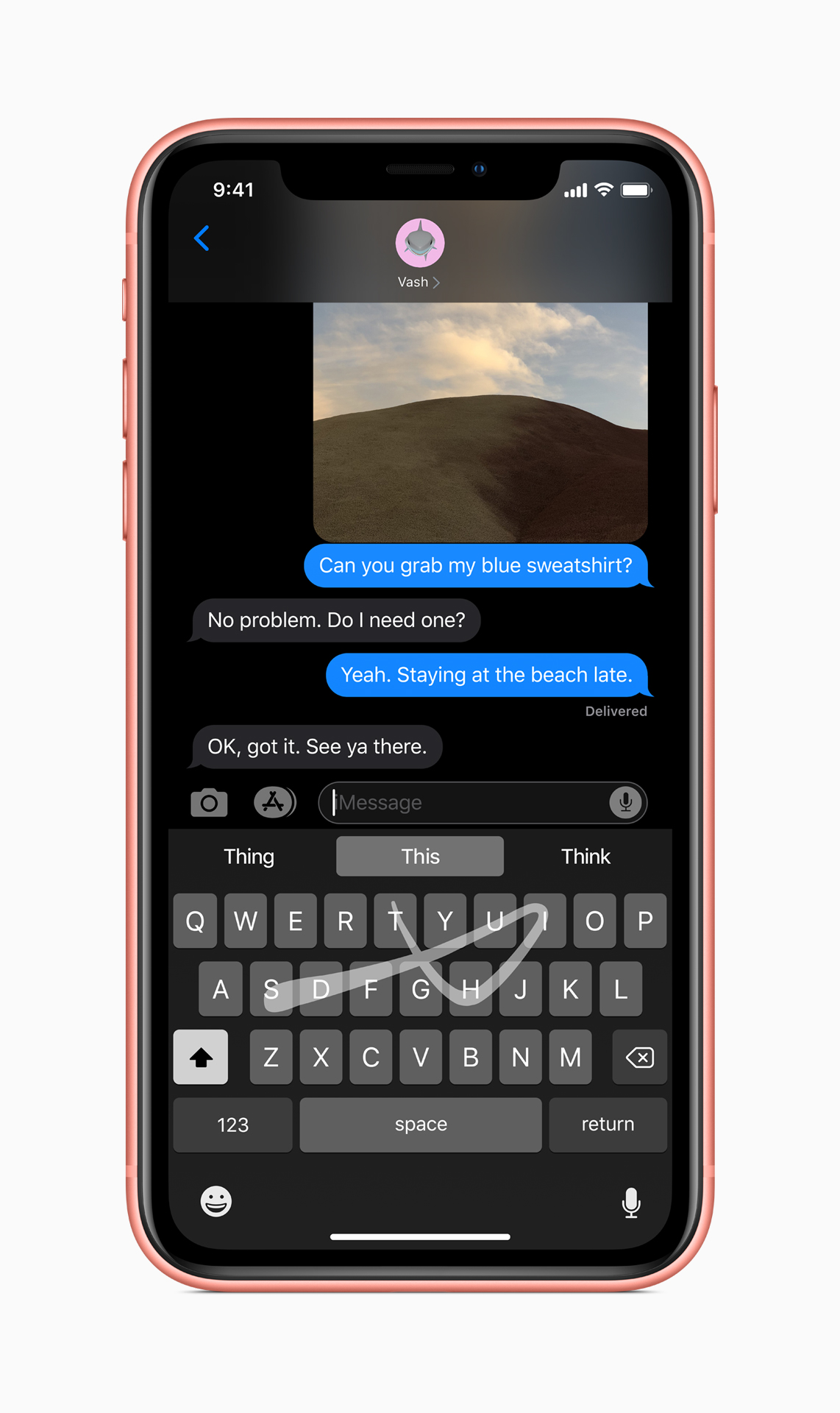
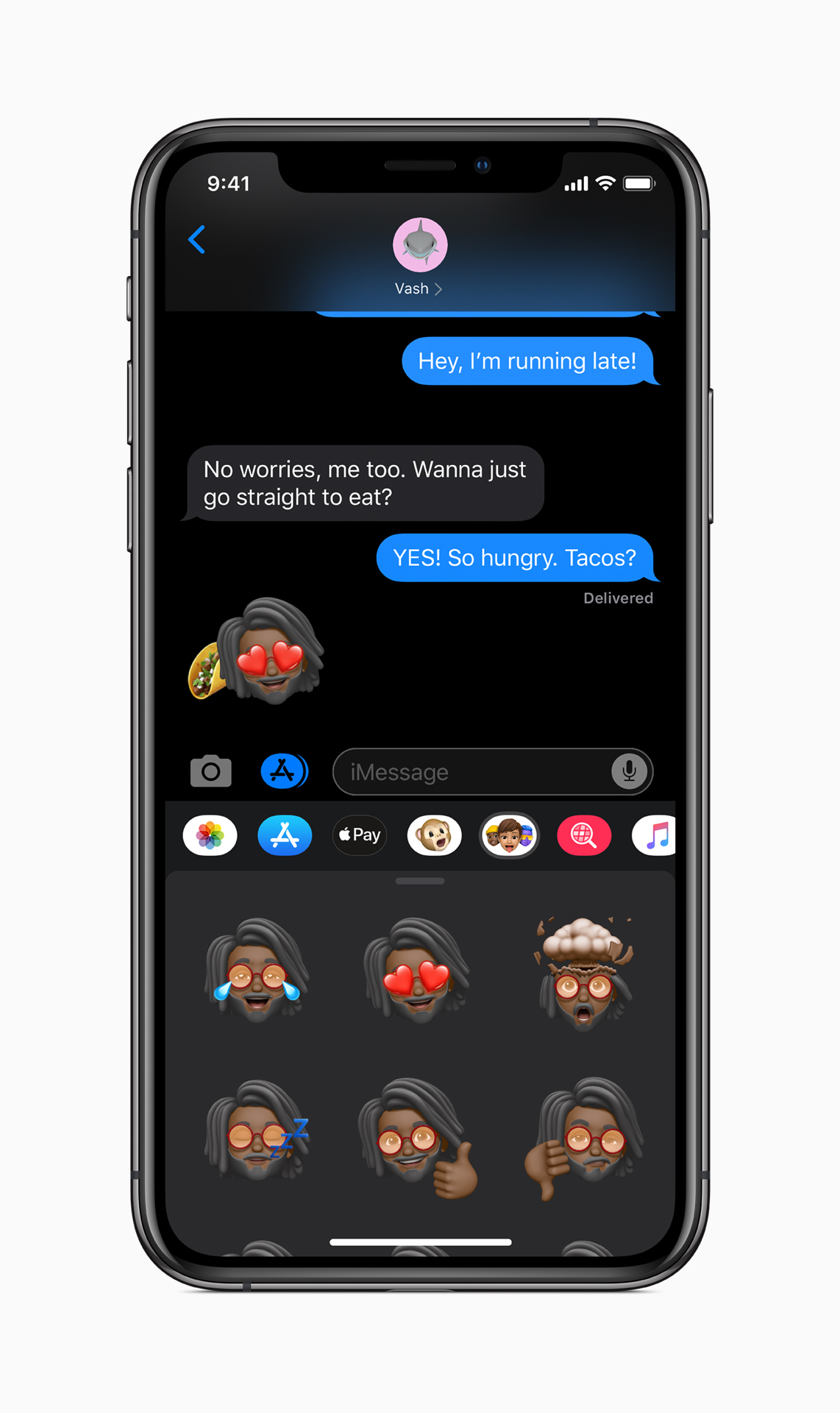

At the beginning, it should be noted that not every user has experienced iOS 13 or macOS Catalina any problems. However, there are significantly fewer such lucky people than those who have problems with the new operating systems. Find out the exact data on how many users have to iOS 13 or macOS Catalina, it is impossible to encounter any problems. However, various discussions on forums and under articles on technology websites clearly indicate that this year's operating systems from Appare indeed more problematic. This is evidenced by the lightning speed with which Apple constantly releases new versions iOS 13 – currently outside already iOS 13.1.3, and even with this version, there are reports of issues with Personal Hotspot, phone calls failing, and even losing contacts. Other users have reported problems with the macOS Catalina installation itself.
Too many features
According to Shayer, one of the other reasons for the failure rate of both systems may be too many new features. You could almost say you are Apple uncharacteristically, it focused more on quantity than quality. Launching some features, such as sharing folders on iCloudu, had to be postponed practically indefinitely. Other functions repeatedly fail and do not work as they should. News that iOS 13 and macOS Catalina offer are undoubtedly tempting, but according to many users, in some cases they are almost unusable.
Inaccurate error messages
Company Apple Although it has a developed error reporting system that can alert the company to certain problems, according to Shayer, this method only reports errors that always bring down the entire system. AppThis way, you won't get reports of minor bugs, such as problems sharing photos in iCloudu.
You might be interested in
Fix new bugs
Apple evaluates reported errors not only on the basis of their severity, but also on whether they have already appeared in the past. Priority is given to the most serious errors, causing the system to crash or data loss, as well as those that have appeared recently. A bug that appeared in one of the older versions of the system may be marked as non-regressive and may not be fixed at all.
The absence of tests and the complexity of the ecosystem
According to Shayer, another reason for the error rate of both operating systems may be the infrequent automatic testing of some functions, such as battery performance. Too much complexity of the ecosystem can also be to blame - Apple it currently offers a lot of different products and services, and perfectly aligning such a complex ecosystem can be challenging.

So far, the biggest problem I have is with the reworked synchronization of the apple, or albums from the Mac.
As long as it was done via iTunes, I could also have sub-albums made in the albums and they could be uploaded separately to the apple.
Now it doesn't work and I spent almost 3 hours yesterday moving and renaming all my albums from the last 8 years and my partner's from the last 4 years.
In macOS Catalina, the latest public version, only albums (folders in the main menu) can be synchronized.foldIt's not possible. I already wrote to them on the bug report website.
Na iOS 13.1.3 I only have a problem with SE airdrop. on X only chopping so far safari and sometimes mail and synchronization with mac go crazy. 11 Pro Max No problems so far, but after 2 days, not everything has been tested yet.
And the main BUG. on Macbook 12, 512GB, 16GB early 2016 unlocking via absolutely does not work apple watch 4s watchOS6.
I have a house full of Apple machines, they are all up to date and I haven't noticed any problems, it's really just the same stupid tabloid crap about nothing. The only thing missing is information that Steve Jobs lives and resides with Elvis and Jacksonem on a deserted island.
I have 11pro and my calls are dropped, in the last update I even had Volte and 4G, I had to deal with it via apple support, where they told me to wait for an update, I didn't even care imessage and facetime, all wrong...
Mam Iphone 11 Pro Max and I haven't noticed any problems in the whole time. Maybe some minor errors like text prediction, but definitely nothing major that would really bother me.. let alone dropping calls. That sounds like something out of a sci-fi movie..
It's exactly the same for me, everything works everywhere and I haven't noticed any problems from around, so I don't know
dtto no problems
Unfortunately, I have problems (Xr). The most fundamental is the occasional dropping of calls and applications, but above all the deterioration of the operator's signal quality. We pay for this "quality"???
No, you pay for Apple marketing. In addition, you get hw + sw, as with other manufacturers.
I got it Samsung Galaxy Note 9 and everything is ok so far, everything syncs with PC and watch and Google Smart Home works great
I also have a note 9, I am completely satisfied with the performance of the speed+ function from a monitor or TV, it will make it almost a full-fledged PC, split screen multitasking on a mobile phone, etc. apple it does not
I have only one problem, and it has the most series, the wifi on the mac keeps crashing :/ I don't know how to solve it anymore...
I have this problem too. Also icloud drive I couldn't synchronize, so I had to reinstall the entire macOS. And it started only after turning on the x-thing. It also asked about when you install Catalinacloud ID and whether it was due to the lock that was not turned on.
did you manage to solve the problem with wifi dako? I'm waiting for an update because it's quite annoying...
So far everything is fine on Xr. Everything seems to run on the SE that my girlfriend has, and the iPad 2018 also runs without problems.
At the beginning, it should be noted that not every user has experienced iOS 13 or macOS Catalina any problems. However, there are significantly fewer such lucky people than those who have problems with the new operating systems. Find out the exact data on how many users have to iOS 13 or macOS Catalina to encounter any problems is impossible.
So, if it is impossible to find out how many users are facing problems, how can you write that the lucky ones without problems are significantly less?
What I see is exactly the opposite. There are fewer people who don't have problems. People who don't have problems don't need it, he vented, "Yeah, I installed it today." iOS 13 and MacOS Catalina and everything works great for me". ProIt's only people who have a problem who vent about it, and from what I've seen everywhere, it doesn't seem like the majority would feel that way, as you claim :)
They have themselves to blame. Jobs championed simplicity and functionality, not droiduality.
X functions are absolutely a fart or for the minority with use 1x per year. It just warms someone's heart that there are a lot of slobs.
Otherwise, I also have everything without a problem and it's strange that some have them and some don't. As if everything is made from components from X suppliers.
The truth is that if someone doesn't have any problems, there is usually no reason to write about it. He only writes when he has a problem. Here the statistics distort
the fact that someone writes that they have no problems does not mean that those problems do not really exist, it really depends on who ios or macos uses, for example, I have a problem with email, but my daughter studies at university and has an outlook account, so she uses Outlook everywhere, on IP, on a tablet, and on macbookua is satisfied everything works on 100% synchronization of sending, etc. I use email applu and the mail is not sent, sometimes there is a problem with the synchronization of contacts, I add two contacts to the ip, for example, and to macbookonly one is synchronized. For many years I was satisfied with email and now I am testing an alternative and choosing a new email client for ip ipad and macbook if someone has a type, let me save time looking for an alternative
Just because someone writes that they don't have problems doesn't mean they don't exist, but that they just don't have them. But someone has the need to shout about how shitty the system is when they have a problem, etc. :) While there are clearly more satisfied customers, and this can be easily deduced from the number of posts with errors, which are several times less. Of course, if someone has Spark and the other has Mail app od AppI hope they both won't have the same mistake :)
It depends on what you want from the email client.
If you want an application that looks similar to the one from Applu, but in my opinion it's nicer and clearer. So I would go to Canary. ProThe problem is that it costs about 500 CZK on a Mac and iOs also 500 CZK per year to unlock all the "cowboys". But it will have better security than the other one mentioned.
Spark is completely free on all devices, but if you look at the terms and conditions, they collect an incredible amount of information from you. But it's nice, clear, etc :)
I personally have Canary on my iPhone and eM-client on my Mac. Which is free, but also a paid Czech email client. But unfortunately it is not and will not be on iOS.
I have tried several email clients, mostly on iOS, but none of the others caught my attention. But it's about personal preference.
I'm a developer and I know these types of problems intimately.
The reason is simple, mess in the codebase, u Applu mainly caused by the use of very outdated development tools (most of OS X is in old ObjectiveC) and poor architectural design - e.g. IOS From an architectural perspective, it is a complete despair caused by the original assignment to do Iphone 1 – dumbphone with the possibility of using iTunes. Engineers AppThey would definitely have been able to design a decent OS, but the task was different. IPhone se became a smartphoneonemaybe later on as we go.
The result is that the developer focuses on one thing, three other seemingly unrelated things go wrong, and even when specific boundary conditions are met, everything works for some, and not for others.
This is exactly the reason why Apple developed language Swift and why he developed IpadOS as a polished copy of Android.
Android does not suffer from a similar problem (or to a lesser extent), language Java and its derivative Kotlin is a much more modern and secure language, Android was designed from the beginning as a robust and secure OS with a garbage collector and managed code.
This approach has higher HW requirements but is much more robust and stable in the future.
It is a similar case, as when it was transferred from Windows 95 na Windows 2000. 2000 had much higher requirements but were much more robust. The messed up 95/98/ME was even more difficult to maintain until it Microsoft he wrote it all down.
So, in the future it will be IOS It's getting more and more unreliable as features are added, and Android will struggle with its robustness even more than it does now.
I personally assume that Apple into the future IOS Throw it away and replace it with IpadOS, which is defacto a slightly worse Android - instead of a garbage collector, it only uses refcounters and therefore the code doesn't even have to be managed.
So why does iPadOS run so fast for me? iOS13?
ProThat's because the function is new.
Windows NT 3.51 on the new kernel wasn't great either.
And practically XP was a successful OS.
One of the most interesting posts I've read on this website. And in its own way, it gives an answer to why iOS worse and Android is skyrocketing. Thanks
Then switch to android and you don't have to write your wisdom here. By the way, it's spelled "mi", but you're probably too hard, so that's why it's "y" :)
So why does Android get so screwed up after a year of use that I need to restore it to factory settings? That's what I'm getting at iPhone It didn't work. In addition, for example, transitions between screens were stuck on Android, iOS everything always goes smoothly...Proc is switching between running applications on iOS without a problem and on Android the application loads completely again, while Androids almost always have more RAM? I'm comparing my own experience with the Samsung S8 and iPhone 7, or iPhone X.
quite a nourishing and exhaustive opinion. However, it does not reflect the only essential thing at any point, and that is the "system screwing up" of Android - thus the garbage collector will not be completely tuned on Android. On the one hand, I don't really care how it behaves, from the perspective of the "user" and thus the "idiot who doesn't know programming, etc."... for me, a functional system that I haven't had to restart once since 2011, deal with lack of space, etc. and that will probably be the thorn in the side of those "droid" users. I won't go into detail here how many people I converted to without agitation iOS, MacOS etc... it makes no sense, it just adds more people who have their own websites, but because they are hungry, they come here to complain :D
It was enough for me to do a factory reset to fix the errors. Upgrade from iOS 12 to 13 screwed up my system. So there you go.
I agree, many mistakes can be prevented this way. I do the same thing.
I always thought that the alarm messages were a bit exaggerated, I never had any problems myself. However, in Catalina (clean install) I encountered a problem during installation IOS 13 in recovery mode, newly now in Finderwhen I didn't want to download the file itself in this mode IOS. Nakonec I solved everything by connecting the phone in normal mode and using RESET I downloaded the latest version to the Mac iOS, the phone was restored and everything was working as it should. Today I completely accidentally encountered a problem in the calendar where my events between the PC and the phone would not pair.onem when using a Google account. Otherwise, it's a completely problem-free function. What I'm saying is that errors occur to users depending on how they use the PC. Just because someone doesn't encounter any problems doesn't mean the system is error-free. They just haven't encountered it yet :-)
Exactly. Google account in mail and calendar causes problems when I send from native calendar with Google account to another iphone a meeting where Google Calendar is used, so many times the invitation doesn't even arrive, let alone appear in the calendar. It does appear in the native calendar, but I only found out when I downloaded it back. My partner hasn't grown fond of native email and calendar - I'm not surprised she's been using email lately.
Tell me what you all do with those phones and what? I always have everything up to date and never have a problem. Never
I guess… amen
i had iphone 7 and iPad :D
after turning on the calendar in the year overview and then turning the display wide - (i.e. daily view) and after repeating the turning in the annual calendar, it turned out minus 2 years.
It took them over a year to ios12 when they removed it.
that's all
i had iphone 7 and iPad :D
after turning on the calendar in the year overview and then turning the display wide - (i.e. daily view) and after repeating the turning in the annual calendar, it turned out minus 2 years.
It took them over a year to ios12 when they removed it.
that's all
After some time of use, a new one settled in a little. ios 13 on iP 8, but there are still some problems.
My calls are still dropped quite often and the operator's signal is lost. It happens during the day and at night. I live and work in the city and the coverage is excellent. This is only for those who are able to write me off, so that I go to the place covered by the signal.
It gets stuck. safari and sometimes the application crashes completely. After restarting it works for a while, but quite often it freezes when I want to scroll pages. It's not constant, but it crashes twice within a minute. I expected something better than the application crashing and crashing again.
When opening the locked content of the notes application, it makes me wait even a minute before it tells me to unlock it with a fingerprint. Since I use the locked content and need to look at the specific note immediately, it is quite annoying.
But the red dots when I write... I do what I do and I like them and I looked them up and tried them, so writing follows me like my own shadow. I take it as a bonus and all I have to do is go through it with a smile 😃
The battery...it's already a bit better. It's holding up a little better, but in the past few weeks, 6% of the battery's condition has disappeared. It hasn't disappeared in almost twenty months of use. It's sad, but maybe it's better not to worry and take it preferably with a smile.
When unlocking the phone, I need to enter a code from time to time, because the fingerprint cannot be recognized. Just for the sake of completeness for other experts, my phone is clean and my hands are not damp, wet, or otherwise covered.
These are just things that I use often, so I only wrote a few observations. It's not without flaws, but if the manufacturer sees a greater advantage in the quantity of unnecessary things over functionality and quality, then it's a case to cry about. But as they say, "to each his own" nest"six streamers"
I hope it will improve in the next updates. And I will add again for those perfect users who do not have problems with iosem 13, but they need to send users to another OS provider, I really believe in a fix iosat 13. Especially the new iPhones don't suit me in size, nor did they interest me in anything else. In case of a long-term problem with this slander, which focused only on fake emojis and similar thingscareI can do without the desire for a smart phone. I'd rather be a user of a stupid or even moronic phone that miniIt will work a little like a phone.
I don't want to offend anyone, but unfortunately, such people are also found here.
good evening
Learn mainly Czech and then point out other people's mistakes
Hahaha!
But missing punctuation is fine, Hajnejch?
So wash your mouth out with soap, thank you.
I wouldn't see it so dramatically. Although it is sad that apple he cannot monitor and protest the system on the few iPhone models he has. You can see that the quality has gone down. If I received calls, the mobile phone flies into the dustbin with words, never again.
The jerky animations of the transition between screens didn't happen to me even on the S2 with Android 4. And the hard reset after a year is stupid, there's no need for anything like that. I've never had to do a hard reset in 8 years with android, never had to do it because of the slowness.
That was supposed to be a reaction to Tomas
Well, another liar. It couldn't be used in Android 6 and the crap that Samsung doesn't cut, etc. I myself have now sold the note 8, a stuck, slow scumbag, where the message set a regular restart for better performance really moved me.
K iPhone I bought an Android tablet about 4 years ago. The poor thing only has 2 GB of RAM but it still runs the same to this day (no slowdowns). I assume it also depends on what kind of junk someone downloads. It's very tempting to google play There are a billion things for free, some of which are programs that spread advertising, viruses (which slow down the system). Today, it can be easily detected through battery consumption, if some appIt consumes abnormally much energy, it can be seen that it works in the background (it constantly uses CPU/RAM). Otherwise, I probably didn't have a problem because I always install ESSET antivirus first and it immediately warns about these stupid programs, cures or deletes infected ones before they are activated.
I've had the second Android on my phone for about 3 months and the Pie version is perfect, I'm looking forward to the top ten at the turn of the year.
AppI lack humility, personally I really dislike bragging about anything. There are a lot of mobile phones on the market today, many of them have mega features and an advantage over iphone and I have never seen another manufacturer boast about it so disgustingly. That is what masters in Applu but that's just a personal thing, in short it's part of the nature of Americans, which I really don't need anymore since I grew up. A person without humility doesn't respect others and I don't like such people. It can be seen in the relationship with nature and other people.