Commercial message: The Nasdaq has been one of the biggest stock market winners in recent years. Massive investments in artificial intelligence, the rapid growth of semiconductor companies and strong results from big tech companies have helped the index reach new highs. maxHowever, the market sentiment has changed significantly in recent days, with the Nasdaq experiencing a multi-day decline that has taken it away from recent record levels.
Until recently, it seemed that artificial intelligence would continue to support the technology sector without major obstacles. But investors are becoming more cautious and are increasingly considering whether the current huge investments in AI will actually bring an adequate return. The main question now is not just how much companies invest in AI, but especially when and to what extent this spending will start to translate into higher profits and free cash flow.
Chip sell-off and growing questions surrounding the AI boom
One of the main reasons for the current correction is the sell-off in the semiconductor sector. Companies such as AMD, Micron and other companies associated with the production of chips and technological equipment, which have benefited significantly from the development of artificial intelligence in recent years, have come under pressure. The situation is also complicated by reports of technological progress in China's development of its own chip technologies. Investors are starting to consider whether Western technology companies can maintain their current competitive advantage and high margins if Chinese competition gradually strengthens.
However, market attention is increasingly focused on the technology giants themselves. Microsoft, Alphabet, Meta and Amazon plan to invest hundreds of billions of dollars in AI infrastructure this year. These funds are mainly directed towards data centers, powerful chips and cloudservices. Investors today nestIf a company outperforms analysts' expectations but also offers a weaker outlook, its shares may react by falling significantly. The market gradually shifts from enthusiasm about the potential of AI to the question of whether these investments will actually pay off economically.
Capital is moving out of the technology sector
The current development does not necessarily mean that investors are completely abandoning the stock markets. Rather, there is a so-called capital rotation, where some money flows from technology companies to more traditional or defensive sectors. In times of increased uncertainty, investors are looking for companies with more predictable results and stable cash flows, which supports, for example, healthcare companies, industrial companies or the consumer goods sector. Technology stocks remain an attractive topic in the long term, but after exceptionally strong growth in recent years, investor demands are increasing. Companies are no longer evaluated only by their vision and potential, but also by whether they can turn their promises into real results.
The Fed and inflation remain an important risk
Another important factor influencing investor sentiment is the macroeconomic environment. The market is closely monitoring the actions of the US Federal Reserve, and in particular the development of interest rates. Although rates are currently expected to remain stable in the 3,50-3,75% range, uncertainty remains due to persistent inflationary pressures.
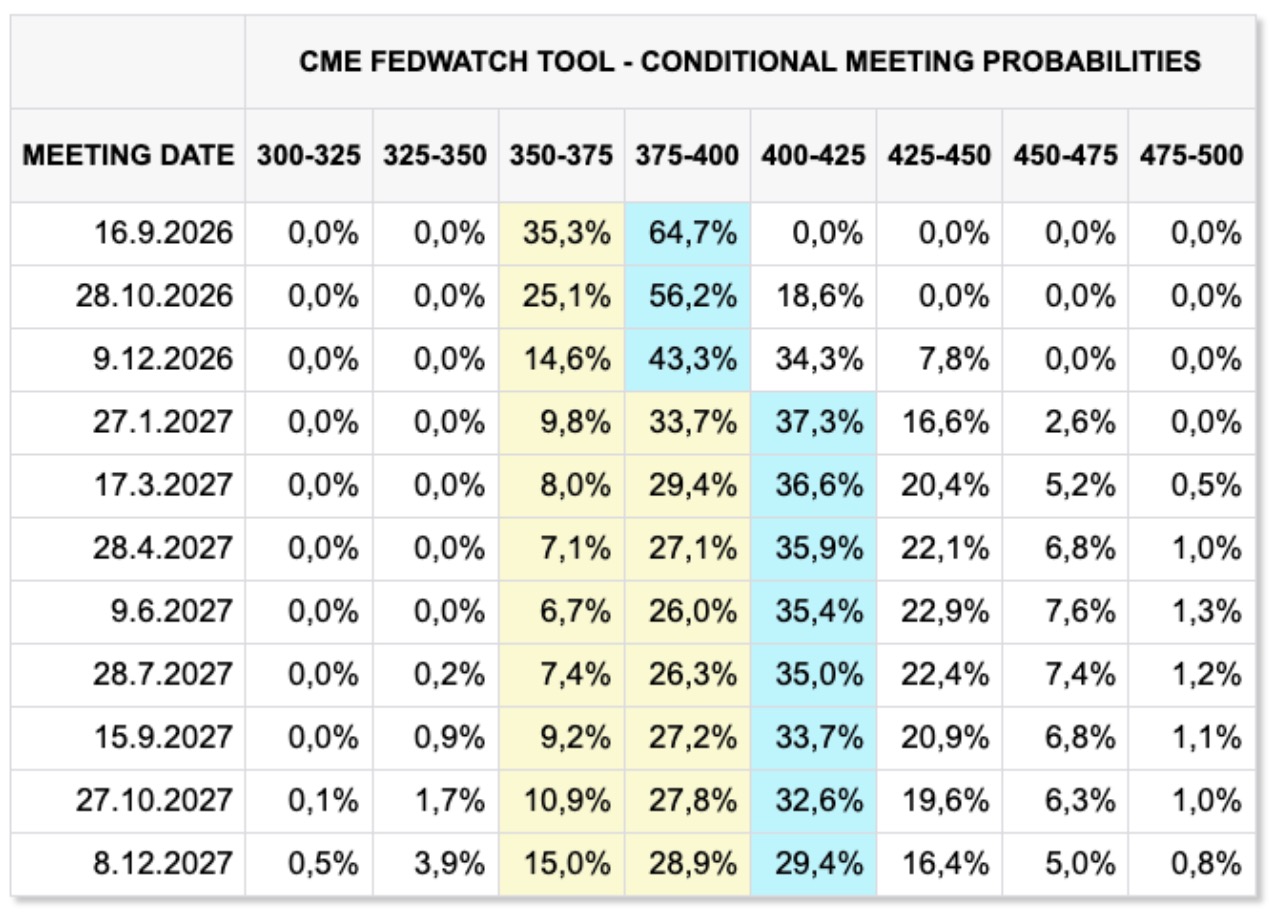
Source: https://www.cmegroup.com/markets/interest-rates/cme-fedwatch-tool.html
These could be supported by higher energy prices or rising costs associated with technology infrastructure, for example. If inflation were to remain elevated for a longer period, the Fed could keep rates higher for longer, or the debate about further increases could be reopened. Higher bond yields are particularly detrimental to highly valued technology companies, as they reduce the present value of their future earnings.
Where can Nasdaq find support?
In addition to fundamental factors, investors are also watching technical levels that can indicate where the current decline could find support. Currently, the important area is around 28,500 to 28,600 points. If the index manages to return above this level, it could once again head towards its previous levels. maxI have around 31,000 points.
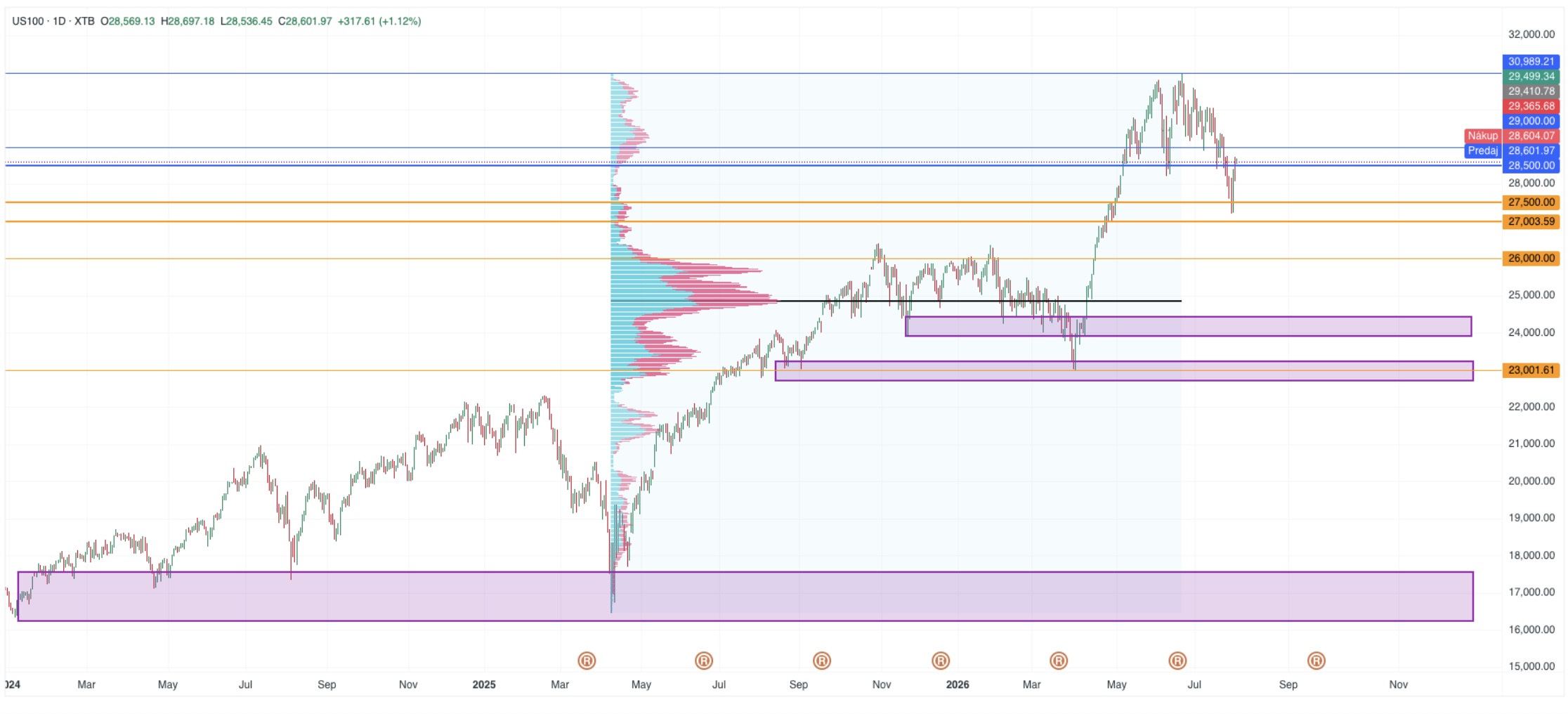
Source: xStation 5, price chart of the US100 instrument
In the event of a continued decline, attention shifts to the levels around 27,500 and 27,000 points. From a volume analysis perspective, the area between 24,800 and 25,000 points is also significant, where a large number of positions have been traded in the past. Stronger buying zones are located even lower, approximately between 24,000 and 24,500 points and subsequently around 22,600 and 23,200 points. These are the areas that may be of interest to institutional investors looking for opportunities after more significant declines.
The AI story continues, but expectations are high
The current correction does not automatically meanonec of the artificial intelligence growth story. Demand for computing power, data centers, and semiconductors remains high, and the largest technology companies are likely to continue to invest heavily. But investors are becoming much more demanding. Already nestRather than just announcing big plans for AI, companies will need to show that they can turn these investments into real revenue and higher profitability.
The gap between high expectations and actual results will be one of the main factors that will determine the future direction of technology stocks in the coming quarters. If you want to follow the development of technology stocks, the Nasdaq index or individual companies related to AI, you can easily view and trade their development via the XTB platform. Open a free account and gain access to thousands of stocks, ETFs and other investment vehicles.
CFDs are complex instruments and, due to the use of leverage, come with a high risk of rapid financial loss. 74% of retail investors have experienced a loss. You should consider whether you understand how CFDs work and whether you can afford the high risk of losing your funds. Investing is risky, invest responsibly.