Today, we take for granted that a map scrolls smoothly, an email opens without loading the entire page, and new posts on social networks appear instantly. But two decades ago, the web worked completely differently. Every click meant waiting and a new screen to load. One of the services that helped change this world was Google Maps.
Google Maps Today, most people perceive it mainly as a navigation that can take them almost anywhere by car, foot or public transport. However, their real influence is much greater. This service helped to show that a website does not have to resemble an ordinary document. It can act as a full-fledged program installed on a computer.
The website originally functioned as an electronic book
At the beginning of the new millennium, most websites were relatively simple. The user clicked on a link, the browser sent a request to the server, and then an entire new page loaded. The same process was repeated for virtually every action.
If you opened a message, changed a setting, or wanted to view another part of the website, the screen would often disappear for a moment and then reload. As a result, websites felt more like a set of linked documents than actual applications. At the time, no one thought it was strange. That's how the web worked. Users were used to waiting, and developers built services based on the capabilities of browsers and internet connections at the time.
Google Maps suddenly they acted like a computer program
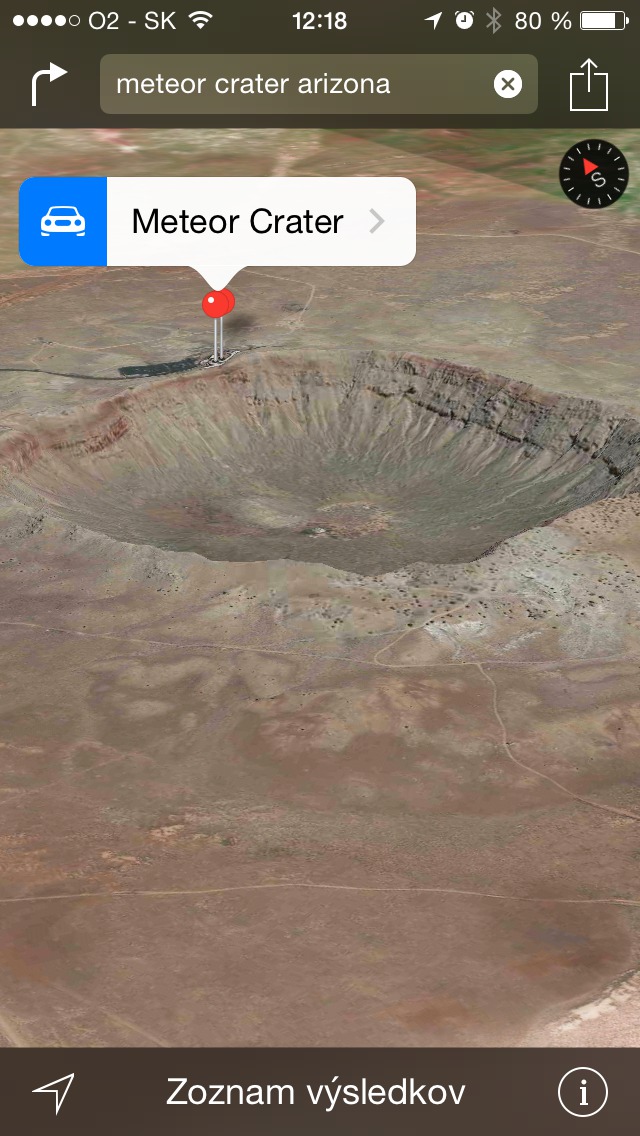
When Google introduced it in 2005 Google Maps, the service seemed almost unbelievable for the time. The user could grab the map with the mouse, smoothly move it to the sides, and instantly view other areas.
The entire page did not have to be reloaded after each movement. New parts of the map were downloaded continuously in the background and the user could continue using the service. Today this is completely commonplace, but back then such behavior resembled a classic application rather than a website.
On the development of this form Google Maps Bret Taylor, who later held important positions in companies, also participated Facebook, Salesforce and OpenAIHis team's work helped show that a browser could offer a much smoother and more natural experience than people were used to.
AJAX technology was the key
The change was driven by an approach known as AJAX. Its name originally came from the combination Asynchronous JavaScript and XML. In practice, it was mainly about the ability to communicate with the server in the background without having to reload the entire page.
ProThis allowed the viewer to request only the data it needed at that moment. In the case of Google Maps For example, additional parts of the map were displayed when the user approached them. Instead of loading the entire website, only a specific part of it changed. The result was a significantly faster response and the feeling that the person was not using a website, but real software.
Google Maps they were not the only service, but their influence was enormous
Of course, Google wasn't the only one using similar technologies. Google Maps However, they were among the services that introduced a new way of working with the web to a huge number of ordinary users. People suddenly saw that a web application could respond immediately, smoothly and without constant screen flickering. They gradually began to have the same expectations from other web services.
Gmail also used a similar principle, which was able to open messages, load content, and organize emails without constantly refreshing the entire page. This way of working later became the basis of social networks, cloudservices and practically all modern web applications.
Without this change, today's website would look completely different.
Principles that helped make it famous Google Maps, we use it practically all the time today. When we Facebookor Instagram, the entire page may not reload. When you write a document in a browser, changes may be saved continuously in the background. When you use ChatGPT, new answers are displayed sequentially directly in the open window.
The same foundation can be found in services such as Google Docs, Canva, Figma, Slack, Notion, or in online versions ofancsoftware programs. These tools are now so advanced that in many cases they can fully replace applications installed on a computer. Moreover, a modern website does not just have to load new data. It can display real-time notifications, synchronize the work of several people, save changes and respond to every user action almost instantly.
The most important benefit Google Maps maybe it wasn't the map itself or the navigation. The service changed people's idea of what a website could do. Once users got used to the smooth scrolling of the map without waiting, they began to expect the same speed and convenience from other services. Developers had to start thinking about the web in a completely different way. The Internet gradually stopped behaving like a collection of static pages and turned into a platform on which entire operating tools, graphic programs, communication services or systems using artificial intelligence could be created.
A revolution that we hardly notice today
When you open today Google Maps, you probably don't think about what's going on in the background. You simply move the map, zoom in on the street, and search for a restaurant or the fastest route to your destination. That's the biggest testament to the success of this technology. It's become so common and natural that we don't even notice it anymore. Twenty years ago, it represented a fundamental change in how the internet could work.
Google Maps They weren't just a cool map service. They helped convince the tech world that the web could be as fast, interactive, and usable as a classic computer program. Without this shift, today's internet, social networks, cloudNeither modern applications nor modern AI tools probably looked like we know them today.