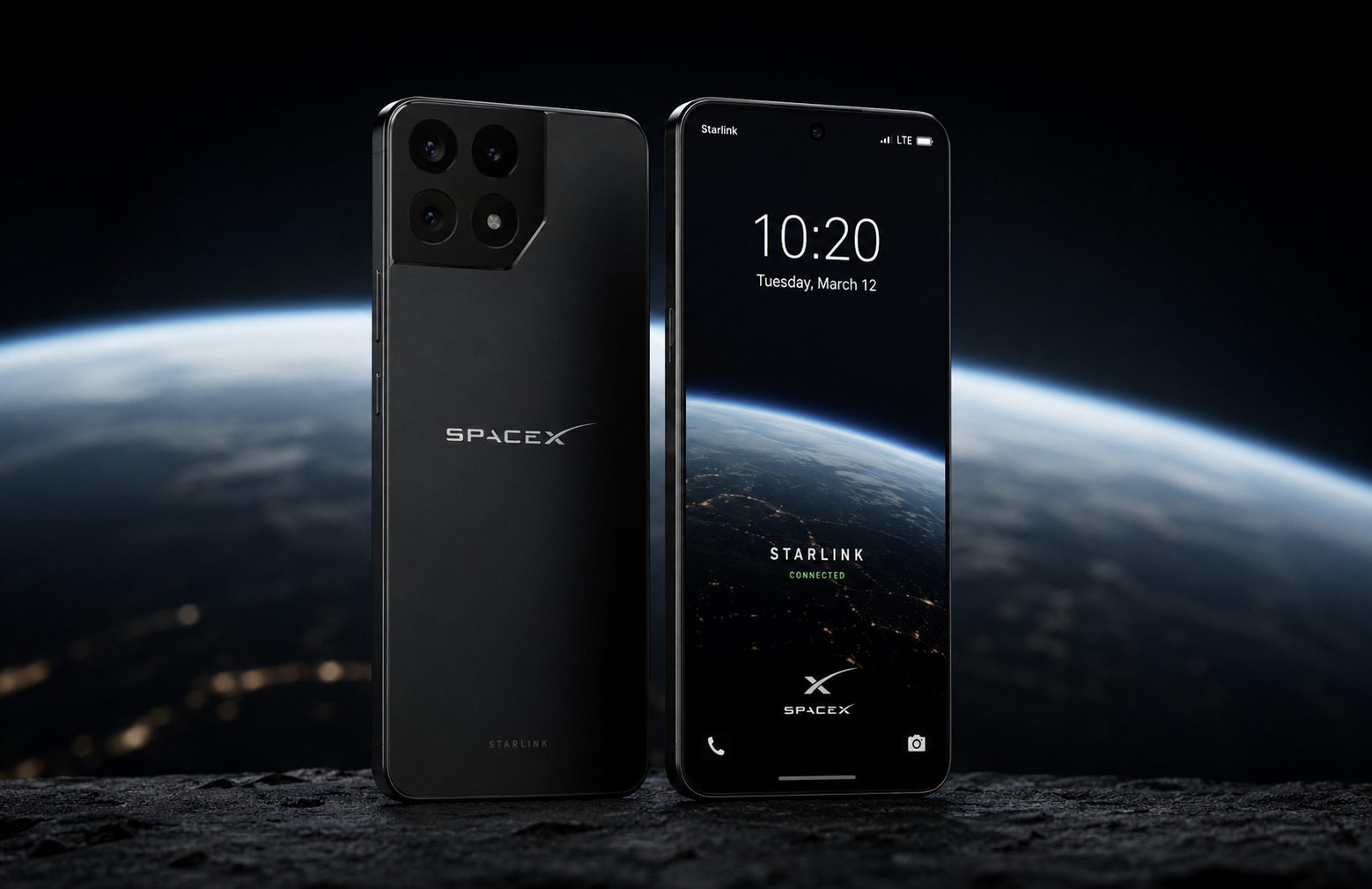
Elon Musk is in a position where it has an unlimited budget and technologies that no other company in the world has, including Apple. This is a dangerous combination for others, especially considering that Musk has never had small ambitions. Starlink already offers the Direct to Cell service, which is a service that allows selected mobile operators in some countries to use Starlink satellites to connect people to them at times when they do not have a standard connection via ground BTS stations. However, Elon Musk's ambitions apparently do not end there. In addition to wanting to enable every phone in the world to connect to his satellites, he is most likely also planning to show his own mobile phone. According to information reported by The Wall Street Journal, Musk showed the largest investors a device that ran on his own operating system and integrated the xAI artificial intelligence, which Musk is also behind.
The device is reportedly slimmer than average iPhone and in addition to its own operating system, which is allegedly not based on Android or anything we know today, it also offers the aforementioned possibility of direct connection to Starlink satellites. The phone is currently being presented under the SpaceX brand, with the fact that the project is in its infancy and so far these are really the first prototypes and attempts to create a full-fledged mobile phone. However, SpaceX has already reportedly confirmed to selected investors that it will be powered by Qualcomm Snapdragon.
Elon Musk immediately responded to this information and claims that it is completely false. However, it has been about three months since we Tim Cook He claimed that he was definitely not going to retire, and since September we have a new CEO here Apple. As they say, there is no smoke without fire, and it is very likely that SpaceX really showed the phone, although its launch on the market can be expected in a few years. Moreover, Musk has often spoken in the past about his desire to create one super application that can do everything and replace dozens of applications that users currently use, and the moment it cannot do something, it would immediately program and create it itself. This is something for which its own device would be directly offered. It is this vision that is supposed to inspire the first prototype of the phone that shareholders had the opportunity to see.
There is also one more interesting thing. In order for Starlink to use the connection directly to our phones without having to deal with any operators, it would have to obtain its own mobile licenses in each country in which it wants to operate the service, which may not be a problem for a company owned by someone like Musk. The moment Starlink does this, it would become an operator that will offer a signal regardless of where you are. The moment you travel across borders, your phone will not have to connect to a new network. Starlink, or rather SpaceX, must have a mobile operator license even when it has its own phone that will connect directly to the satellite, because the satellite is essentially a broadcasting station that uses the radio frequencies through which the phone connects to it. This is precisely why licenses for operating a mobile network are necessary.
We'll see if and when SpaceX's own phone is revealed to the world. So far, artificial intelligence has given us an idea of what a SpaceX phone might look like. However, it seems that if Musk does indeed launch his own mobile phone, he will aim for something other than just competing with iPhones and Samsung phones. Rather, he will try to offer a device that will be completely dependent on AI and will use Starlink instead of traditional carriers.