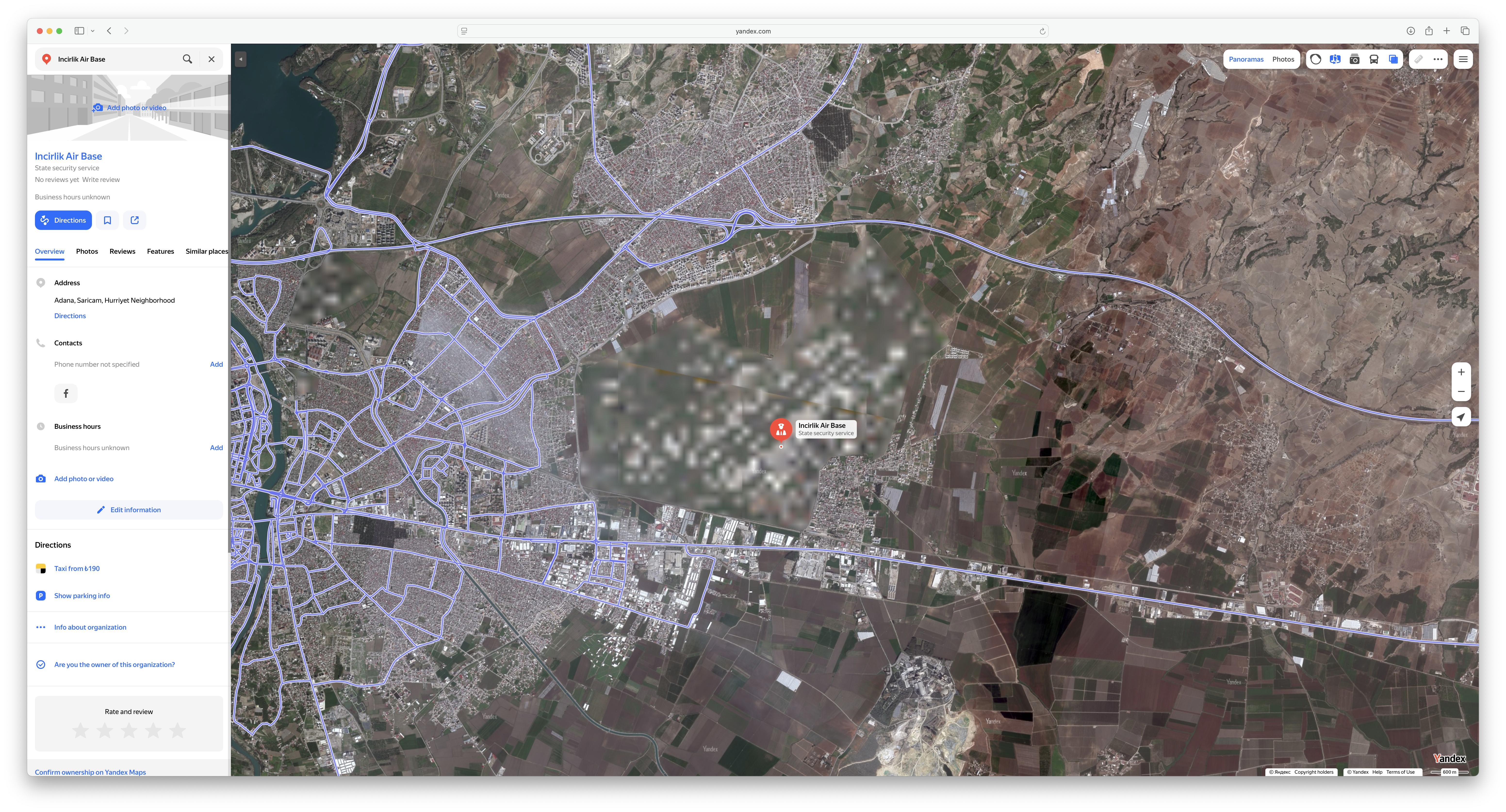
An attempt to hide strategic objects from Ukrainian drones ended in a complete fiasco for Russia. Russian technology giant Yandex, which operates as an alternative to Google Maps in the country , began blurring sensitive areas on satellite images at the behest of the authorities. The result? Due to the so-called Streisand effect, it paradoxically drew the attention of the whole world to secret military objects near NATO borders. Scandinavian public media (Swedish SVT, Danish DR and Norwegian NRK) in cooperation with the Estonian portal Delfi revealed a total of 119 blurred areas. Analysts immediately understood that the general blurring of locations works as a perfect target list. Almost all of these places are demonstrably related to the Russian military or the war industry.
Interesting fact: Among the censored objects, due to adminiNot only nuclear weapons depots and military drone factories have been thrown into chaos, but also, bizarrely, long-abandoned sites and an ordinary lingerie store. Moreover, the entire process of digital camouflage is accompanied by incredible amateur mistakes. When a Moscow court ordered Yandex to block the view of the repeatedly interfered oil refinery in Ryazan at the end of 2024, officials forgot to rewrite the company's name in the documents. In doing so, they publicly confirmed the direct connection of map censorship with the government's secret list of strategic enterprises involved in the military-industrial complex.
Security experts, including American nuclear weapons expert Matt Korda, warn that Moscow's effort lacks any technological sense. While Yandex blurs the images, rival platforms such as Google Maps, Bing or Apple Maps (or commercial providers of detailed satellite data) continue to display these locations in full resolution. Pro Ukrainian drone attack planners and Western intelligence services have essentially created a clear map of the most important targets for Russia.