
Ladies and gentlemen, it's here! What has been hotly speculated about in the previous weeks and months will soon become reality. Apple He recently announced a number of changes that he was forced to make by the European Union and its new law.onemo digital markets, which will enter into force on March 7 this year. And we are not afraid to say that these changes are by far the most fundamental changes in the history of iOS, as it will fundamentally change it in the European Union. We will cover the whole issue in detail tomorrow, as soon as we have studied everything more thoroughly. For now, we are only bringing you a "brief" overview of everything new through translation official press releases from Appyou.

Company Apple announced changes to systems today iOS, Safari a App Store, which impact developer applications in the European Union (EU) and which are to be compliant with the lawonemo Digital Marketplaces (DMA). Changes include over 600 new APIs, expanded app analytics, features for alternative browsers, and app payment processing and app distribution capabilities for iOSWithin each change Apple introduces new safeguards that reduce – but do not eliminate – the new risks that DMA poses to users in the EU. These steps will make the company Apple continue to provide the best and most secure services to users in the EU.
New payment processing and app download options in the system iOS they open up new opportunities for malware, scams and fraud, illegal and harmful content, and other privacy and security threats. Proto Apple introduces protection – including notarization of applications for iOS, authorization for developers in the marketplace and disclosure of information about alternative payments - to reduce risks and provide the best and safest experience for users in the EU. Even with these safeguards in place, many risks remain.
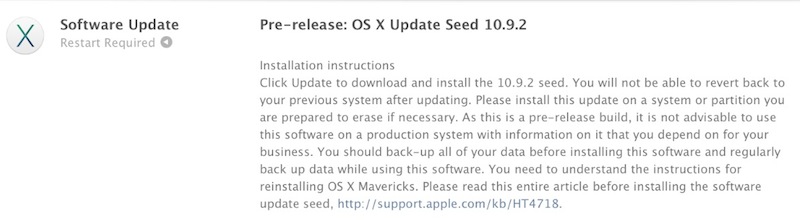
Developers can familiarize themselves with these changes on the company's developer support page Apple and can start testing new features in today beta green iOS 17.4. The new features will be available to users in the 27 EU countries from March 2024.
“The changes we are announcing today are in line with the requirements of the European Union Digital Markets Act, while also helping to protect EU users from the inevitable increased privacy and security threats that this regulation brings. Our priority remains to create the best and safest possible experience for our users in the EU and around the world,” he said. Phil Schiller, company employee Apple. “Developers can now learn about the new tools and terms available for alternative app distribution and alternative payment processing, new alternative browser and contactless payment options, and more. What's important is that developers can choose to stick with the same terms of business as they are today if that suits them.”
The changes for EU applications reflect the fact that the European Commission has designated the systems iOS, Safari a App Store for “core platform services” under the Digital Markets Act. In March, the company will Apple share new resources to help EU users understand the changes they can expect. These include guidance to help EU users navigate the complexities introduced by the Digital Platform Act changes – including a less intuitive user experience – and best practices for addressing new risks associated with downloading apps and processing payments outside of the EU. App Store.
Company Apple, which is available for developer apps worldwide, also announced new game streaming capabilities and more than 50 upcoming news in areas such as engagement, commerce, app usage and more.
Changes in the system iOS
In the EU, it carries out Apple in the system iOS a number of changes to comply with DMA requirements. Pro For developers, these changes include new app distribution options. Upcoming system changes iOS in the EU include:
New application distribution options for iOS from alternative markets – including new APIs and tools that will allow developers to offer their applications for iOS downloadable from alternative marketplaces.
New framework and API for building alternative app marketplaces – allowing marketplace developers to install apps and manage updates on behalf of other developers from their dedicated marketplace app.
New frameworks and APIs for alternative browsers – allow developers to use non-WebKit browsers for in-browser apps and apps with in-app browsing experiences.
Interoperability Request Form – developers can enter additional requirements here for interoperability with iPhone hardware and software features, and iOS.
As announced by the European Commission, Apple also shares changes in compliance with the DMA that impact contactless payments. This includes a new API allowing developers to use the technology NFC in banking apps and wallets across the European Economic Area. And in the EU Apple introduces new controls that allow users to choose a third-party app — or an alternative app marketplace — as their default contactless payment app.
New options for developer applications in the EU inevitably create new risks for users Apple and their equipment. Company Apple cannot eliminate these risks, but will take steps to reduce them within the limits set by DMA. These safeguards will be in place once users download the system iOS 17.4 or later, starting in March, and include:
Notary review of applications for iOS – a basic control that applies to all applications regardless of their distribution channel, focused on platform integrity and user protection. Notarization involves a combination of automated checks and human review.
App installation sheets – which use information from the notarization process to provide a clear description of the apps and their features before download, including the developer, screenshots, and other essential information.
Authorization for developers on marketplaces - to ensure that developers on marketplaces commit to ongoing requirements that help protect users and developers.
Additional protection against malware – which prevents applications from running for iOSif, after being installed on a user's device, they are found to contain malware.
These protections – including notarization of applications for iOS and authorization for developers in the market – help reduce some risks to user privacy and security iOS in the EU. This includes threats such as malware or malicious code, and the risks of installing apps that misrepresent their functionality or the responsible developer.
Company Apple however, it is less able to address other risks – including apps that contain fraud, deception and abuse, or that expose users to illegal, inappropriate or harmful content. In addition, applications that use alternative browsers - other than the company's WebKit - can Apple -, negatively impact the user experience, including impacts on system performance and battery life.
Within the limits set by the DMA, the company Apple undertakes to protect privacy, security and quality of the user environment as much as possible iOS in the EU. For example, the function App Tracking Transparency will continue to work for applications distributed outside App Store – requires user consent before a developer can track their data in apps or on websites. However, DMA requirements mean that store features App Store – including Family Sharing and Ask to Buy features – will not be compatible with apps downloaded outside of the store App Store.
When these changes take effect in March, the company Apple will share more detailed resources explaining the options available to users – including best practices for protecting their privacy and security.
Browser changes Safari
Users iOS today they already have the option to set a different application as their default web browser SafariIn accordance with DMA requirements, the company Apple also introduces a new selection screen that appears when you first open the browser Safari in the system iOS 17.4 or later. This screen will prompt EU users to select a default browser from a list of options.
This change is a result of DMA requirements and means that EU users will be confronted with a list of default browsers before they have a chance to understand the options available to them. The screen will also interrupt the experience for EU users when they first open Safari with the intention of going to a website.
Changes in App Store
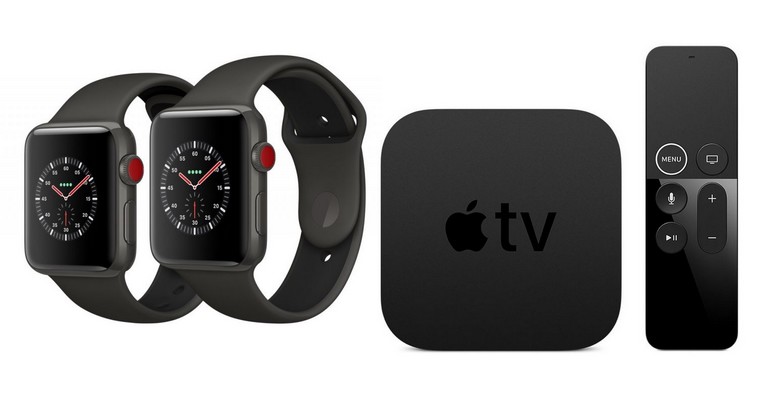
In the store App Store shares Apple a number of changes for developers with applications in the EU that affect applications across company operating systems Apple – inclusive iOS, iPadOS, macOS, watchOS and tvOS. The changes also include new information informing EU users about the risks associated with using alternatives to secure payment processing in App Store.
Pro Developers, these changes include:
- New ways to use payment service providers (PSP) – within the developer's application to process payments for digital goods and services.
- New payment processing options via link-out – when users can complete a transaction for digital goods and services on the developer's external website. Developers can also inform users in the EU about promotions, discounts and other offers available outside of their apps.
- Tools for business planning – for developers to estimate fees and understand indicators associated with the company's new business terms Apple for EU applications.
- The changes also include new steps to protect and inform users in the EU, including: labels on product pages App Store – that inform users that the app they are downloading uses alternative payment processing methods.
- Information sheets in applications – which inform users when they are no longer transacting with the company Apple and when the developer refers them to transactions using an alternative payment processor.
- New application review processes – to verify that developers are accurately reporting information about transactions that use alternative payment processors.
- Enhanced data portability on the company website Apple Data & Privacy – where EU users can get new data about their store usage App Store and export them to an authorized third party.
For applications that use alternative payment processing methods, the company will not Apple able to refund money and will have less ability to support customers who encounter problems, fraud or scams. These transactions will not reflect the useful features of the store either App Store, such as Report a Problem, Family Sharing, and Request to Buy. Users may be required to share their payment information with other parties, creating more opportunities for bad actors to steal sensitive financial information. And in the store App Store User purchase history and subscription management will only reflect transactions made using the in-app purchase system App Store.
New business conditions for applications in the EU
Company Apple today also published new terms of business for developer apps in the European Union. Developers can choose to accept these new terms of business or stick with the company's existing terms Apple. Developers must accept the new terms of business for EU applications in order to take advantage of new alternative distribution or alternative payment processing options.
The new terms of business for EU applications are necessary to support the DMA's requirements for alternative distribution and payment processing. This includes a fee structure that reflects the many ways in which the company Apple creates value for developers’ businesses – including distribution and search in App Store, secure payment processing in App Store, trusted and secure mobile platforms Apple and all the tools and technologies to create and share innovative applications with users around the world.
Developers operating under both terms of business can continue to benefit from secure payment processing in App Store and share your apps in App Store in the EU. And both sets of terms and conditions reflect the company's long-term efforts Apple to make the app ecosystem the best opportunity for all developers.
Developers who will work under the new business terms will be able to distribute their applications for iOS z App Store and/or from alternative app marketplaces. These developers may also choose to include in their EU apps App Store will use alternative payment processors across the company's operating systems Apple.
New terms and conditions for applications iOS in the EU they have three elements:
- Reduced commission – applications for iOS v App Store They will pay a reduced commission of 10% (for the vast majority of developers and subscriptions after the first year) or 17% on transactions for digital goods and services.
- Payment processing fee – applications for iOS v App Storu can use payment processing in App Store for an additional 3 percent fee. Developers can use payment service providers within their app or refer users to their website to process payments at no additional cost to the company Apple.
- Basic technology fee – applications for iOS distributed from App Store and/or alternative app marketplaces will pay €0,50 for each first annual install per year above the 1 million threshold.
App developers for iPadOS, macOS, watchOS and tvOS in the EU who process payments using a PSP or by linking to their website will receive a three percent discount on the commission they owe Appyou.
Apple also shares a fee calculation tool and new insights to help developers estimate the potential impact of the new business terms on their app business. Developers can learn more about the changes for EU apps on the company's new developer support page Apple and they can start testing these options today in beta green iOS 17.4.



konecne
KoneThank you and thanks to the EU🇪🇺. I hope this change will be gradually implemented worldwide.
Well, the trouble 🥲🥲at Brussels is going to ....
It is spelled "potes". You go... you need to go to the school desk.
It's actually spelled "pleasure". A moralist and he can't spell it right either...
Is it hard to avoid this update?
It would be solved, for example, by the American ones apple ID ?
iOS 17.3 as the latest SW on the phone? It looks like this...
do not update and then probably buy from US distribution and American Apple ID.
I get the impression that US distribution will not help you. It will all be controlled via IP address.
Thank you to the EU for iOSu makes a leaky Android.... The whole EU can go to hell.
:-D what about never nestno, what are you writing?
I agree and 5 demolitions too
The main thing is to get out of it nestno android:-(
I definitely won't download anything with EU. App Store, I can just buy that crappy android and be fine with it..
If the diktat from the road is not a bigger problem for you than the one from the EU...
You won't, half of the iPhone's functions are missing.
What are you all talking about here? Is someone forcing you to install it? appfrom alternative sources?
NO, DO NOT FORCE!
The level of security will be for those who remain only on appstore still the same.
Unfortunately, that probably won't help! Despite the fact that I don't even want to have this option on my phone and deal with it!!!
I'm afraid that the EU will also dictate that the EU will be displayed to us. App Store and there will be no other way back.. tvl that would be a disaster like.. maybe change the region on the phone??
No, it won't. This is because there is the option to install apk from other sources. ProIt will be a semi-open system.
They won't stay, they'll still be too viral iPhone send to uninfected source code pres iMessage e.g. etc. They will make the latter just Android. Which is perhaps the purpose, Apple it has pluses precisely in the software, in the hardware it is already overtaken by premium China.
LoL, another cyber security expert. You better not drink anything.
Exactly!!
You've never had a jailbreak, why are you all so excited about it? 😂
No. What would be the point?
So it made sense, like 10 years ago with iOS3 it couldn't even display percentages for the bar and the like
In fact, it didn't do a damn thing back then iOS today
And so we had jailbreak and at that time they downloaded great applications sideways in Cydia and the like, they weren't official markets and it had all the magic
But from iPhone 3G has advanced a lot and I believe that the vast majority of today's users apple she didn't see it
Correction: it will be 15 years already
iOS3 is 2009
Proyes, don't speak for us, but for yourself...so they didn't "have" any. I didn't have a jailbreak and I didn't mind. A lot of people were touting the benefits of jailbreaking, but in the end, 99% of people got it just to brag about it, but didn't use it in any way.
Jailbreak was everyone's free choice. And for phones that did not have it, communication with jailbroken phones was not a risk. Now it will be open and there is danger.
Dangerous paranoid people came to me.
And open NFC vitamin, koneHow can I make a payment from this? terminal upon receipt by cashless payment
And when will I be able to have it on Android? safari or Apple pay? That comrades from euroDoesn't the union solve the problem? :)
Until there apple adds Comrade.
Definitely tomorrow if that Apple will issue
Can someone please write to me in a simplified way what it is about? In normal speech😁
Take it easy. :)
ProThere will be an opportunity to download applications from other "stores" than the App Store.
If so nestyou will use it normally iPhone as before.
Otherwise, it works just fine on the Mac - no one solves it and doesn't get hysterical.
And if you install appki from third parties, it still applies that the biggest security risk is the user himself - just be careful about what you install and who created the application.
E.g. spam can fall into your calendar even now with the "closed system".
Just for info – sideloading went to iOS even before this change, but it was not as user friendly and was limited to a certain group of users – developers, corporate appetc.
Thanks;)
KoneMaybe from iOS It will become a competitive system and not what it is now. A half-baked toy for half-literate users.
You illiterate...what exactly is this half-baked toy about? iOS dreaming needs to download tons of support appfor the system to work.
Really? I have a completely different experience. I'm writing this to you from my 15th max. Pro For idiots who only have a phone for making calls and taking pictures, that's enough. Pro all the others don't.
KoneYes! Apple on the first pages of the best-selling phone and from somewhere 5. Samsung. That sounds like a decent conlurence ability to me! I'll think about it, why are you such an idiot and bought a half-baked toy?
McDonalds is also the best selling garbage.
So that I can make fun of you and you can't tell that I have an android :)
Kone3x glory. Maybe you can install a formatting utility.
For me, the only + with this clownery is the possible installation of KODI. That's it
I don't understand why the EU is getting involved again. If you don't like the current secure model, let them buy a competing, leaky Android, it's everyone's choice. I think it's a big step backwards in terms of security. There will be a lot of attackers who will want to exploit this for some malware. I'm horrified at what else the EU is capable of ordering. Personally, I definitely prefer security to the possibility of installing some applications from 3rd party stores, from where malicious code can spread between devices easily via iMessage, Cloud etc... I'll want to exchange with someone NameDropif I don't know that his device is free of malware?
I totally agree!
It's unbelievable how many IT experts there are at once. 😁😁😁
Agreed, I'm really having fun with it :D
In other discussions, the same people emerge as experts on fighter jets, viruses, the Middle East, energy, climate, law... They know a lot. They just often can't even spell.
But you are one of them, Adam. Maybe the worst.
So if it's going to happen, he could Apple to do something else too...namely so that I can freely turn on a function on my phone that prevents me from being contacted by a sideloaded app.
Goodbye closed system, I liked you! :-(
And it's not just about security, but also the stability of the system will be compromised.
It's up to us, whether we will be faithful AppStore, where Apple he will have great control and everything will be normal or the person will take an alternative path. And even an application from a third-party store will not be able to do everything, Apple it also implements some kind of firewall, which when it detects malware or something in the application, will not allow it to work on its systems.
On a Mac, you don't mind installing from other sources and pri ios you are doing the end of the world. The main thing is that we already have a slow M3 processor in the ipad ios system in nom is compared to mac os onic. but that's another matter.
So many thoughts in a few sentences. You're a little confused, aren't you? 😂
all those changes are great for some, but in my opinion it would be a bit difficult to turn it off or basically turn it on whether I want it or not
So when a person wants it, he downloads an alternative store from the site of the store developer via the browser.
If you don't want it, you are nestiahne There is nothing to turn off, I think.
And before the site tries to download something, a warning will definitely pop up.
Luckily, it's all about our choice. I'll stay clean. iOS environment and I don't intend to install crap from anywhere else AppStore, ApplePay I don't intend to leave (I haven't found a faster and safer alternative).
This move by the EU is completely unnecessary.
And if anyone thinks you're on now iPhone It will install the apk similarly to how it does on a droid, so it won't be like that.
Exactly when I was switching from Android, I made a voluntary choice Apple with the system iOS and fully aware of the limitations this system offers. I didn't mind. I liked that there was a choice. I also won't need these sheep that the EU forced on me Apple implement. Nowhere does it even say that it's forever. Politicians change in our country, they will change in the EU as well. I believe, that Apple he did the things he did with this obligation to buy time to change (however, there will be EU elections) before the EU cracks it and sends Apple to court (see what I write below). He can then convince future EU politicians that it was a bad choice, which is why I think it will only be in the EU and will not be allowed elsewhere. Probecause they believe that the EU will go back in time.
I am seriously amused by the way some people advocate being restricted. Instead of freedom, they long to live in prison and call it safety. If Apple made a car and made it possible to fill it with only Apple gasoline, they would probably advocate that too.
The question of where is the truth, EU vs. Apple. As if I switched from Android to iOS and very satisfied. The system runs faster than Android. And I don't know if it's just a feeling, but I felt safer. Whenever something happened, I could turn to Apple Support, including by phone and in Czech. If a problem occurs now, that option will not be Apple he's staying away from that. And he won't help with that. Only with what you install through AppStore.
And it probably won't be that crazy, what I read from a foreign competing website, which is no joke, they write that Apple will probably go to court anyway, but it will take the EU a while to crack his case. Installing third-party apps will not be possible without the Store. Practically, a company that wants an alternative Store to operate, it will have to have so-called capital and not small. Follow some rules and as an unnamed foreign website writes, for each installation of the application outside AppStore, as if Store third parties, the owner will have to Store pay +/- €0,55 even for an app that is free. So it won't be as huge as everyone thinks. Maxwill definitely arrive Microsoft, Epic Game (probably) and Google.
You write that people defend restrictions, but I take it more from a business point of view, client/customer vs. the merchant/firm, the firm/merchant offers the product and the client/customer either chooses it or chooses the competition. Apple never hid its closed system and style of business and it still found its customers. No one forced the customer to buy Apple, he himself with his free will to choose their product where he clearly knew what was in store for him and still chose that product. Practically thanks to the fact that Apple offered what it offered and Google its system, so there was a choice on the market, either a very open system or a closed one iOS (free elections). Now politics has started to interfere and is actually creating similar systems only in the EU market (it depends on how the EU intervenes in the future). I don't think politicians should be interested in such detailed things. I think there are much more important issues in the world that need to be resolved.
If the website owner doesn't mind, I'll gladly include a link to the site where they write about the fee for installing the application outside of AppStore.
We are not against the EU, but in this I think it is doing something that is not so important. A mobile phone should basically be able to make calls, write messages and be able to connect us to the Internet, all other services are above standard in my opinion and that's where the competitive market should come. And the customer chooses what suits him best.
iGas. KoneYes! Just like buying the original toneprinter ink, prescribed oil and original car parts. Of course. By the way, no one is forcing you. But I want everything to work and there are no problems with the warranty. I hope at least that you can handle this dictatorship and the prison stay!
Do you also buy certified electricity to charge your iPhone?
You are just a limited individual who has never tried other adequate equipment and thinks that his opinion is somehow relevant. It isn't.
You don't understand IT, you don't understand legislation, you're just a nerd and a user who has their smartphone.one for making phone calls, nothing more.
What restriction? No one is forcing me to buy Apple. If you mean limitation by the fact that the price includes technical support that makes sure everything works and I don't have to worry about what will work and what won't, I don't know. I simply don't have time for that. My cousin is a programmer and he has Android because he programs the applications himself or modifies the code, otherwise it's worth shit. I see it as a competitive struggle to destroy something that works because there are phones with better hardware and if it's not the original ios so some people choose competition. And the argument that "poor" companies like Google, Meta, Uber... will save them is also a joke, besides, no one forces them to offer applications there. It is true that supporting small companies in the form of discounts would also Apple survived unscathed.
ProSorry Petra, I'm sending the answer through your comment, but I can't respond to Brutus, there's no option to reply, so thanks to your comment I'll respond to him.
@Bruto: I would just like to point out that you can also choose the electricity seller according to your free choice. If Apple or Google sold electricity in the EU, so you can take electricity from them. It would definitely Apple/Google could make smart meters, whatever. So if it could be done and it would provide benefits, it would be fine Adam He could use it. But he doesn't, so he'll use what he has.
How can you label someone as not understanding IT, legislation? just because you don't like his free opinion? However, it is true that the market should be colorful, different, so that each customer can choose according to his individuality. Just as every person on earth is individual and original, every company could also be original and individual.
The EU/politician should deal with other things, food waste. How many cows, pigs, chickens, etc. are raised to fill the shelves? So that each of the customers has an abnormal and large selection? And if the person/customer doesn't get it, they cuss and say there is no choice. But does everyone who swears think what will happen to the unsold pieces? They go bad, mold, etc. and get thrown away. Poor animal that went to waste because it just gets thrown away. And in general, one could watch documentaries and programs about what the breeding of so many cows, pigs, etc. causes. Even raising cows produces more harmful gases than the car industry, just because of the spoiledness of people on the planet. And then it causes ozone holes and destroys our planet.
That should be solved by politicians or the EU. And point. Not whether on the phone from Apple, the conditions are what they are, and that there cannot be a store from Google. That's a rash. So if you don't like the eco system Apple, try Google. But don't force someone who owns a company to change their strategy on which they based their business and as you can see it still pulls people even through the given restrictions.
If I take into account what we were taught in school in marketing and management and economics, in the framework of a free competitive market, then any regulation is bad. It has aonec influence on price increases. Regulations should only be introduced if the competitive environment is not functioning.
In my opinion, the competitive environment here in mobile phonesonech is. Google offers its pure Android so that every brand can offer it in any form, in addition it offers licensing of devices where Google services will work. As far as I know, Google is also playing with the idea of prohibiting the installation of third-party applications, because it knows very well that it is not safe. And yes, it did not talk about third-party application stores, because for example, Android licensed from Google can also be used in devices of other brands. Like Samsung, Xiaomi, Honor, etc.. and it will allow them to have their own stores next to Google Play, because its business is set up from the beginning to offer Android to other manufacturers with the option of licensing. So it can allow them to do so, with the understanding that they are responsible for the applications in their store. Try to find it, Google is really considering that it will not be possible to install applications just from the net.
Apple has built his business on a closed platform that even iOS and does not offer other systems to other companies. It aims more or less at a richer layer of customers (from the business segment, creators, etc.), and the prices already show that it is a premium brand that has a selected group. The prices of the devices also depend on this. And in order to offer the business segment something other than Android, it closed the platform and secured it (yes, sometimes there are holes, but where are there not?). But it does not force anyone to use its devices and services. Even a business person can freely decide for Android.
And that's what market freedom and competition are all about. The customer goes to the store and chooses freely according to his preferences, someone likes openness, someone likes closure. And that's right.
Apple even Google copy and copy each other if they know it's good. And with that comes news. If everything is the same, there will be no inspiration. And the market will be monochromatic. And the EU should care about more important things than these.
And, by the way, I don't think it's very nice to insult someone with the words "stupid", "limited individual" and practically a simple person. Usually, behind insults and humiliation, there is a person who lacks his own opinion and whose intelligence is not above average, sometimes even below average. Probecause he has no arguments to contradict the person, he starts insulting and slandering him out of ignorance. And hides it behind this stupid behavior. I don't want to insult you because I don't know you, but in psychology, what we learned, that's what it looks like from what I read. It's possible that you have arguments that you haven't revealed here. But I don't have the right to insult you here, and you don't have the right to insult someone who expressed their opinion.
And I'll just add Apple It's a foxy approach and won't offer the ability to install apps from anywhere, but only from third-party stores, and those aren't exactly easy either. It must have a basic capital, and not a small one, and for each installed app outside AppStore to hand over Apple a fee of 0,55 EUR even though the application was free. And other things. And if Apple recognizes that the application is harmful, so it can be installed but will not be launched. I think the fee will be quite liquidating. Consider that in the EU, 5 customers will install one free application = 000 EUR. And now how much will the application be free. Apple he had a lot of quality lawyers involved in this decision to follow the law. And if the EU doesn't like it, it will take a long time for it to Apple sent to court. Or they will change laws that will be dictatorial. Let's also play with the idea that Apple he can leave the EU market (it would hurt him) but he could sell us equipment from a country outside the EU, where it would be our decision. As even now you can buy almost anything outside the EU.
Let's be surprised where these EU ideas will go. And the EU elections are coming soon, and everything can still change. Before, there were politicians who wanted to regulate operators a lot. And when they left, new ones came in who claimed that such regulation is not healthy from the EU and moderated their demands. In my opinion, it will be the same with the EU. And that's also because democratic, right-wing parties usually win. Who care more about freedom and democracy and less regulation. Apple he knows that and that's why he hasn't fully opened up the market yet, as the EU wanted.
I would ask you if you respond without insults and humiliation. And rather use factual counterarguments. Thank you
Interesting discussion, you want to learn something useful, but it's just about attacking you're stupid, no you're stupid, but at least a few reasonable relevant posts can be found..;)