We often hear about the worst cases of network and database breaches from the media. There are countless situations in which hackers cause great damage to companies and individuals. The number of newly operated systems that attackers can target is constantly increasing, and at the same time the value of the data processed by these systems and the processes they control is growing. Along with the growing technological “debt” that organizations and individuals build up by operating outdated systems, the risk associated with cyber threats is becoming greater and greater.
Threats affect everyone, not just giant companies, but also small businesses and individuals. In order to effectively counter threats, we need to have enough security experts. ProIt's good that young people today can learn from the best in the field, for example from security experts from companies Alef and Cisco, which have had programs for students and others interested in learning for many years. "For example, at a high school focusing on cyber security, we present practical topics that follow the material being discussed. The added value is in practical knowledge. From the beginning, we wanted to spread awareness about the issue of cyber security among young people and create a community that would meet regularly," says Filip Pávek from the ALEF company, adding that they also organize lectures for various institutions that are interested in the topic.
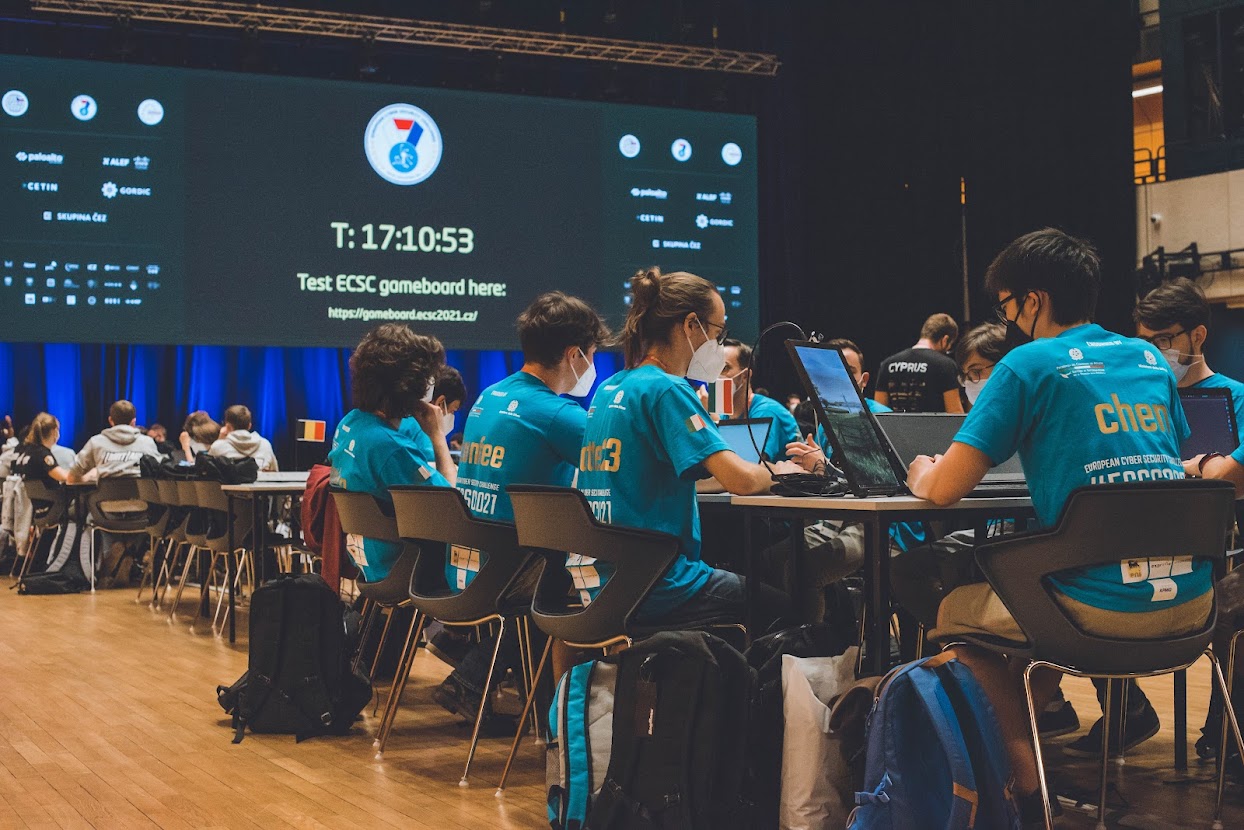
ALEF and Cisco have been supporting student education for a long time, and therefore were naturally also key partners of this fall's European Cyber Security Challenge (ECSC), which is a major international competition. It takes place every year in one of the EU countries and as such is a key activity of the European Union Agency for Cybersecurity (ENISA). This year's ECSC 2021 was the first time in 15 years that this event has been held in Prague. The competition was attended by 250 competitors from national teams under the age of 25. European teams tested their strength in penetration testing, cryptography, reverse engineering, forensic analysis and other challenging tasks. The competition aims to motivate young people to work in IT and to popularize cybersecurity issues in general. Companies are also striving for the same Alef and Cisco with its educational programs to support and develop young experts.
TIP: Test your business with Sysnetshield . They will verify your company with security solutions and assess security risks so you can ensure the security of your business.
The Czech Republic lacks 30 IT experts
Supporting young talents is essential for the continuity of the field. “International studies show that there is a shortage of approximately 4 million cybersecurity professionals in the global labor market. There is a similar situation in the Czech Republic, where there is a shortage of approximately 30 IT experts. Our educational programs try to contribute to improving the situation in the future," says Andrej Jeleník, a system engineer at Cisco, who participates in a joint educational project with ALEF.
Dozens of students attend presentations organized by Cisco or ALEF. They usually attract serious people interested in this field. Some individuals even travel to Prague from Brno or Šumperk, for example, for a two- or three-hour presentation from their practice. “Whoever comes there does it for themselves and knows why they came there. Some of these young people are already our colleagues. They work for Cisco, ALEF, but also other companies,” describes Filip Pávek. His colleague from ALEF Jan Kopřiva adds that the students' reactions to the lectures are often extremely positive. Why not, because today's security experts are something like the James Bond of today. Their main weapon is the keyboard.
The problem is that a relatively large number of pupils and students still underestimate cyber threats and are not sufficiently prepared for them. According to security experts, it would be good for this topic to be included in school curricula, because it affects everyone in everyday life. Ideally, it should be taught in primary school. "Currently, within the AFCEA, we are participating in the preparation of recommendations for the Ministry of Education, Youth and Sports, which cover this area. At the same time, we have already actively participated in the preparation of a new project for secondary schools narrowly focused on cyber security. It is already being taught in a pilot project at several schools," he explains. Jan Nettle.
A good reason to start learning early is that there is a lot of knowledge and experience to absorb. "When we work with specific students, they are surprised over time how much time it takes to prepare for this area. Few students understand that first it is necessary to understand and learn the dense theory, to master the principles of how to prevent security attacks, and only then can they enter the world of attack and vulnerability testing. Sometimes in practice we see that students want to 'go around' it and take it from the other side and start with an attack. But this is often just a consequence of a big ego and mini"...with minimal knowledge," adds Filip Pávek, adding that they are patient even with such students and try to guide them in the right way to acquire important skills, as well as ethics associated with cybersecurity.
Security experts from ALEF and Cisco are in demand and their time is precious. Nevertheless, they devote a large part of it to educating young people in their field. According to them, the time required for all presentations and activities related to students is immense, but it is definitely worth it. “I have been presenting at the Cisco Academy for over 10 years. When we prepare a presentation for an elementary, secondary or higher education institution, we have to make the current presentation interesting enough, and especially from practice and relevant to the given group. It is very challenging to convey practical experience to such an audience. Pro "Imagine, preparing for four two-hour presentations within a semester can take several days," concludes Filip Pávek from the company Alef.