
If you think that there are so few computer operating systems in the world that you could count them on the fingers of one hand, you are sorely mistaken. Windows, macOS and Linux are the most well-known operating systems, but this does not mean that they are the only ones. In this article, let's take a look at 10 operating systems that you probably didn't even know about.
You might be interested in

FreeBSD
If you're using an operating system that's available for free and isn't Linux, you're most likely using a BSD-based system. The FreeBSD operating system is one of several systems built on the UNIX platform. In addition to FreeBSD, NetBSD, OpenBSD or PC-BSD are also available, for example. Most of these systems are very similar to Linux - they are free, open source, and available to virtually everyone. Some of the source code from FreeBSD has even appeared in other operating systems, such as macOS, the operating system for the Sony Playstation 4, and others.
ReactOS
Some operating systems that are available for free try to resemble some of the larger operating systems, and ReactOS is one of those. The main "mission" of this operating system is to be able to run applications from Windows, without requiring the user to purchase an original copy of the system Windows. ReacOS is free and, of course, open source, so anyone can customize it. This operating system has been partially implemented in many APIs since Windows and collaborates with the Wine project.
FreeDOS
Remember that time when computers didn't have a graphical interface and everything happened inside the terminal? If so, you surely remember MS-DOS. The FreeDOS operating system takes you back to that era, with everything. Thanks to FreeDOS, you can run old DOS programs on computers with modern hardware. We must also not forget the fact that you can play a lot of old games in FreeDOS.
Haiku
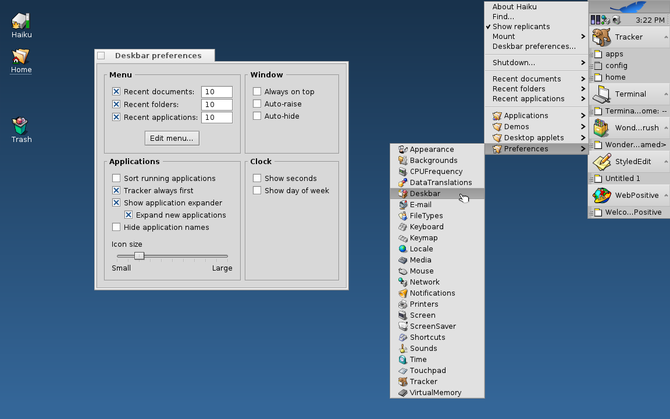
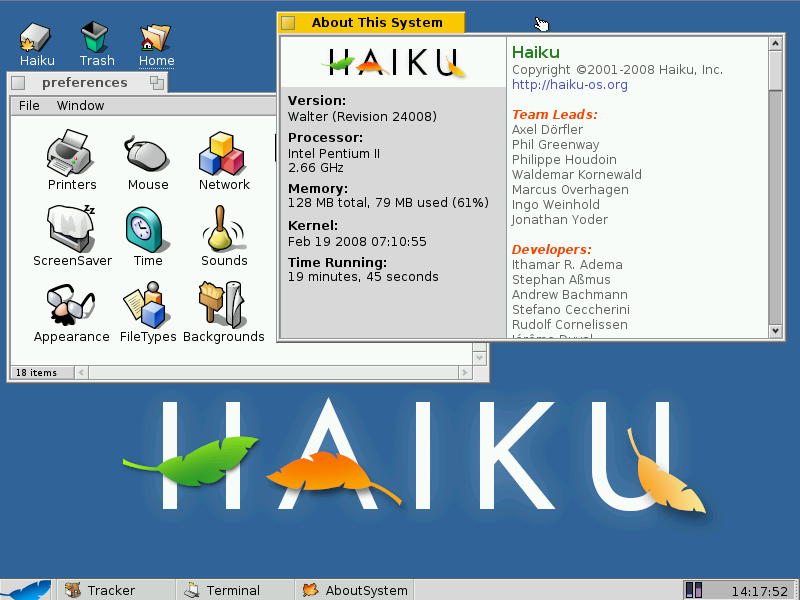
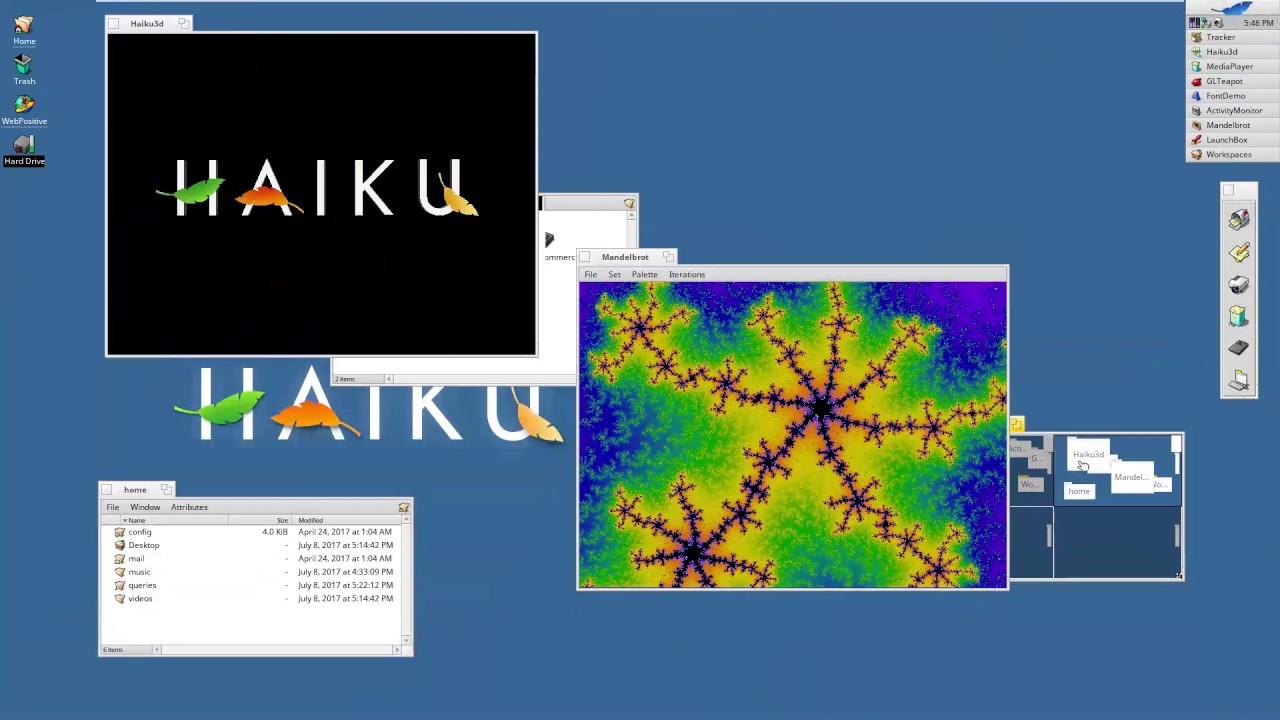
The Haiku operating system took a lot of inspiration from BeOS. BeOS was a graphical operating system developed by Be Inc. It was originally supposed to run on the BeBox in 1995. BeOS was "live" for five years when it saw its last update in 2000. Even though BeOS was not the most popular operating system in the world, it had a number of loyal users who decided to save it. They created the Haiku system, which is free and open source. The main idea is to run all BeOS programs on Haiku (similar to ReactOS with Windows).
May
Oracle developed its own Solaris operating system. Originally, it was a project whose source code was not freely accessible. In 2008, however, Oracle decided to make Solaris open source and did the same two years later with the OpenSolaris operating system. However, in 2011, Oracle released another operating system, called Solaris 11, in which it reverted back to closed code. So the illumos operating system is trying to keep OpenSolaris alive.
Syllable
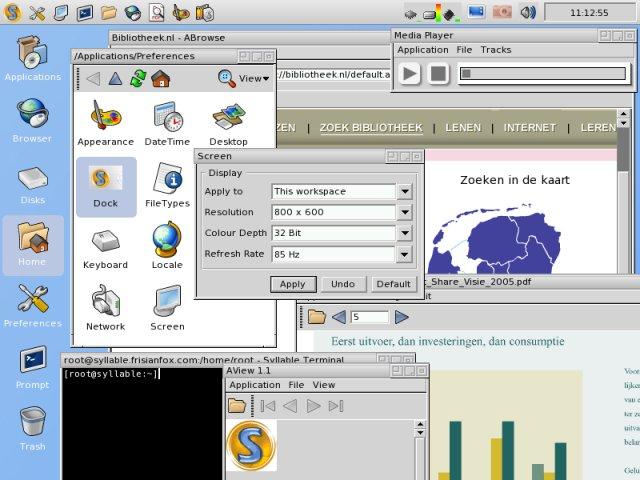
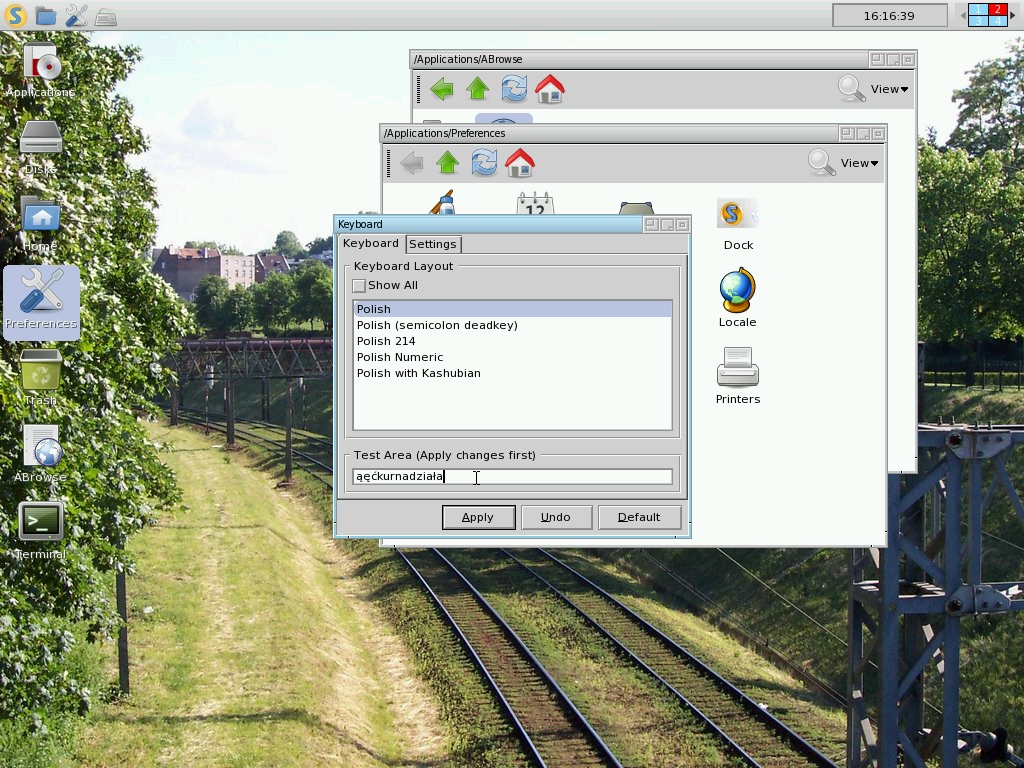
Syllable's operating system is built on AtheOS (an AmigaOS clone), whose development was discontinued more than 20 years ago. However, unlike AtheOS, AmigaOS is still alive and well on many computers from the 80s. Syllable's main target is home users who are looking for a simple system with many native applications, along with a browser built on WebKit, as well as an email client. Only 64 MB of RAM is required for the proper functioning of this operating system with all programs, and the total installation takes up only about 250 MB on the hard disk.

Hoops
The Syllable operating system is built on an AmigaOS clone, just like the AROS operating system. However, he takes it slightly differently, as it is compatible with AmigaOS at the API level - similar to ReactOS and Windows, or Haiku and BeOS. Compared to AmigaOS, AROS is available for free, so it is suitable for all users who do not want to pay for an operating system. AROS offers many programs from AmigaOS for free and is also open source.
MenuetOS
The main advantage of the MenuetOS operating system is that it fits on a single floppy disk. These were the "flash drives" from the 90s that had maximal capacity of 1,44 MB. Considering that many operating systems these days don't even fit on a 700 MB CD, MenuetOS is certainly quite remarkable. It is written directly in 32/64-bit assembler and is designed to run on very low hardware specifications - even though it supports up to 32 GB of RAM.
Dex OS
Do all computer operating systems seem similar to you? DexOS is an operating system that is definitely not like any of them. The DexOS operating system will remind you more of a game console than a truly functional operating system. Apart from playing games, you can't do much else with it. The good news is that it also fits on a single floppy disk. Some users even run it on a Raspberry Pi.
Visopsys
Like DexOS, Visopsys is a project of a single independent developer. The Visual Operating System (the original name of the Visopsys system) has been in development since 1997. Surprisingly, it is not built on any already finished operating system. However, it uses various prepackaged source codes. In it you will find, for example, GNU tools and icons that are very similar from the KDE Plasma operating system.










And where is TempleOS? :( https://www.youtube.com/watch?v=t9l058vrURo
I've read practically only one operating system here, and that's Linux; what you mentioned here are only editions and versions.. :)
BSD is definitely not Linux.
You're pretty out of it :)
If you don't understand it, don't write anything...
BDS and others have about as much in common with Linux as you do with a person who is at least moderately knowledgeable about IT.
But that's nonsense. Neither amiga os nor BSD and others have even a kernel in common with Linux
Exactly, I could have easily farted Ubuntu here, but that's Linux. Amiga and BSD are different 😉👍 Nice article. Konesomething outside iOS 👏🙏👌👍😅
I'm also really annoyed by how they always write about iOs, iPhoneon iPads, iMacs, etc.. just by myself Apple...it's starting to look like a website about Appyou.
😅
I don't know why we shouldn't have any idea that FreeBSD exists. After all, the MacOS kernel is also based on the BSD kernel.
A lot of people really have no idea what FreeBSD or UNIX is.
It is so. Letemsvetemapplem it's really about windowseh, right?
I'm quite interested in how the ReactOS one fared. When I tried it many years ago out of curiosity and hatred for woks, it was not very useful. Today it looks outdated, so hopefully it works. After failure I rooted on Ubuntu and noApple I still use it on computers today. If games were also programmed for Linux, Ubuntu would flush Wokna to hell in no time...
It practically looks the same as it did 10 years ago. There have been a ton of bug fixes over the years, but it's still just a hotbed for Wine. Great as a community project, but nothing really usable. That's right, that's how Wine started and where it is today. ^^
AmigaOS is still an active system, no need to use AROS etc. just for fun...
latest version for Amiga comp. is AmigaOS 4.1 even in Czech.
Another Amiga OS clone like AROS is MorpOS -> I would say probably the best-known clones in which the old SW is run in emulation, of course.
Pro “on-line” running of 68k “applications” is the AmigaOS 3.1.4 system from 2018 also called Workbench 3.1.4 (an upgrade of the original WB3.1)…
Then there is AmigaOS3.9, which is the last one that runs best on Amiga comp with PPC turbine.
The beautiful thing is that the basic HE of these computers is not far from the original MAC.
If anything I am available. Amiga forever!!
Sorry, but it's really unusable for serious work - in addition, the HW requirements have also increased.
FreeBSD, after a few ("billions") of hours, is often far more usable for work than Wokna.
If it was me, it's clear that it's from nostalgia and fandom!! I just wanted to point out that these systems are still being developed and even HW on sale such as Amiga X5000 etc...
That's why we have a Mac for work 😉
Sun Solaris