
The iMac is celebrating its 20th anniversary. This is a milestone that deserves due attention. Few other computers have left such a significant mark on the history of the world of technology. In today's article, let's recall the twenty-year history of the Mac from the first model to the present day.
Two decades of revolution
Last Sunday, iMacs from Applu have been included in the "twenty club". This means that they have two decades of valuable lessons and traces left in the computer industry. Two decades of stories about design, functionality, and successes and mistakes in terms of hardware and software. The history of iMacs is one of the most diverse ever, especially when it comes to computer design. You would be hard-pressed to find such a diverse parade of colors and shapes in this area.
At the beginning of 1998 he wanted Apple to contribute its sip to the current range of personal desktop computers, with a beige plastic combination of monitor and chassis, which was a common standard at the time, but was out of the question - however much the Apple company's previous computers resembled these models. Apple in short, he sensed an opportunity to come up with something never seen before, and took full advantage of it.
The original iMac offered several firsts. It was the first Apple computer, built in the era of massive Internet boom - hence the small "i" in its name. The first computer to adopt the then relatively new USB standard in terms of inputs and outputs. The first computer to show that such a machine can be a design piece and a cool accessory. The apple company's design team put all their efforts into it, and the result was a retro-futuristic machine that quickly gained popularity among laymen and experts alike.
Gallery


A color computer? Prono no
The first iMac was designed in color varia"Bondi Blue". The name had its roots in Bondi Beach in Sydney, Australia. In early 1999, the product line was enriched with the shades Blueberry, Grape, Tangerine, Lime and Strawberry. Customers suddenly had the opportunity to choose a computer not only based on technical parameters, but also on color. Making Macs with a body made of durable, colored, translucent plastic was not for Apple just a toy. According to Steve Jobs, the required plastics didn't exist at all at the time, and it took the teams responsible six months to work out how to achieve the mentioned color shades.
A year later, iMacs received another major design change. The computers' bodies became smaller, the speakers saw significant improvements, Applu also managed to reduce the internal componecomputer. In addition to the five usual colors, varianta Graphite. In 2000, the original color range was replaced by new colors variantami named Indigo, Ruby, Sage and Snow, the Graphite version continued to be sold. Apple along with the new iMacs, he also offered his customers a new mouse and keyboard. A year later he came Apple with the offer of iMacs in the color versions "Flower Power" and "Blue Dalmatian", in June of the same year the apple company returned to safety varia"Snow" is here.
Gallery


Shape also matters
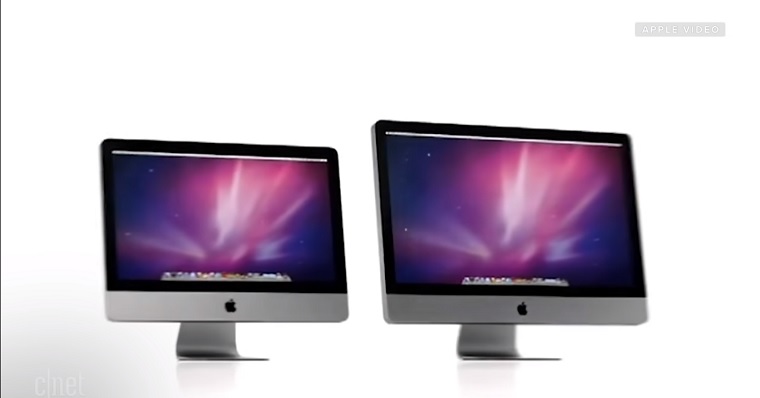
In 2002 at the SanfrancMacworld conference Apple showed that he wants to innovate iMac not only in terms of colors, but also in terms of shape. This was necessary, among other things, in order to replace CRT displays with LCD technology. Apple decided to create a completely different design - the new generation iMacs had the form of a flat display on a simple "neck".
https://www.youtube.com/watch?v=T-B_a2Lu6R4
The new design was a perfect example of how you Apple managed to cope with some limitations in favor of design. The new iMac G4 also did not lack originality and earned the nickname "Luxo Lamp iMac". Some even saw a certain similarity between this iMac and the Philco Predicta television from the XNUMXs. Work on the new iMac Applu definitely paid off and secured this model a place in the Museum of Modern Art. Of course, the new design did not come without some compromises - the "light bulb" iMacs included a fan, improved Apple Pro The speakers took their toll in the form of unsightly extra cables.
Gallery


From the creators of the iPod
A simple sentence promoting the next generation of iMacs aptly summed up the speed with which it impacted business Applu its music player. Apple's iPod quickly became a part of the lives of most people in modern society and directly influenced the design of the company's larger products AppleIn the case of the iMac G5, Appmanaged to fit the computer equipment behind the display, while the drives were placed in parallel. All-in-one The iMac G5 was housed on an aluminum base and, at two inches thick, was the thinnest desktop computer in the world at the time. Apple's new Cinema Display line also featured a similar design to the iMac G5, albeit with different materials.
In October 2005, the iMac G5 became even thinner, with the input and output interfaces placed on its back. AppThe iMac G5 also included an iSight camera for the first time ever. The new iMac G5 also came with a six-button infrared remote for media control. The updated iMac GXNUMX was released just a few months before the Apple began distributing iMacs with Intel chips.

All-In-One for all
Much like the iPod inspired the aforementioned iMac G5, the next generation of Apple desktops was inspired by iPhonem. A large, glossy display, integrated into a black computer body made of a combination of glass and aluminum with a truly miniwith a minimal use of plastic – it was only used on the back of the computer – complemented by ultrathin aluminum keyboard. The transition to a combination of glass and aluminum has brought Apphas many advantages. Steve Jobs noticed that the new models looked more professional and gave the impression of a high-end product.
The success of the new materials led, among other things, to a switch from plastics to aluminum in 2008. MacBooku. Another advantage of glass and aluminum is their easy recyclability, which is especially important nowadays for Appamong the priorities. In 2009, the Apple especially for those users who work with video, view multimedia content or do creative work on the iMac - introduced 21,5-inch and 27-inch wide-angle displays with LED backlighting. Apple gradually reduced the bezels on other models, from a wireless keyboard and Magic Mouse became standard, while the remote control disappeared.
Gallery


Even more perfect
Decision AppThe effort to slim down the iMac even further led to the release of new models in 2012. The displays were also improved, reducing reflection. “Isn’t it amazing how something new can suddenly make the old thing look old?” asked Phil Schiller at the time. The new iMacs also got rid of optical drives, debuting the Fusion Drive, combining the performance of an SSD with the capacity of a traditional hard drive.
With the iMacs, released two years later, a major innovation was the use of Retina display, known from iPhones and iPads. In order to support much better resolution, it had to Apple carefully consider all the details regarding new computers. In 2015, a new version was introduced Magic Mouse, trackpadua keyboard Magic Keyboard, in which the possibility of recharging replaced the previous use of pencil batteries.
High quality and professional
Since the release of the first iMac, the personal computer market has changed significantly. Not only have new options been added, but with them have also increased the demands on computer configurations. iMacs soon became very popular among professional users, who took advantage of their advantages, such as Retina display or Thunderbolt tooneactivity, used in their work. Effort AppThe desire to accommodate these users resulted in the launch of the iMac in 2017. Pro.
Eighteen cores in the highest configuration, specially developed graphics chip Pro Vega, a 4TB SSD, or a display with 14,7 million pixels make for a truly powerful combination. Together with powerful componeIt was also necessary to improve the cooling of the new iMac Pro, which Apple solved with a pair of powerful fans, effectively preventing the machine from overheating.
When you put the first Bondi Blue iMac and the latest one side by side iMac Pro, at first glance you wouldn't know that they are members of the same "family". The story of the Apple iMac most of all simply resembles aonecontinuous evolution and a constant path to innovation.









Few other computers have left such a significant mark on the history of the world of technology.
Yes, the iMac is great. Quiet, beautiful and above all functional.