
Slide to unlock – an iconic gesture that, despite its absence in iOS 10 and later versions of the system are still inherent to the iPhone and other products from Applu. It looks simple at first glance, but behind its perfect functioning lies a lot of hard work on several fronts. What all had to happen for us to be able to "swipe to unlock"? Let's tell the whole story of the creation of the legendary gesture.
You might be interested in

One of the key decisions Apple The Human Interface team's design philosophy for the iPhone was to boil everything down to big, simple gestures. There's a bit of irony in that—after investing so heavily in multi-touch technology, which relies on a variety of touch inputs, one of the key edicts was Applu perform as many gestures as possible with a single finger.
Former user interface designer Applu Bas Ording said that the request came directly from Steve Jobs. Fulfilling it was not easy. You simply cannot perform many gestures with one finger – it is easy to scroll the screen with one finger, but for zoom gestures, one finger is not enough.
“We worked incredibly hard on multi-touch, but then we tried our best to do everything with one finger,” Ording recalls with a laugh.
Ording is one of the lesser-known employmentance Applu, whose work has had an enormous impact on our digital lives. He is responsible for a large number of today's computing interfaces. During the 15 years he spent in Applu, managed to become one of the leading designers iOS and macOS / OS X interfaces that we work with every day. The results of his work include specific scrolling on the iPhone, the zoom effect in Docku on the Mac and much more. Ording is also behind hundreds of patents and has been a key witness in lawsuits Apple vs. Samsung, however, did not give too many interviews to journalists.
You might be interested in

The iPhone's built-in proximity sensor turned off the screen when the user raised the device to their face. The user interface team initially thought that this sensor would be enough to turn off the device's display when the user had it in their pocket, for example. However, they soon discovered that simply turning off the display nestThis is because even in a pocket or bag, for example, unwanted dialing of numbers or other unwanted actions may occur.
The ability to lock the screen seemed like a good and logical step. But in addition to locking, a distinctive, simple gesture was needed to unlock the device. And that led to the invention of the Slide to unlock function. However, the path to it was not easy. The team in question tried a number of gestures, such as sliding with two fingers, pressing two different places at the same time, or even an unlocking gesture. Steve Jobs sononec decided that unlocking should be achieved with a single swipe of the finger across the screen. This required a generous, long swipe. It also needed to be horizontal, as a vertical orientation could increase the risk of accidental unlocking when pulling the phone out of a pocket.
You might be interested in
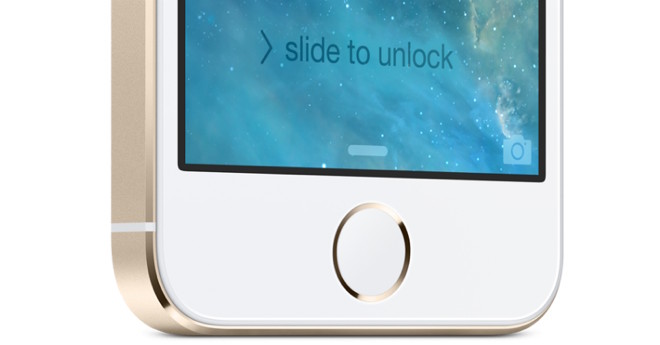
The mechanism included a button that could be slid from left to right and the text "Slide to Unlock". To emphasize the need for swiping, the team decided to add an animation to the screen to indicate to the user which direction to move the button. The option of arrows was quickly rejected by the team due to possible lack of transparency. Ordinga thought of highlighting the text with animation. The resulting effect was simple, elegant and fun.
Applu was to this effect granted in 2011 patent. But the function also became a key point of conflict between Applewith Samsung. With the arrival of iOS 10 in 2016 Apple "Swipe to unlock" gestures got rid of. He "took charge" of unlocking home button with integrated Touch ID, or it was possible to unlock the phone using a numeric code.
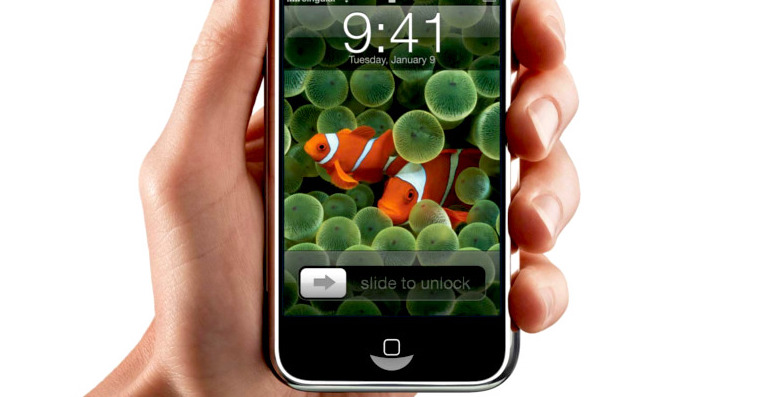
Source: CultOfMac






Letem svetem Applem your transition from iOS11 na iOS10 doesn't work at all
what exactly?
Letem svetem Applem the phone (7 plus) doesn't want to download the 10.3.2 and it's just stuck with the iTunes connection icon... I've been trying it for about 20 different ways, but always before the end it turns off or disconnects, it starts up normally for a while like an update then it goes black and pops up the picture to connect to iTunes again, so a trip from iWant tomorrow because the phone is not working :))
Pro return is enoughstore – https://beta.apple.com/sp/betaprogram/iosimagerestore
Then restore the backup iOS10, which you probably did before updating to beta version. If not, you just need to update again to iOS11 and then redeem the 11 deposit (iTunes or iCloud).
Yes, they will definitely take it under warranty?????
Barbora Kadlec https://www.letemsvetemapplem.eu/forum/viewtopic.php?f=9&t=2827&sid=c4402df04815d73d96ce7b7204c8465e
They really don't give you a guarantee :)
Adam so I'll buy a new one, and what about it :)
Tomáš Šlehofr doesn't bother me to buy a new one :)
Slide to unlock is one of the things I'm always on about iOS 9.3.5 , I don't understand why in iOS10,11 is not possible to switch Touch ID or Slide to unlock…
I would welcome a talk about "How and why the legendary 'Slide to unlock' gesture DIED".
Pinch the idiot who removed it!
It's gone anyway
Is there a way to set it back?
Ne
Now it's Slide it widgetwith ? ?
Is there any way to get it back? It was one of the reasons to buy the first one iPhone ????