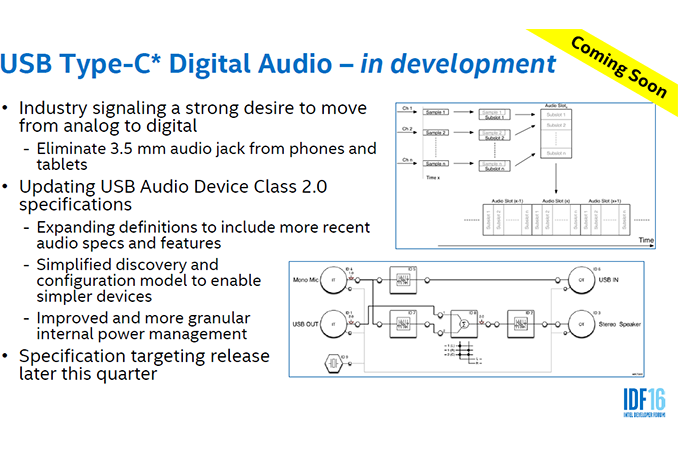
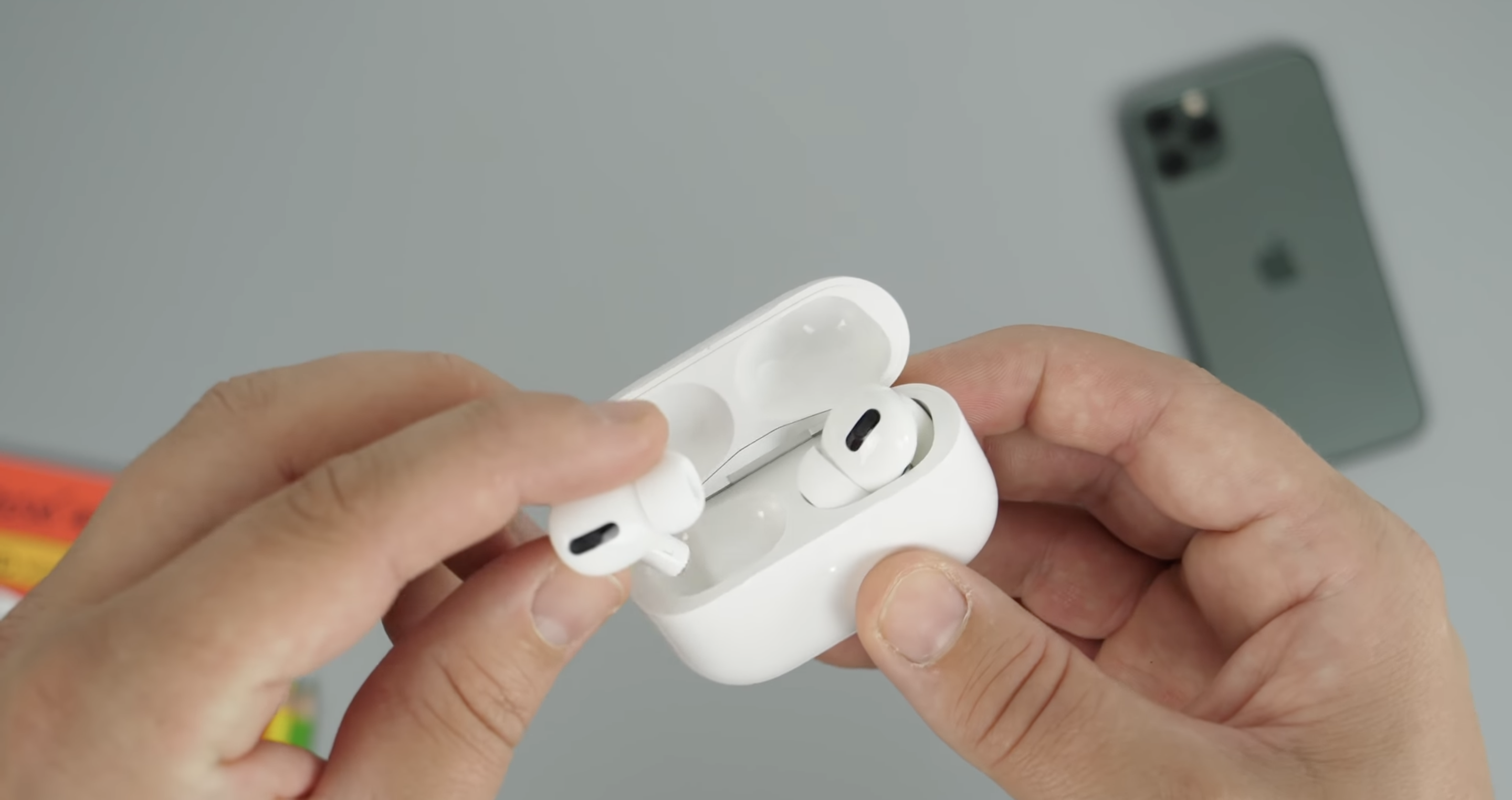
About the new iPhone 7, which we should expect in the fall, will lack the traditional 3,5mm jack jack, has been speculated for a long time. It should be replaced by a universal and proprietary Lightning konewhich, which Apple uses on its mobile devices. Intel has now come up with a similar plan, seeing a future without the classic analogonewhich, but on the contrary with a new and digital USB Type-C interface. According to Intel, it will be possible to get various advanced and "smart" functions into the headphones. So it seems that the edge of analog is unfortunately, slowly but surely ringing.
As the popularity of USB-C gradually grows,onewhich are slowly but surely entering most new laptops, computers, tablets and phones, Intel wants to take advantage of this trend and "immortality" of thisonewhich should be further increased by making it a standardonewhich for all audioYes, it would mean a departure from the classic analog jackwhich has been with us in its 3,5mm form since the 60s (the original 6,35mm konewhich was invented in 1878).
They are just classics audio konewho on the phoneonephones, computers and other devices that are the last bastion of analog interfaces in modern devices. The disadvantage of analog systems is that they require a sufficient and high-quality level of design and shielding to be able to transmit a top-notch and undisturbed signal without accompanying interference. This is one of the reasons why 3,5mm toonewho leaves and Apple. Its incorporation into the phone simply takes up too much space. And given the current trend of making everything thinner and thinner…
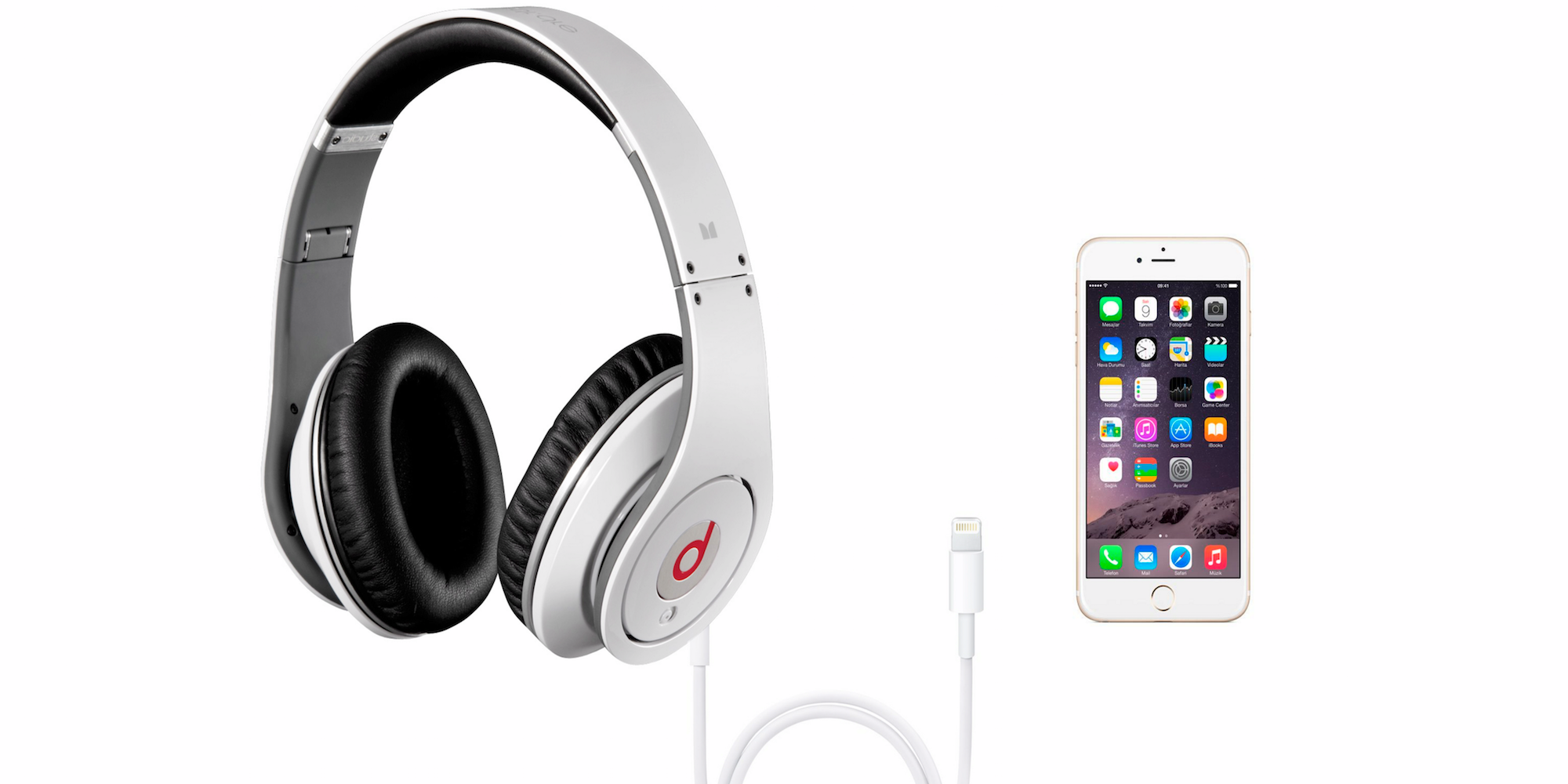
The technology of theseonewhich has remained the same for more than 100 years. Over time, there has been miniaturization – the already mentioned 60s and the transition to 3,5mm, connecting headphones/speakers with a microphoneonem, or adding other controls such as volume, answering calls, camera control, and more. However, the principle as such has not changed, and according to Intel, it is time for modernization. These attempts to "kill" the 3,5mm konewhich has already happened several times, it never happened againonec no one has succeeded. But Intel has a backup plan ready just in case.
In certain applications, USB-C can transmit audio signals in a classic analog way, thanks to the side pins that can do this without blocking other data flows in theonewhich. However, the original device must be able to do this. In this way, it is possible to achieve that an analog signal with music production, as well as a digital signal with various "smart" data, can pass through the cable. And the idea of "smartness" and expanding functionality is the main reason why Intel started this effort.
In today's era of extremely complex and capable mobile devices, Intel believes it's simply a shame to use such a one-sided peripheral like headphones/speakers that only serve to play music (no matter how perfectly they do it). Full use of USB-C toonewhich offers many other ways to further enrich this interface functionally. Thanks to the extended interface, we could, for example, have headphones that will be able to measure heart rate from the ear using biometric data, which can be useful, for example, when doing sports.
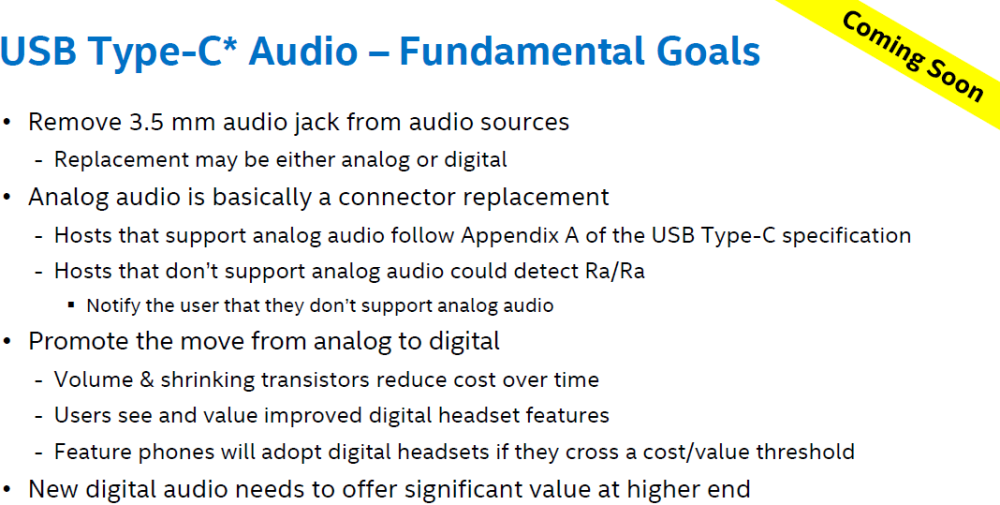
Intel is working on a new USB-C standard, called USB Audio Device Class 2.0, which should be released sometime in the second quarter of this year. It is expected that the basis will be the expanded functionality of the entire interface so that it can cooperate with today's smart devices to a greater extent. The use of this technology has its advantages and disadvantages. You can find some of the advantages in the paragraphs above, but the disadvantages are also significant. USB headsets and headphones will have to include, in addition to other hardware, a DAC converter, amplifiers and other tools that will take care of converting the digital signal to analog. This will certainly be reflected in the final price of the individual goods. The advantage of this solution will be that it will be possible to expand the capabilities of the device with various software updates.
A variety of wireless headsets and speakers are gaining popularity these days, but despite technological advances, I think analog will still be the preferred option among enthusiasts and consumers seeking the best possible music quality. So, are you attracted by the prospect of digitization and leaving the old analog tracks? Do you want your new headphones to be able to measure heart rate, temperature or other biometric data? What other uses or potential do you see in this industry?