
SpaceX launched 13 Starlink satellites into Earth orbit on April 4, 2025, including 21 satellites equipped with the Direct to Cell function. This can be called the most revolutionary service since the advent of GSM without exaggeration. Direct to Cell allows a mobile phone to connect directly to Starlink satellites. Currently, this function can be used in Australia, the USA, Canada, New Zealand, Japan, Swedencarsku, Chile, Peru and Ukraine. In the future, the number of countries will expand and as soon as you encounter a place in a given country where there is insufficient terrestrial signal coverage, the phone will automatically switch to the signal received from the Starlink satellite with the Direct to Cell function.
In addition to expanding mobile coverage, Direct to Cell will enable ubiquitous connectivity to the Internet of Things beyond terrestrial coverage, connecting millions of devices in critical global industries. Whether it’s emergency services, mining machinery, or anything else you can think of. All devices can be connected to the Internet anytime, anywhere on our planet. Direct to Cell is a true revolution, meaning that no matter where a device is, as long as it can see the sky and connect to the Internet. The revolution is that you don’t need any additional accessories.
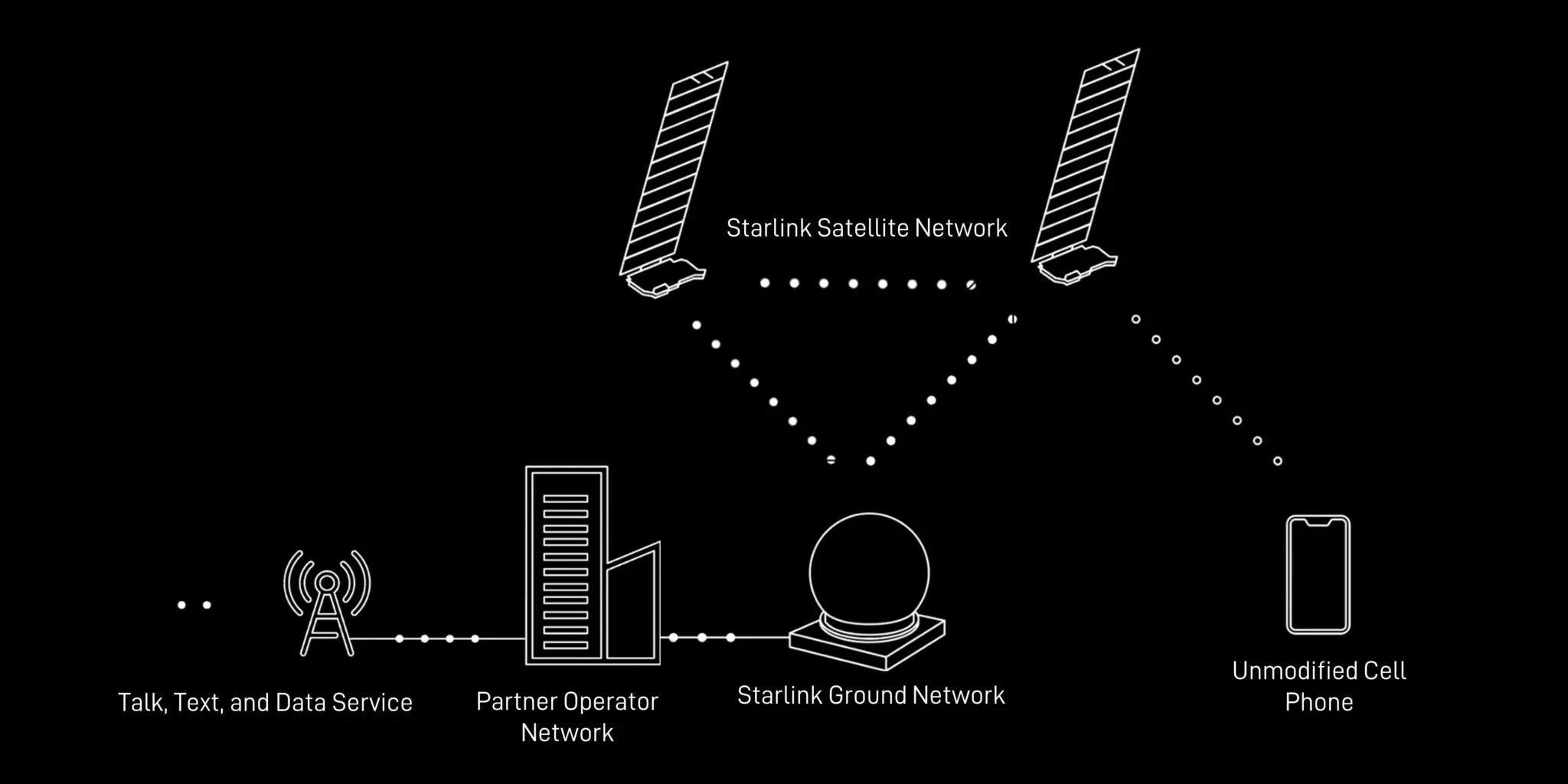
Satellite phones have been around for decades, but apart from costing you an average monthly salary per minute, they were complex, expensive and not exactly small devices. Direct to Cell allows you to connect any device in the world that has a GSM module and connects to a classic GSM network. That's where the revolution lies. All you need is any device with the LTE standard and you can connect to the internet. ProDirect to Cell currently only works for internet and SMS messages, but we will soon see the possibility of making a classic phone call. The feature is currently available in most countries where it is available beta testing. The service is available for free during this testing. It is not yet clear what its subsequent price will be, but it should not be anything major and with better flat rates, the Direct to Cell service should be available completely free of charge. Moreover, the switching is completely automatic and the user does not even know when he is connected to the terrestrial GSM network and when his phone connects to the satellite.


Guys, you have a lot of typos there... "In the future, the number of networks will expand, and as soon as you encounter a place in the country where there is insufficient terrestrial signal coverage, the phone will automatically switch to the signal received from the Starlink satellite with the Direct to Cell function."
…and?