
Technology is advancing at a rapid pace every day, making science fiction innovations a modern reality. Some of today's products, we could not even imagine a few years ago, which also applies to the most modern achievements of the photographic world. Cameras and cameras are increasing in quality year after year at a rocket pace, which we can also notice, for example, in the case of Apple devices. However, if you think that SLRs or professional cameras for thousands of dollars operate as the absolute top in this sphere, we will lead you wrong. Meet the fastest T-CUP camera, the work of leading experts in the field ultrasound display. This camera can take an incredible 10 trillion pictures in one second.
You might be interested in

Professionals from the INRS University in Canada and several scientific groups from the well-known technological institute Caltech participated in its creation. The system that enables the recording of this enormous number of frames per second is based on technology ultrafast compressed photo. It works on the basis of synthetic slowing down or stopping time, which allows capturing elements in the slowest possible movement. However, the T-CUP camera is understandably only intended for scientific purposes and projects.
This is what the world's fastest camera that can artificially stop time looks like:
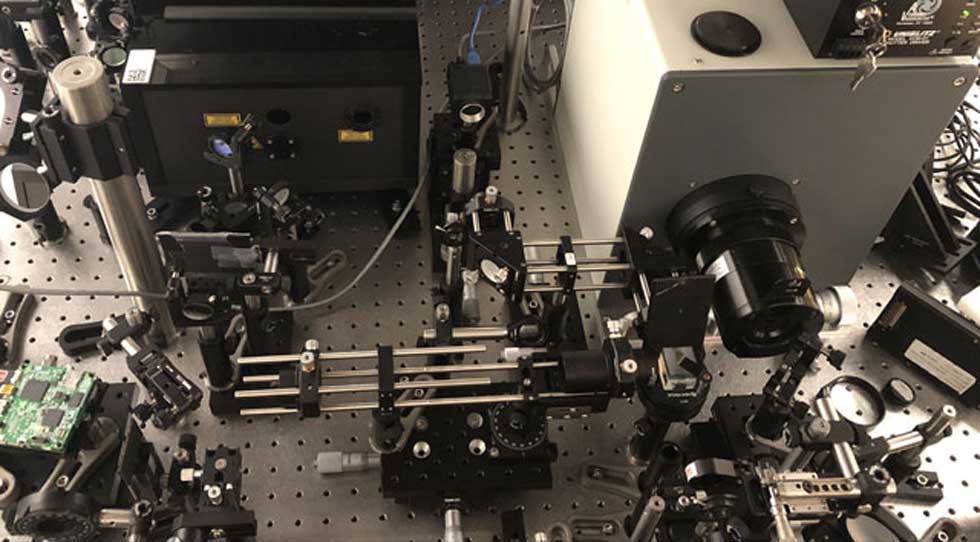
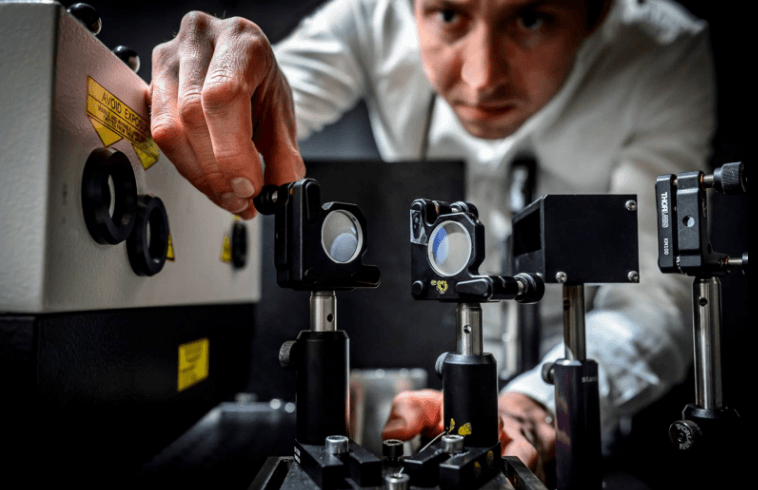
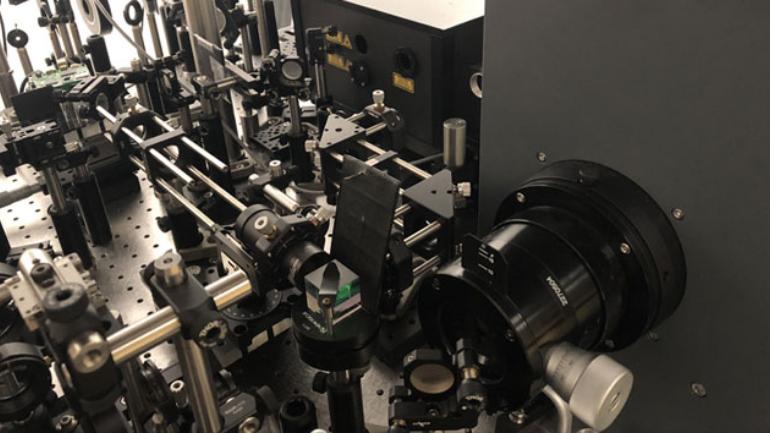
The capture of the monitored object takes place using pulses with a short range, which allows scientists to observe previously impossible elements, such as the reaction of matter to different light intensities. "We reckoned with the fact that if we use a camera with a femtosecond flash, the quality of the image will be very limited. We have improved the resolution by adding another camera that takes care of taking still images. By combining these two elements, we can arrive at the result of high-quality images with the help of capturing up to 10 billion images in one second. We call this method Radon transformation," describes the process leading participant in the project Lihong Wang, who works as a professor of health engineering and electrical engineering at the California Institute of Caltech.










...and we can look forward to this hi-end novelty in the next generation iPhone XTMFCAOW (X The Most Fastest Camera All Over The World). ✌️
Can this camera already capture the speed of light in motion?