
Pro For those who might feel that there are too few cameras in too few places, we have excellent news. We have managed to develop special microcameras with literally millimeter dimensions that can be placed practically anywhere. How do they work?
You might be interested in
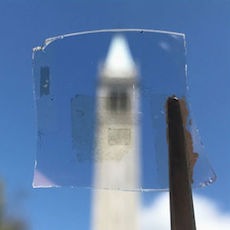
TechCrunch reported that American scientists have developed a new type of microcamera. In addition to their truly microscopic dimensions, they also boast complete independence from any other power source, allowing them to be placed virtually anywhere with the assurance of continuous operation.
Without sockets and charger
Scientists have been trying for quite some time to build and operate a camera that would be able to power itself without the need to be connected to a source. As a solution,onec showed solar and light energy. These are essentially two functions that a photovoltaic cell must perform – one is responsible for storing energy from the light that falls on it, the other is responsible for recording the amount of energy obtained.
ProThe problem was that the cell could not perform both functions at the same time. For a sensor of a certain size, it is therefore necessary to allocate a certain part of its structure for collecting electrical energy, or to ensure rapid switching of functions in the cells.

The smallest camera
Euisik Yoon and Sung-Yun Park from the University of Michigan successfully solved this situation. They discovered that light-sensitive diodes are not usually completely opaque and are able to transmit a relatively significant volume of light. By placing a solar cell under the image sensor, it does not deprive it of a light source.
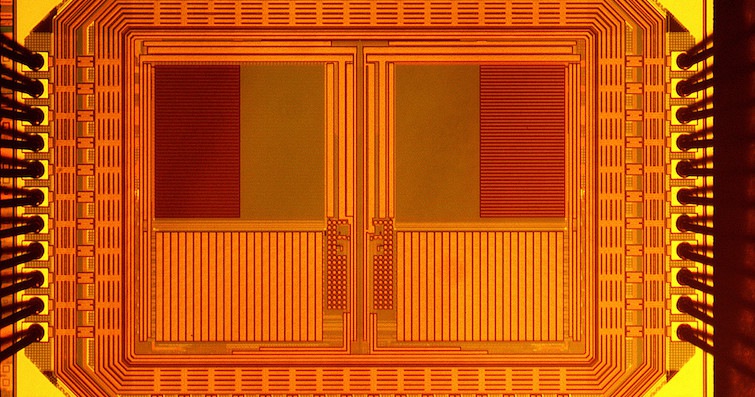
The result of the combination of this breakthrough discovery and painstaking work was the creation of a sensor that is able to "simultaneously image and collect energy". The first prototype of this sensor measures no more than one square millimeter and is entirely powered by solar energy. It can capture an image in a sequence of up to 12fps and – given its dimensions – in decent quality.
The scientists responsible for the invention point out that better quality is not unrealistic even for such a small device and requires only a few partial improvements. The chip could also work at a higher number of frames per second, or at a lower level of lighting.
So the sensor could really become a practically invisible camera, independent of another source of energy. However, for such a camera to work 100% and efficiently, a lot of additional effort, work, and a number of additional improvements are obviously needed.











Does this remind me of the movie The Circle?
Perpetual motion! KoneYes! Howdy?